by James Clive-Matthews | 17 Feb, 2018 | Marginalia
 4/5 stars
Borderline five star for me, this. Ticks a huge number of the boxes for books I love: Lyrically-written magic realism, unreliably narrated from multiple perspectives, set in the 16th century (flicking between Medici Florence and the court of Akbar the Great), weaving together elements of real history, fiction, fable, philosophy, and inventive ideas.
My issue with it is hard to pinpoint, but throughout I had a niggling dislike of a book whose writing and concept I loved. I think it’s probably to do with how every single female character is an archetype: the whore, the jealous wife, the bitter mother-in-law, the spurned lover, the unattainable object of desire, the witch, the imaginary ideal.
This is, of course, thematically kind of appropriate for the story – which revolves around the romanticised fiction of a mythical woman’s life – but it still grated. The inner workings of the mind of the Mughal emperor are so interestingly explored, yet none of the women in this novel seem to have any layers of complexity to them at all.
Is that just because the women are presented through the eyes of the men in the novel, or because Rushdie lacks the ability to create a convincing female character? It’s the first book of his I’ve read (have been meaning to get around to him for ages), so hard to judge. But I’ll still certainly try more of his stuff after this.
by James Clive-Matthews | 27 Jan, 2018 | Narratives & Meanings
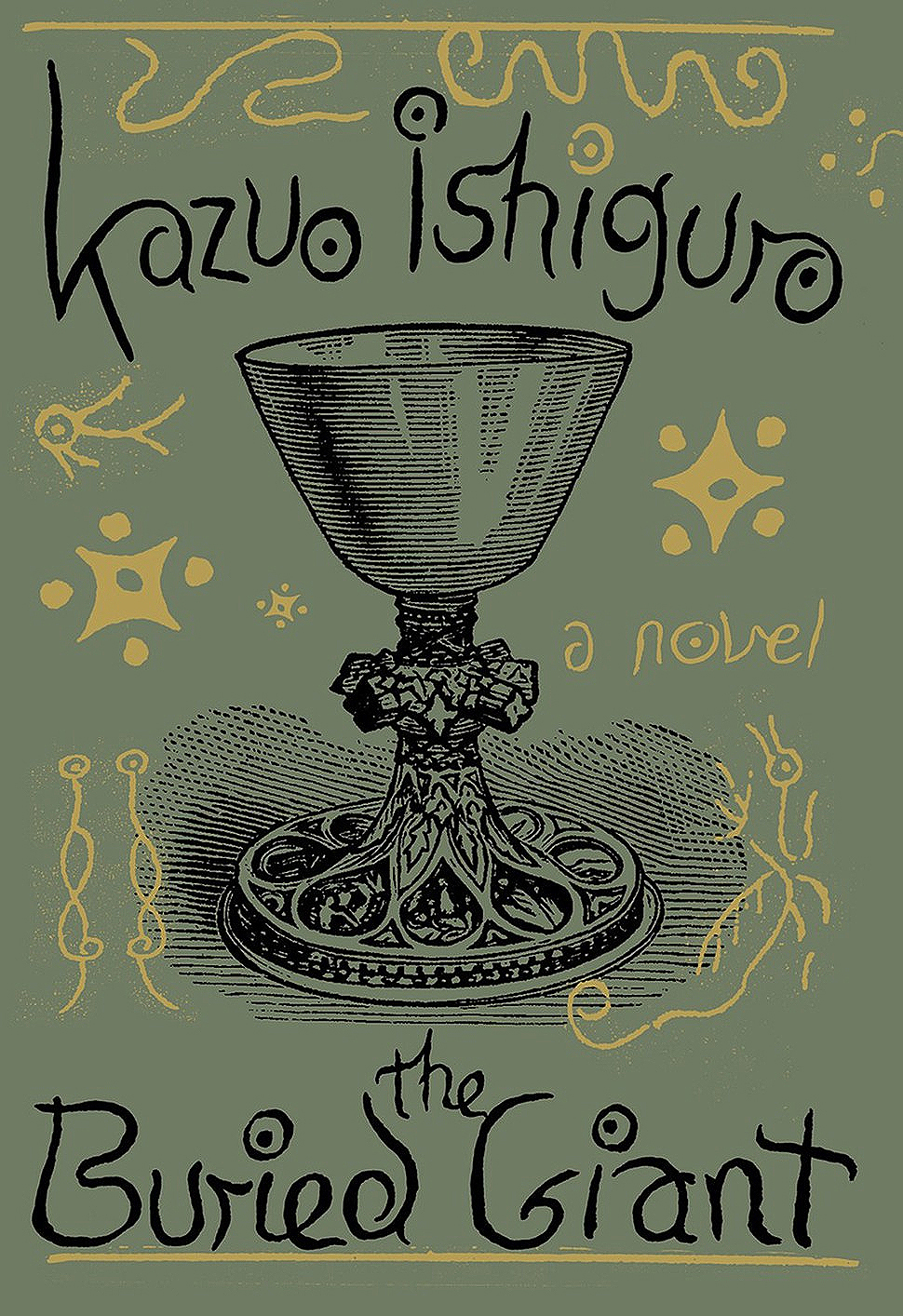 5/5 stars
A surprisingly deep book for one written in such a simple, innocent style – and once that slowly presses the emotional buttons in a way you don’t quite notice until it’s too late and you’re fully sucked in. Want to go and give the wife a massive hug right now, basically…
Initially couldn’t see what the fuss was about, but it builds and grows, layer after layer, subtly adding depth and clarity to the allegorical elements and emotional attachment to the characters. The conclusion, though long expected, is done with a skill that has genuinely left me feeling a little shell-shocked – that kind of sadness that comes with a calm acceptance. Fits the book perfectly.
It’s about relationships, memory, trust, forgiveness, anger, revenge, and history. How the past is forgotten, manipulated, subjective, vital – but also how human relationships are the thing that both bind and divide us, and can, with the right attitude, overcome any past.
It gives both cause for hope and for despair. It’s both pessimistic and optimistic. And, ultimately, despite being a fantasy, it’s profoundly realist and meaningful. Worth a read.
by James Clive-Matthews | 17 Jan, 2018 | Marginalia
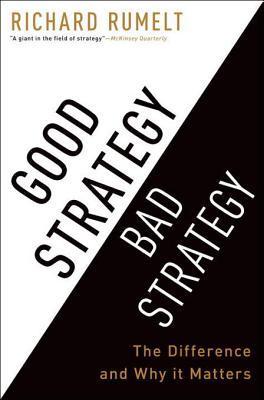 4/5 stars
One of the few strategy books recommended by Lawrence Freedman in his chunky Strategy: A History, largely for its gleeful destruction of the fatuous nonsense that passes for most business strategy.
There’s a lot of good stuff in here. Useful ideas. Good tips for clarifying thinking and approaching problems in a more strategic way.
But, as with so many business books, it’s very heavy on anecdote and case study, few of which are well told, and all of which could do with succinct, clearly formsttd summaries of the point so you can skip the details if needed. Only one section tries to do this, and it doesn’t do it well.
Nonetheless, where the thinking is clear and clearly presented, it’s got some excellent short sumaries of ways to think and act that can be invaluable to anyone in a leadership position. If you are, it’s definitely worth a read.
by James Clive-Matthews | 14 Nov, 2017 | Marginalia
 5/5 stars
An impressive no bullshit overview of strategic thinking (and claims about the merits of such thinking) over the last two centuries. My copy is now littered with copious notes, and I’m sure I’ll be returning to it repeatedly as a reference book from now on. Particularly enjoyed the excellent destruction of pretty much all businesses guru claims about management strategy.
Well worth investing the time to read this for anyone interested in politics or business – though there are big chunks it’s perfectly possible to skip, depending on your primary interest (the lengthy detour into left-wing and radical political theory added little for me, largely because I was already familiar with it).
by James Clive-Matthews | 23 Oct, 2017 | Structures & Models
 5/5 stars
Had read most of these in isolation before, never cover to cover as a coherent collection. They work better as a collection – themes emerging, parallels, repetitions.
No real standout story for me, bar possibly The House of Asterion and The Writing of the God, though many standout ideas. The core concepts of The Zahir (an object or thing that drives obsession it’s impossible to shake) and The Aleph (a point in time and space from which it’s possible to see all other points in time and space simultaneously) both could have been expanded into much more.
And that’s the thing with Borges – he always leaves you wanting more. May well try this same trick of reading his collections as collections with the rest now…
by James Clive-Matthews | 22 Oct, 2017 | Narratives & Meanings
 5/5 stars
An immense amount of research packed into a well-written, fascinating book. Has given me untold new appreciation for the late Georgian scientists and explorers – from a period before the word scientist had even been invented, and where art and science were still far more closely intertwined. This isn’t just Banks, Herschel and Davy – Coleridge also plays a significant role, as do Shelley, Woolstonecraft, Wordsworth.
Is it a bit Anglocentric? Possibly – I don’t know enough about the period to tell. But it does amply show how much scientific dialogue there was between England and France in particular, even during the Napoleonic Wars – a kind of friendly rivalry in which England seemed to have come out on top.
Is it a bit London-centric too? Possibly, though the Davy chapters do feature the Westcounty, and there are references to the later proliferation of provincial scientific associations. And in any case, this is about the initial scientific breakthroughs, not their applications asthe Industrial Revolution spread.
I took my time reading this, as it was an ideal tube journey book – each chapter split into shorter sub-chapters, and all enjoyably worth savouring. Tiny print in the paperback also means this packs in far more words than many books of the same pagecount. Could it have been a far faster read? Yes – but I’m glad I took my time, and that I finally got around to it after years of it lying on the shelf unread.
by James Clive-Matthews | 5 Oct, 2017 | Marginalia
 4/5 stars
A solid, readable polemic (with occasional excellent passages and a few clunky ones) that neatly demonstrates the complex challenges of Britain’s odd understanding of and responses to racism.
In all, the book made a fair few things clearer, while provoking several moments of “hmmm… That’s a bit strong / doesn’t really help the argument” – but as I’m a white man, most of my objections had either already been anticipated or dismissed as me not getting the point. (A useful rhetorical device for shutting down objections, that – but here, in places, it is probably a valid one.)
Most interesting were probably the chapters on race and feminism / race and class – this is where the core argument about the need to fight all forms of injustice and inequality (to really get rid of the structures that ensure racism/sexism/etc persists) begins to kick in. That’s a good argument, and needs to be made more often. (*waves at the Labour party*)
Only fear now is that even by writing this review (let alone reading the book on the tube earlier) I could be guilty of “performative anti-racism”. I kinda knew that was a thing, and know I’m occasionally guilty of it, but now can’t tell what counts – or whether the “performance” is a negative to be avoided, or just something that doesn’t make sufficient difference in the overall battle. (I’d argue it’s all good marketing…)
by James Clive-Matthews | 3 Sep, 2017 | Narratives & Meanings
 4/5 stars
The author is one of those irritatingly lucky people who stumbles through life being in the right place at the right time, meeting the right people. Deep envy.
Some small oddnesses and cultural misunderstandings, though – such as a passage describing the interpretation of a painted scene. He reads the image from left to right (making it about the moment before glory) rather than right to left, as Japanese people would read it (making it about the transient nature of life and success, a much more Japanese concept). Small things like that make me wonder whether, despite the author’s long years living in Japan, and his close familiarity with many aspects of its culture and history, he really does understand the place.
But then, as he says, that’s the beauty of Japan – it can’t really be explained in words, it mostly has to be experienced. And, to be fair, he has a good stab of explaining it.
The book itself is an engaging overview of the crisis of cultural identity Japan’s still going through, though mostly from the boom years of the 60s to 80s. Makes a lot of the oddness of modern Japan make a lot more sense than most other books I’ve read on the place, and so well worth a read for anyone interested in trying to understand the place.
by James Clive-Matthews | 24 Aug, 2017 | Narratives & Meanings
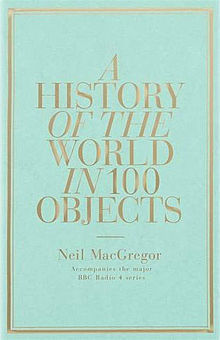 4/5 stars
Flicked through before, this time read kinda cover to cover over a few days. Skipping bits, for sure, but reading most of it. Main observations:
1) It’s going to date badly – too much speculation about meanings, and too many interpretations that feel very of a particular moment.
2) Despite thinking it’s being critical and analytical, it’s actually kinda teleological, and definitely has an agenda. It’s an agenda I agree with and support, pushing a global, multicultural view of the world, but just because I agree with the agenda doesn’t mean I can’t see that some of the points are stretched very, very thin.
3) It doesn’t function as a linear narrative, but the thematic sections also don’t make much sense to me – largely because they’re also kinda chronological. It would make much more sense to have the first coins followed by the first ledgers and the first bank notes, but instead these objects are all grouped into other sections, to facilitate a more semi-chronological approach. Thematic makes more sense.
4) There’s a huge amount of unjustified historical equivalence, making some things sound more important than they are for world history to ensure a good geographic spread – often accompanied by enthusiastic hyperbole about the significance. But there’s also still a number of significant gaps: nowhere near enough China or Greece in particular.
That’s not to say it’s not a good book. It is. And it informed me abiut a bunch if things I never knew. But history is about selection, and here the selection was limited by the British Museum’s own collections. How would other major global museums have approached this differently? I’d be keen to find out.
by James Clive-Matthews | 3 Aug, 2017 | Structures & Models
 3/5 stars
I’ve come away convinced that this would have been infinitely better as a 400-page standalone novel with an optional 600-page sister volume of semi-related spin-off short stories as a kind of DVD extras disc, rather than this incoherent mess of disjointed interconnected short stories.
Even though I understand *why* he structured it this way (to fit in with his new, fun, central concept of the nature of nonlinear time), and though he makes it clear enough he doesn’t really care what his audience thinks (this is ART, darling – and if you don’t like it you’re an idiot and can fuck off), I kinda prefer novels to have some kind of coherent narrative to them, as well as a thematic point.
All that said, there are bits of this vast, meandering not-really-a-novel that are five stars. There are some genuinely great bits in it, where Moore is at his very best. The 350-odd pages of straight narrative in the middle, written as a kind of heightened, metaphysical Enid Blyton Magic Faraway Tree for adults, is good fun – the sort of thing fans of Promethea, Top 10, Tom Strong and The League of Extraordinary Gentlemen will love. Even the Joyce pastiche chapter is very well done – albeit an appropriately hard slog that adds little, if anything, to the overall narrative.
But it’s far too self-indulgent. Too smug. At points – especially towards the end as he builds up to the conclusion (which isn’t really a conclusion, because – thematically appropriately – the promised one never comes), he starts breaking the fourth wall via his characters, dropping more and more hints as to his book’s grand design.
Eventually he gives up, and taps on a final “postlude” chapter to smugly, patronisingly, and still vaguely obscurely, explain the entire thing, positioning himself as a weirdo artistic genius who doesn’t really care if you understand it or not.
I did understand it. I did enjoy much of it – including many of the bits I think should have been cut. I just didn’t think it was as clever as he does, and didn’t think it holds together as a narrative whole. Because it doesn’t, pretty much by design.
Glad to have got it over with. Glad to have read it. And now know far more about Northampton than I ever wished to.
by James Clive-Matthews | 20 May, 2017 | Marginalia
 5/5 stars
As ever with anthologies, some variation in quality of writing (from excellent to competent) – but consistently raw and compelling in emotion and insight for those, like me, lucky enough not to have to live with racism every day.
Horrible to say, but at first as a Brit I kept comparing to something like Ta-Nehesi Coates’ Between the World and Me and the US experience of racism, and being slightly proud of the UK for there are fewer stories of naked aggression or direct violence, or even of fear.
But then that’s the point. The worst racism isn’t necessarily the extremes, the exceptions, the stuff we can all (even our racist relatives) safely disassociate ourselves from and loudly disapprove of – the shit through the letterbox, the defacing of Jewish graves, the random assaults – it’s the daily, mundane slog of unspoken assumptions and unconscious bias. The stuff us privileged white people, even well-meaning ones, barely notice – even when we’ve realised it’s there. Constantly. Inescapably. With no end in sight.
To better appreciate the all-pervasive impact of that kind of everyday racism, this book is essential.
by James Clive-Matthews | 12 May, 2017 | Narratives & Meanings
 3/5 stars
Decent and interesting, as far as it goes – but this is a history of religious myth only, and then only really of ancient Near East and Judeo-Christian religious myth. China is breifly touched on, but no India, no Africa, no Americas, no Asia-Pacific. No national myths, no folklore (bar some Chinese ones), no attempt to define the difference between myths and legends (that I remember).
Why no myths of the likes of King Arthur or Robin Hood? Why no discussion of folk tales, ghosts, genies, goblins, faries, and the like? Why no mythical creatures like the Loch Ness monster, Bigfoot, and the like?
As much as I like Armstrong, the only answer that I can think of is that it doesn’t fit the narrative of the rise of rational thought – because the appeal of these kinds of non-religious myths have endured. If anything, the rise of the urban myth and appeal of TV shows like The X-Files and its successors show we’re still looking for unbelievable things to believe in.
But while Armstrong keeps talking about humans being attracted to myths, her explanation leaves out any real psychological discussion. Instead, it’s all about “spirituality”, a concept she fails to define (that I can recall).
Not her best book, in other words. Too limited in thinking, not just in length. But still interesting enough for a quick read. Sparked a few ideas, at any rate – and that’s all I ask for.
by James Clive-Matthews | 15 Sep, 2016 | Narratives & Meanings
 4/5 stars
Rather liked this. Told from multiple perspectives (including those of animals, dead people, and abstract concepts), it’s a rare historical murder mystery that didn’t violently irritate me by being an historical novel that’s a murder mystery, one of the most frustrating clichés of the historical fiction genre.
Underlying it all is a melancholy exploration of the Islamic rejection of art, and the Turkish identity crisis that’s continuing to this day, making this a wonderfully contemporary book, even while being set five centuries ago. Reads well too – a solid translation.
Four stars primarily because it’s deliberately written in a way that makes it hard to keep track of some of the characters’ identities, which may well help maintain the murder mystery, but occasionally makes for a confusing reading experience.
by James Clive-Matthews | 3 Sep, 2016 | Structures & Models
 5/5 stars
“events! if you want those, you’d best stop reading now)”
Extremely readable – finished in one sitting – and a perfect piece of postmodern contemporary anthropology of a particular kind of existence in c.2012-2015 London that felt all kinds of familiar. I can see how some would find it pretentious, but it felt so much like a more accessible, less thesaurus-prone mid-90s Will Self that I couldn’t help but like it lots.
Two passages in particular sum up the book, for me:
“It will find its shape, he’d said; I leave all that to you… What if, rather than *it* finding its shape, the age itself, in all its shape-shifting and multi-channelled incarnations, were to find and mould *it*? What if the age, the era, were to do this from so close up, and with such immediacy and force, thay the *it* would all but vanish, leaving just world-shape, era-mould? I started thinking thoughts like this… Beneath their vagueness, I felt something forming”
And:
“Certainly, the fact it came from me, and the context within which it was presented, would imbue it for him with all kinds of cryptic meaning. And besides, I felt with real conviction that it *was* full of this already: meaning of a genuinely deep and intense nature, whose sense eluded me but whose presence radiated, pouring into everything around it.”
Yes, I can see how some would find it pretentious, pointless. Because it is. But knowingly so. Which is, as far as I can tell, the entire postmodernist point – and one that I greatly enjoyed.
by James Clive-Matthews | 29 Aug, 2016 | Marginalia
 4/5 stars
An excellent achievement, original in conception, convincing in execution – a kind of reconstructed autobiography from a dauntingly chaotic array of manuscripts that gives an intriguing new perspective on the much-covered intellectual circles of mid- to late-17th century Oxford and London. It’s a perspective firmly from the sidelines, written by a bit player, a kind of hanger-on.
And that’s why only four stars. It’s fascinating for people interested in the period, and novel-like enough to be worth reading anyway. But Aubrey is so self-deprecating, so timid, so uncertain of himself, so seemingly incapable of atanding up for his own interests, so prone to prevarication, that he can become a depressing, frustrating companion. You feel like shaking him, telling him to sort his shit out and get on with it, to write that damned book at long last.
Yes, I see much of myself in Aubrey, which made this book all kinds of existentialist. I should stop prevaricating myself. Life is short. In three hundred years will they remember me as they do him?
by James Clive-Matthews | 2 Apr, 2016 | Marginalia
 5/5 stars
A short, readable book, well worth a read for anyone interested in the media – specifically how to tackle the ongoing challenge of funding news, and the role of journalism in democracy.
The solution proposed for the ongoing challenges of monetisation and the maintenance of independence from vested interests is an interesting one. Plausible too – if governments can be persuaded that news is a public good, that is.
And even if you don’t buy in to the news as public good argument that underpins the entire thesis, along the way come a number of interesting – often surprising – nuggets about the media industry across various countries that make this worth a look by themselves. I was particularly intrigued by the finding that an increase in the number of newspapers leads to a decrease in democratic engagement – initially counterintuitive, but makes perfect sense once explained.
by James Clive-Matthews | 17 Jan, 2016 | Narratives & Meanings
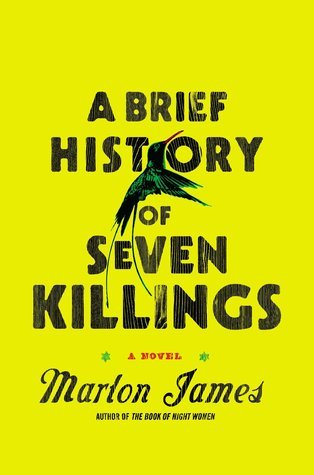 5/5 stars
In the acknowledgements, James describes the book as “A novel that would be driven only by voice.” It’s an excellent description. Multiple characters, multiple perspectives, but each with a such a distinctive written style you can tell whose chapter it is even when they’re unnamed.
On starting, I was told it’s like James Ellroy, and it really is. Complex in places, but fairly easy to keep track, even without knowing pretty much anything about Bob Marley. But unlike Ellroy, (or, at leasy, the Ellroy I’ve read, which can get a bit monotonous after a while), the multiple voices and short chapters keep the pace fast, even when very little is happening. And the atmosphere. Excellent stuff.
Not my usual sort of thing, but may well make me look out more novels that aren’t my usual sort of thing.
by James Clive-Matthews | 3 Jan, 2016 | Narratives & Meanings
 4/5 stars
I’m not convinced that Mishima really works in translation, as it’s all about the beauty of the language he uses rather than the narrative. For this book in particular, with the concept of beauty at its heart, this is especially the case, and this translation was at times a little too clunky to work. In places terrible, in fact.
That said, I enjoyed it. The introduction compares it to Dostoyevsky, and that’s a fair one – strong hints of Turgenev as well.
The book sums itself up nicely, though again this would likely work better in the original Japanese (I mean, “adumbrated”? Really, translator?):
“If one examined the beauty of each individual detail… the beauty was never completed in any single detail… for each detail adumbrated the beauty of the succeeding detail. The beauty of the individual detail itself was always filled with uneasiness. It dreamed of perfection, but it knew no completion and was invariably lured on to the next beauty… Such adumbrations were signs of nothingness. Nothingness was the very structure of this beauty”
by James Clive-Matthews | 8 Mar, 2015 | Narratives & Meanings
 4/5 stars
Finally got through the whole thing, and am frankly not much the wiser, and still not sure how to explain what it’s about.
A plot made of innumerable MacGuffins and deliberately incoherent sidetracks, writing that is at once beautiful in its flow and incomprehensible in its meaning, packed with schoolboyishly deliberate attempts to shock through the gamut of sexual taboos (paedophilia, coprophilia, incest, bestiality) and postmodernisms piled so densely on top of postmodernisms that you can’t help feeling that Pynchon was, at least in places, taking the piss. (Hell, the plot centres on magical erections, so…)
Did I enjoy it? For the most part, and in places I loved it. Did I understand it? Well, I think I get the overarching point, which is something.
But as much as I like “difficult” books and have enjoyed every Pynchon I’ve read so far, (including the much-maligned Vineland), there’s something to be said for plots that can be followed. Mason & Dixon is similarly episodic, yet works as a narrative as well as a concept. Against the Day has significant flaws, but its multiple narratives are at least internally coherent and enjoyable to read. V becomes hard to follow in places, like reading while drunk, but always pulls you back.
Gravity’s Rainbow, meanwhile, works as a concept, but I’m not convinced that it does as a novel. It’s simply too sprawling, too vague, too unconcerned with helping the reader to keep up, or in delivering a satisfactory resolution. Which is, of course, part of the point that the book’s trying to get across about the meaning and nature of life, so I guess I shouldn’t complain.
by James Clive-Matthews | 31 Dec, 2014 | Narratives & Meanings
 5/5 stars
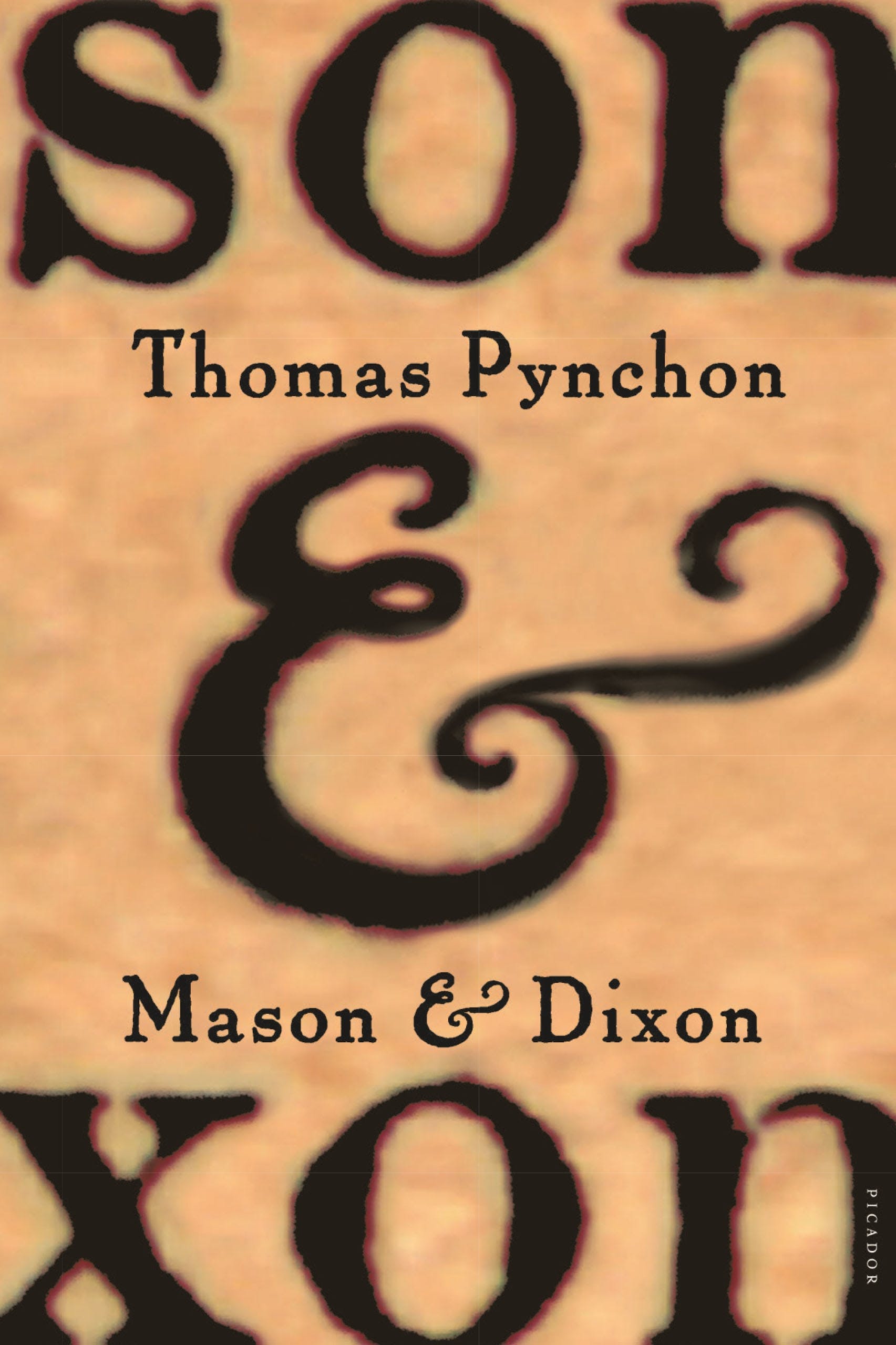
As ever with Pynchon, I loved it even while I struggled to get into it at first. Episodic, confusing, beautifully written, dreamlike, near impossible to follow, and definitely deserving to be re-read – it was only with a passage on page 610(!) that my inability to keep track of what it all meant started to make sense, as Mason speculates to his companion about the purpose and meaning of the titular duo’s lengthy mission into the American wilderness:
“None of this may be about either you or me. Our story may lie rather behind and ahead… never here in the Present, upon the Line, whose true Drama belongs to others… and when ’tis all done I shall only return to Shapperton, no wiser, and someday wake up and not know if any of this’ happen’d,’ or if I merely dream’d it, even this very moment, Dixon, which I know is real…”
Dixon’s response to this may be that of many when approaching this book: “Oh dear…?”
It certainly won’t be to everyone’s taste, but a postmodern 18th century pastiche was never going to be. Hell, if the first sentence hasn’t put you off, you’ve got no excuse not to make it to the end, I say. At which point you’ll want to return to try it again, to try and understand the bits you missed the first time around:
“Snow-Balls have flown their Arcs, starr’d the Sides of Outbuildings, as of Cousins, carried Hats away into the brisk Wind off Delaware,-the Sleds are brought in and their Runners carefully dried and greased, shoes deposited in the back Hall, a stocking’d-foot Descent made upon the great Kitchen, in a purposeful Dither since Morning, punctuated by the ringing Lids of various Boilers and Stewing-Pots, fragrant with Pie-Spices, peel’d Fruits, Suet, heated Sugar,-the Children, having all upon the Fly, among rhythmic slaps of Batter and Spoon, coax’d and stolen what they might, proceed, as upon each afternoon all this snowy Advent, to a comfortable Room at the rear of the House, years since given over to their carefree Assaults.”
Glorious stuff.
