by James Clive-Matthews | 23 Apr, 2026 | Structures & Models
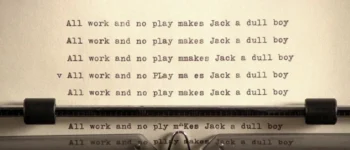 “Quietly” is quietly becoming a big GenAI copy tell, and that’s more interesting than you think.
(It may not actually be very interesting – but that’s what AI would tell you, because “more interesting than you think” is another GenAI linguistic meme it’s now nearly impossible to escape.)
The problem isn’t AI writing
This is not another rant about GenAI writing patterns. I personally hated the em-dash long before it was cool – not its use as a grammatical tool, which I use all the time, but its ugly aesthetics.
The point is that it used to take months, if not years to notice trends in headlines and framing devices – now they’re shifting far, far more rapidly.
This started with the BuzzFeed effect, more than a decade ago – everything was suddenly clickbait or a listicle, usually with an uneven number. The writing style even of newspapers of record shifted towards ever more chatty informality.
Suddenly every media brand sounded like a relatively smart Californian trying to sound dumber than they are.
The issue is systemic
GenAI has been trained on this stuff.
And because this kind of content was designed largely to cut through social and search algorithms via a brute force attack – combined with test, learn, repeat until false – it was produced in inordinately vast quantities, spamming the system.
And because LLMs are probabilistic, and they’re trained from the internet, this kind of annoyingly-formulated content is a core part of their training data.
Pattern recognition drives addictive behaviour
This kind of copy is designed to appeal to intrigue, encourage engagement, encourage a click, trigger a dopamine response when the (barely mysterious) mystery of what the hell the headline is talking about is revealed and either tells you something new or makes you feel smarter if you already guessed the answer.
It’s designed to suck you in, and keep you coming back.
There was a lawsuit about this recently. Meta and YouTube lost, found guilty of designing their platforms to suck users in and get them hooked.
GenAI is the output of a pattern recognition system. These are patterns it has recognised.
Now it’s doing its own equivalent of test, learn, double down and iterate to find new formulas that will suck in intrigue- and dopamine-hungry brains.
And so headlines written by AI – a great use case for the media – are all starting to converge into similar patterns again. Just as they did a decade ago when BuzzFeed disrupted then industry and turned almost all newspapers on the planet just that little bit dumber.
—
This is how language and culture has always evolved. The process just seems to be accelerating.
by James Clive-Matthews | 3 Apr, 2026 | Narratives & Meanings
 4/5
4/5
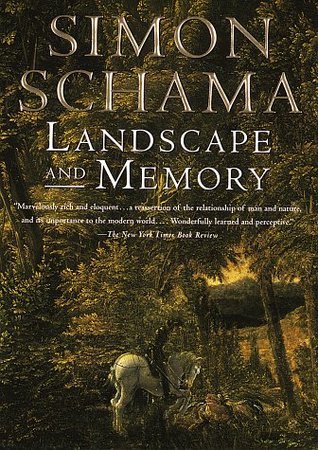
This is a big, strange, frequently fascinating, but strangely disjointed book. Impressionistic history, not narrative. It’s also far longer than the page count suggests – a huge, heavy book that needs two hands to hold even in paperback.
Effectively a collection of essays that combine to make up one big essay, it jumps around in places and time as it explores Western civilisation’s relationship with the landscapes in which that civilisation has developed.
Yet this is a bit of a misrepresentation, as really the focus is primarily on the 18th and 19th centuries, as the conscious awareness of landscape as a thing started to emerge. And primarily via England, France, the United States, and Germany / the Holy Roman Empire. Other countries do get a look in. but these four dominate.
It’s at times more lyrical memoir or art criticism than cultural history, with the schema and structure and choices of what to cover making sense only to its author – making me wonder how on earth Schama managed to get this commissioned, given it came pretty early in his career, five years before he became a household name via his TV work. It feels more like the kind of self-indulgent passion project with which someone famous is rewarded to get them to produce something a bit more commercial.
But there’s still a lot here to like. For me, it’s best when it delves into myth and legend – though it doesn’t do this as much as I think is warranted, or as much as I’d have liked, given how good Schama is on myth when he does write about it:
“how much myth is good for us? And how can we measure the dosage? Should we avoid the stuff altogether for fear of contamination or dismiss it out of hand as sinister and irrational esoterica that belong only in the most unsavory margins of ‘real’ (to wit, our own) history?
“…The real problem… is whether it is possible to take myth seriously on its own terms, and to respect its coherence and complexity, without becoming morally blinded by it’s poetic power. This is only a variation, after all, of the habitual and insoluble dilemma of the anthropologist (or for that matter the historian, though not many of us like to own up to it): of how to reproduce ‘the other,” separated from us by space, time, or cultural customs, without either losing ourselves altogether in total immersion or else rendering the subject ‘safe’ by the usual eviscerations of Western empirical analysis.
“Of one thing at least I am certain: that not to take myth seriously in the life of an ostensibly ‘disenchanted’ culture like our own is actually to impoverish our understanding of our shared world.” (p.134)
And (much) later, concluding the thought with the closest the book has to an explanation of Schama’s aim in writing it:
“it seems to me that neither the frontiers between the wild and the cultivated, nor those that lie between the past and the present, are so easily fixed. Whether we scrambled the slopes or ramble the woods, our Western sensibilities carry a bulging backpack of myth and recollection… The sum of our pasts, generation laid over generation, like the slow mold of the seasons, forms the compost of our future. We live off it .” (p.574)
Appropriately enough this book is a rambling affair, following paths that make little sense as you wander them. But gradually the intent of the person who’s staked out those paths starts to make some kind of sense – as with an Impressionist painting, the subject of which can only be seen when you take a few steps back.
Here, the details are so dense, so varied, you’re better off with your nose close to the canvas – the parts work better on their own rather than summed into a whole.
by James Clive-Matthews | 16 Jul, 2023 | Marginalia
Fascinating long read, combining my old focus on film with my current one on tech, business, and society.
Core to this piece is a fundamental question: What is a fair wage in a digital era in which the connection between the effort and means of production and the business bottom line is utterly obscure?
Lots of interesting questions – not least of which is: Could Hollywood actors striking be a tipping point for AI awareness and regulation?
“SAG-AFTRA is one of the most well-known labor unions in the United States (everybody loves a celebrity). Partnering with WGA to draw a line in the sand over the AI threat to workers is a huge deal that I believe can benefit people in the many different industries beyond Hollywood that are facing the same existential danger that the technology presents. Precedents are important, and big wins on national platforms can help the little guys get what they deserve too.”
by James Clive-Matthews | 3 Sep, 2017 | Narratives & Meanings
 4/5 stars
The author is one of those irritatingly lucky people who stumbles through life being in the right place at the right time, meeting the right people. Deep envy.
Some small oddnesses and cultural misunderstandings, though – such as a passage describing the interpretation of a painted scene. He reads the image from left to right (making it about the moment before glory) rather than right to left, as Japanese people would read it (making it about the transient nature of life and success, a much more Japanese concept). Small things like that make me wonder whether, despite the author’s long years living in Japan, and his close familiarity with many aspects of its culture and history, he really does understand the place.
But then, as he says, that’s the beauty of Japan – it can’t really be explained in words, it mostly has to be experienced. And, to be fair, he has a good stab of explaining it.
The book itself is an engaging overview of the crisis of cultural identity Japan’s still going through, though mostly from the boom years of the 60s to 80s. Makes a lot of the oddness of modern Japan make a lot more sense than most other books I’ve read on the place, and so well worth a read for anyone interested in trying to understand the place.
