by James Clive-Matthews | 23 Apr, 2026 | Structures & Models
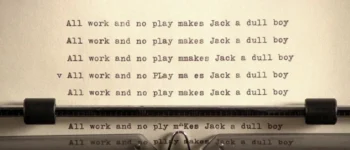 “Quietly” is quietly becoming a big GenAI copy tell, and that’s more interesting than you think.
(It may not actually be very interesting – but that’s what AI would tell you, because “more interesting than you think” is another GenAI linguistic meme it’s now nearly impossible to escape.)
The problem isn’t AI writing
This is not another rant about GenAI writing patterns. I personally hated the em-dash long before it was cool – not its use as a grammatical tool, which I use all the time, but its ugly aesthetics.
The point is that it used to take months, if not years to notice trends in headlines and framing devices – now they’re shifting far, far more rapidly.
This started with the BuzzFeed effect, more than a decade ago – everything was suddenly clickbait or a listicle, usually with an uneven number. The writing style even of newspapers of record shifted towards ever more chatty informality.
Suddenly every media brand sounded like a relatively smart Californian trying to sound dumber than they are.
The issue is systemic
GenAI has been trained on this stuff.
And because this kind of content was designed largely to cut through social and search algorithms via a brute force attack – combined with test, learn, repeat until false – it was produced in inordinately vast quantities, spamming the system.
And because LLMs are probabilistic, and they’re trained from the internet, this kind of annoyingly-formulated content is a core part of their training data.
Pattern recognition drives addictive behaviour
This kind of copy is designed to appeal to intrigue, encourage engagement, encourage a click, trigger a dopamine response when the (barely mysterious) mystery of what the hell the headline is talking about is revealed and either tells you something new or makes you feel smarter if you already guessed the answer.
It’s designed to suck you in, and keep you coming back.
There was a lawsuit about this recently. Meta and YouTube lost, found guilty of designing their platforms to suck users in and get them hooked.
GenAI is the output of a pattern recognition system. These are patterns it has recognised.
Now it’s doing its own equivalent of test, learn, double down and iterate to find new formulas that will suck in intrigue- and dopamine-hungry brains.
And so headlines written by AI – a great use case for the media – are all starting to converge into similar patterns again. Just as they did a decade ago when BuzzFeed disrupted then industry and turned almost all newspapers on the planet just that little bit dumber.
—
This is how language and culture has always evolved. The process just seems to be accelerating.
by James Clive-Matthews | 13 Apr, 2026 | Systems & Technology
 The ability of AI to produce paradoxes continues to fascinate me.
One recent survey found that workers lose the equivalent of 51 working days a year to technology friction – yet people who use AI effectively save 40–60 minutes a day.
The same survey found that only 9% of workers trust AI for complex, business-critical decisions, compared with 61% of executives. After the recent Wall Street Journal poll showing a similar split between senior management and staff, this is starting to look like a pattern.
And, to be honest, I can see both sides.
Why AI Often Looks Better to Executives Than Employees
For senior leaders, GenAI is often genuinely useful. If you want a high-level overview or a summary to help you orientate yourself and set direction, it can be superb.
But for the people doing the detailed work, the output frequently looks good enough only if you don’t look too closely.
Yet the closer you look, the more probabilistic problems appear: missing caveats, vague generalisations, invented facts, sentences that sound solid when skimming but mean nothing.
When details matter, getting to something usable with even the best GenAI tools can take dozens of rounds of amends and refinement. It’s not hard to see why many staff feel the technology is creating as much friction as it removes.
Why Reliable AI Needs More Structure
What’s interesting is that the newest attempts to make these systems more reliable seem to point in exactly the same direction.
The leaked Claude Code system appears to work so well largely because it surrounds the model with multiple layers of contextual constraint and instruction.
Gary Marcus has argued for years that something like this – closer to his preferred “neurosymbolic” approach – is the only plausible route to reliable AI.
Meanwhile, Elin N. has proposed an alternative approach she calls “substrate engineering“: tightly controlling the language, context and structure around a model to produce much more consistent results.
In other words, the more reliable these systems become, the less they seem to work like magic and the more they seem to depend on carefully-constructed contextual scaffolding.
The Catch-22 at the Heart of AI Adoption
Most workers do not yet have the time, knowledge or support to build that scaffolding for themselves.
Yet without the detailed knowledge of the people actually doing the work, the scaffolding often is not good enough.
Which may help explain why the promised productivity gains have yet to emerge.
Getting the best results from GenAI increasingly seems to require expertise in both the technology itself and the domain you are using it to help with.
The people most sceptical of these tools may therefore also be the people most needed to make them work.
by James Clive-Matthews | 5 Apr, 2026 | Narratives & Meanings
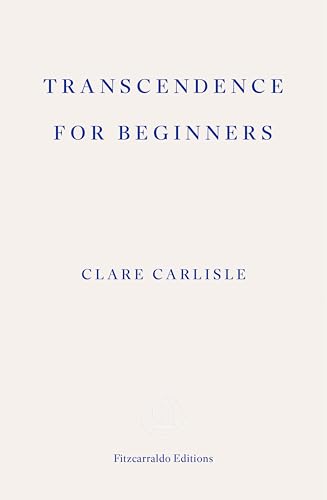 Definitely not for beginners, covering as it does Spinoza, Kierkegaard, George Eliot, Nietzsche, Heidegger, Ramana Maharshi, Celia Paul, Proust, Arendt and (I’m pretty sure) Kant – as well as Christianity, Hinduism, the Kabala, and more… I very nearly gave up during the first chapter or two, as it seemed to be drifting more towards spiritualism, religion, meditation and yoga than anything I find meaningful or insightful as a hearty sceptic and firm atheist – but I’m glad I stuck with it.
For me, the discussions of the art of biography, biography versus fiction, the sheer impossibility of capturing a life in its entirety, and the comparisons between philosophy and religion were all fascinating and thought provoking. I’ll probably need to go back through at some point taking notes.
Having been surprised by how much I liked Middlemarch I’ll now have to dig out my dusty, unread copy of Daniel Deronda one of these days – as well as Carlisle’s biography of Eliot, as I’m now more or less convinced that she was one of the most interesting novelists of the 19th century. Carlisle’s biography of Kierkegaard is also going to go on the to read list. Kierkegaard is one of those philosophers I’ve never quite got around to – and another where I’ve had a book lying unread on the shelf for, as with most of Eliot, a good 30+ years now.
by James Clive-Matthews | 3 Apr, 2026 | Narratives & Meanings
 4/5
4/5
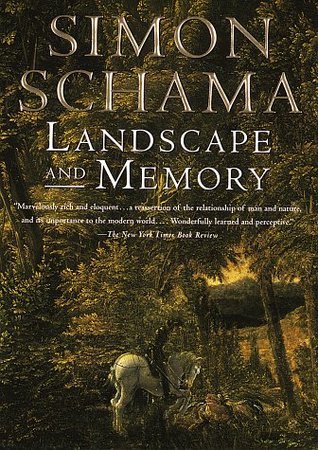
This is a big, strange, frequently fascinating, but strangely disjointed book. Impressionistic history, not narrative. It’s also far longer than the page count suggests – a huge, heavy book that needs two hands to hold even in paperback.
Effectively a collection of essays that combine to make up one big essay, it jumps around in places and time as it explores Western civilisation’s relationship with the landscapes in which that civilisation has developed.
Yet this is a bit of a misrepresentation, as really the focus is primarily on the 18th and 19th centuries, as the conscious awareness of landscape as a thing started to emerge. And primarily via England, France, the United States, and Germany / the Holy Roman Empire. Other countries do get a look in. but these four dominate.
It’s at times more lyrical memoir or art criticism than cultural history, with the schema and structure and choices of what to cover making sense only to its author – making me wonder how on earth Schama managed to get this commissioned, given it came pretty early in his career, five years before he became a household name via his TV work. It feels more like the kind of self-indulgent passion project with which someone famous is rewarded to get them to produce something a bit more commercial.
But there’s still a lot here to like. For me, it’s best when it delves into myth and legend – though it doesn’t do this as much as I think is warranted, or as much as I’d have liked, given how good Schama is on myth when he does write about it:
“how much myth is good for us? And how can we measure the dosage? Should we avoid the stuff altogether for fear of contamination or dismiss it out of hand as sinister and irrational esoterica that belong only in the most unsavory margins of ‘real’ (to wit, our own) history?
“…The real problem… is whether it is possible to take myth seriously on its own terms, and to respect its coherence and complexity, without becoming morally blinded by it’s poetic power. This is only a variation, after all, of the habitual and insoluble dilemma of the anthropologist (or for that matter the historian, though not many of us like to own up to it): of how to reproduce ‘the other,” separated from us by space, time, or cultural customs, without either losing ourselves altogether in total immersion or else rendering the subject ‘safe’ by the usual eviscerations of Western empirical analysis.
“Of one thing at least I am certain: that not to take myth seriously in the life of an ostensibly ‘disenchanted’ culture like our own is actually to impoverish our understanding of our shared world.” (p.134)
And (much) later, concluding the thought with the closest the book has to an explanation of Schama’s aim in writing it:
“it seems to me that neither the frontiers between the wild and the cultivated, nor those that lie between the past and the present, are so easily fixed. Whether we scrambled the slopes or ramble the woods, our Western sensibilities carry a bulging backpack of myth and recollection… The sum of our pasts, generation laid over generation, like the slow mold of the seasons, forms the compost of our future. We live off it .” (p.574)
Appropriately enough this book is a rambling affair, following paths that make little sense as you wander them. But gradually the intent of the person who’s staked out those paths starts to make some kind of sense – as with an Impressionist painting, the subject of which can only be seen when you take a few steps back.
Here, the details are so dense, so varied, you’re better off with your nose close to the canvas – the parts work better on their own rather than summed into a whole.
by James Clive-Matthews | 2 Apr, 2026 | Narratives & Meanings
 Effectively an appendix to Herzog’s excellent memoir, the chapters here have some familiar anecdotes and some new (to me) ones.
The stories of how he fabricated quotes and incidents in some of his films were the most interesting; hearing his take on AI, deepfakes, and the artificial mimicry of his distinctive voice is at once amusing (especially in the audiobook version, with him reading it out) and surprisingly optimistic; the chapter where he simply relays the plot of an opera far less engaging, hence dropping a star.
But this is Herzog. It’s almost impossible for him to be dull for long. And even when he is dull, there’s usually a point to it – like that seemingly endless sequence of planes taking off through the heat haze at the start of Fata Morgana. It sets the tone.
The tone he’s setting here is the tone he’s set throughout his career – it’s all to encourage inquisitiveness. Because that’s the best antidote to untruths – a desire to learn more, understand more, and get to the bottom of a story, no matter how outlandish or how banal.
by James Clive-Matthews | 1 Apr, 2026 | Narratives & Meanings
 4/5 stars
An excellent companion to Rée’s superb Witcraft, his history of how philosophical ideas made their way into English (often with a considerable delay). The chapters here on Kierkegaard and Sartre neatly fill some gaps in that earlier book’s narrative, as it (mistakenly and frustratingly, in my view) ended the story largely with Wittgenstein. (Yes, Kierkegaard was earlier, but didn’t get translated into English until the early-mid 20th century.)
The introductory interview was also a nice touch, with Rée’s dislike of histories of philosophy – and especially of Bertrand Russell’s, and of Russell more broadly – an entertaining educated rant that helped shift my perspective on what has become one of my favourite genres of book over the last few years. I knew it’s not just me who sometimes, when reading the original works rather than someone else’s summary of them, struggles to understand and needs to re-read paragraphs repeatedly – but it was very reassuring to hear that the same is true for Rée.
Philosophy is hard, basically. Intellectual biographies and histories of philosophy may make it more accessible – but the point is philosophy is all about the act of thinking, not just understanding ideas.
This feels like a particularly useful insight in the age of GenAI, when it’s easier than ever to find a summary of an idea, and to have someone (albeit a bot) explain a complex concept in simple terms. This may be a shortcut to understanding, but sometimes this can mean your understanding is only superficial – by reaching your knowledge via an intermediary, rather than working at it yourself, you’re likely to be missing nuances and details, as well as to be picking up received wisdom and interpretative assumptions from other people, rather than determining your own understanding.
Taking shortcuts via other people’s interpretations isn’t always a bad thing, by any means – but it’s worth being aware of what you may be missing by doing so. I’m probably never going to read Heidegger’s Being and Time or Sartre’s Being and Nothing in English, let alone in the original German and French. I’ve always known I’m going to be missing something as a result – the summaries of these books that I *have* read have convinced me there are aspects of both I’d find fascinating. But Rée’s emphasis on taking the time to digest philosophical works, to ruminate on them, to make the effort to truly understand them has given me pause.
Much to think about here, in other words – not bad for what is at its core a collection of book reviews.
by James Clive-Matthews | 1 Apr, 2026 | Systems & Technology
 Bad photo of a good slide on what makes content valuable in an AI era, from Kevin Anderson at the inaugural Source Code event last night.
A successor to the much missed Hack/Hackers series looking at how tech and journalism can come together to do great things, it was unsurprisingly dominated by conversations about AI.
The point about what is valuable about the content we produce was also core to my old colleague Steven Wilson-Beales‘ session on SEO / GEO / AEO / AIO / whatever you want to call it, and what a “zero click” web could look like in practice.
Key points:
– You need differentiation
– You need to add value
– You need to be accessible, relevant, and credible
It’s almost as if E-E-A-T is still a thing!
Also, the lesson we should all have taken from the last decade and a bit of chasing search and social algorithms is simple – diversify.
Don’t get over reliant on any one traffic source. Don’t chase the algorithm, because the algorithm is changing faster than ever – and with AI search, will increasingly adapt it’s findings to every individual.
And a top tip – given AI tools have been trained on existing content, you need to take a careful look at your archives. If they don’t answer the potential needs of an AI bot in query fan out mode, they may need an update.
—
But the absolute key point – and this speaks to a lot of the work I’ve been doing behind the scenes lately – It’s no longer enough to focus your SEO / GEO efforts on optimisation of individual pages.
You need to see your content as part of a broader system – because the bots are no longer looking for just one page to rank at the top of a list, they’re looking for the right information to answer the query. If they can’t get it from you, they’ll get it from someone else. (Or just make it up…)
