The most surprising thing with this growing move away from social media advertising is that it has taken this long for brands to realise that they can’t control the context in which their adverts appear – and that context can change perception of their messaging.
The real lesson here is not that social media needs stricter controls (an ethical debate), it’s that in the classic Paid/Earned/Owned model, the *only* part brands can fully control is Owned. Many are only now beginning to wake up to the fact that their social accounts are not Owned platforms.
All this should have been obvious for years – every fresh story about an algorithm change destroying business models that were relying on social audiences has been an alarm bell. But perhaps now brands are finally realising that social isn’t as straightforward as they’ve long seemed to believe.
What does this mean for brands?
1) They need more robust, nuanced social strategies. Chucking money at paid posts and adverts doesn’t cut it. It never has.
2) The quality of their genuinely Owned platforms is becoming more important than ever. These are the only places they have complete control over the context and the message.
And it’s also notable that many brands joining the boycott have solid Owned strategies in place…
Somehow I’d not already read this, despite loving magic realism a bit more than it probably deserves. It was different to what I was expecting. Far less realism, much more absurdity.
Still, it was mostly very enjoyable – and packed full of fantastic (in both senses) imagery and phrases.
But there’s just so much of this descriptive oddness that halfway through the sheer unrelenting imagination, sidetracks, asides, quirkiness, and deliberately meaningless obsessions becomes somehow repetitive. Pointless. Frustrating. No longer enjoyable.
But then the final chapter wraps it all up with a kind of thematic unity that makes this very repetition – the way the various stories blur into one despite their wild differences – all make sense. After enduring one hundred plus pages of annoyance, that wrap-up means I’ve ended up leaving One Hundred Years Of Solitude with affection – if not the love I was expecting.
Ethos (basically the speaker’s credibility or brand)
Logos (the subject & style of the message)
Pathos (effectively the audience’s response)
Prioritising pathos
For an artist, novelist, or even journalist, the first two of these are almost always the most important, with a strong emphasis on the second. While most artists and writers *want* to have a positive audience response to their work, their primary goal is to get their idea out there. Their ethos / reputation may help them reach an audience, but this is secondary to the logos of the work they’re producing: the subject they want to convey, and the way they – the authors of the work – decide to shape it is both their focus, and the focus of their audience.
In short, for an artist or writer, often it is the act of creation itself that is the goal. Getting a positive audience response is merely a bonus – and being forced to chase an audience can stifle their creativity and lead to both stress and bad work. Hence the cliche of the difficult second album…
By contrast, for marketing it’s the last of Aristotle’s three concepts – pathos, the response of the audience – which is most important. Without the right kind of audience response, a marketer’s work will have failed. Hence the birth of focus groups, testing, and the often quite derivative nature of advertising, as “creatives” are forced to shape their work not around a great creative concept in itself, as an artist would, but how that creative concept is likely to resonate with their target audience – pushing them into creativity by committee (always a killer), and a constant recycling of ideas that are known to work.
This focus on the audience’s response is how we’ve end up jumping all the way from Aristotle to Roland Barthes, the notoriously difficult to read late-20th century French semiotician. (But still, at least he’s not Pierre Bourdieu, who I may get to in a later piece in this series…)
Everything is subjective
Barthes’ most famous idea is that of the death of the author – basically the idea that the authorial/creative intentions behind a work of art/literature don’t matter; all that is important is the response of the audience.
To understand this response, Barthes – building on some of the concepts of Ferdinand de Saussure that helped give birth to semiotics, the study of signs (combined with some of Jacques Lacan’s ideas on psychology) – began to re-conceptualise the way meaning is created in culture and society.
Where for Saussure, the importance of semiotics was to help understand the connection between a symbol/sign (the signifier) – be that a sound, a word, or an image – and the thing or concept that symbol/sign was intended to represent (the signified), Barthes effectively took this one logical step further by pointing out that this two-way connection still didn’t get to the heart of the *meaning* of that sign/symbol, because meaning is entirely a matter of interpretation. The connection between signifier and signified is entirely subjective.
Why? Well, because all of us have different knowledge, experience, ideas, attitudes, needs and expectations.
Emojis and meaning
Emojis are a good example. Take this one: Originally designed to represent a Chinese dumpling, the emoji’s creator specifically had dumplings in mind when she made it, arguing:
“The dumpling is actually universal. Georgia has khinkali. Japan has gyoza. Korea has mandoo. Italy has ravioli. Polish people have pierogi. Russian people have pelmeni. Argentians have empanadas. Jewish people have kreplachs. Chinese people have potstickers and various other dumplings. Tibet and Nepal have momos. Turkish people have manti.”
As emojis are intended as shorthand signs to speed up communication, arguing for a dumpling emoji based on that logic is pretty sound.
When I first saw it, I initially thought it was a Cornish pasty – a type of food I grew up on. This wasn’t explicitly included in the creator’s initial list – but it was there in the spirit.
In other words, a symbol that means one thing to one person could mean something very different to someone else. (A bit like when my mother kept on signing off text messages with “LOL”, meaning “Lots Of Love”, and I was reading it as “Laugh Out Loud” and wondering what was so funny.)
Back to Barthes and a multitude of meanings
Anyway, all this is to illustrate one of Barthes’ key points: Meaning isn’t as simple as there being a direct connection between a signifier (word/image/sign) and signified (thing/concept). Instead you also need to consider the interpretation of both.
This led to Barthes’ modification of Suassure’s bilateral signifier-signified relationship into a trilateral model:
Representamen: the signifier / sign / word / image / sound used to represent a concept or thing
Object: the signified / thing / concept being represented
Interpretant: the person decoding the meaning denoted by both Representamen and Object – a meaning that may vary wildly from interpretant to interpretant depending on their personal context
In other words, there is no single objective, definitive, “correct” interpretation of any given representamen, because the meaning of such signifiers (and even the objects/signifieds they are intended to represent) will constantly change according to context.
An alcoholic example
Take the phrase “I want some alcohol” to illustrate the point.
In one sense, “alcohol” always means the same thing – reading that word, you *think* you know what I mean by it in writing it down. But – as with the emoji example above – what kind of alcohol is, to you, representative? Beer? Whisky? Wine? Gin? A fancy cocktail with an umbrella in it?
In Japanese, the word for alcohol is sake – which is fairly familiar to English speakers as Japanese rice wine. Ask for sake in a Japanese bar (at least, if you’re obviously not Japanese, like me), and that’s what’ll be delivered, even though the word technically means all types of alcohol.
But what if you’re a surgeon, talking about medical alcohol to clean your scalpel? Or Muslim, and alcohol is forbidden by your religion? Or an alcoholic, and the very thought of it represents a constant temptation and potential relapse? Or, to a lesser degree, what if it’s nine o’clock on a Saturday morning and you’ve got a hangover?
And then there’s the time and place (kairos, for Aristotle). “I want some alcohol” if you’re the surgeon in the operating theatre above will be purposeful, urgent, obviously related to a specific medical need. Say it at the end of a long working day, it could be an sign that you’ve worked hard and deserve a reward, or that you’ve been worked *too* hard and are feeling depressed, or just that you’d like to spend some time with your colleagues in a social environment. Say it at seven o’clock in the morning, and it likely means you’re an alcoholic (unless you’ve been going all night, in which case it means you’re a bit of a party animal – unless you’ve been going all night and you’re in your forties, in which case it means you’re having a mid-life crisis, and probably a little bit sad).
Even if both you as author and interpretant as reader are agreed roughly on what specific type of alcohol you’re referring to, there are still additional contextual meanings that the interpretant will layer on top of your representamen, often subconsciously, that will trigger very different responses.
Again, Aristotle got in there first – because this is pretty much what he had in mind with the idea of pathos: the emotional response of the audience to the rhetorical approach you, as speaker, have taken.
It’s always about your audiences – plural
So, if everything is subjective, context is everything to interpretation, and the intended meaning and interpreted meaning can vary wildly from person to person and context to context, what does this mean for effective communication?
Well, it basically means that it’s very, very difficult to communicate effectively.
But there is hope – Barthes doesn’t go as far as his fellow postmodernist Jacques Derrida (of whom more another time, probably) and argue that all this means things are changing so much there is ultimately no such thing as meaning.
But what it does mean is that we shouldn’t make assumptions about how what we’re trying to say will be interpreted. We need to think more about principles of inclusive design when starting to craft our messages. We need to constantly self-criticise and consider the vast range of cultural, linguistic, social, educational, and personal experiences of our audiences. And to recognise that audiences are always plural – even if the audience is a single person, because their mindset and mood will vary depending on the context in which they encounter the thing it is they are interpreting.
To anticipate all these variants may well be impossible. But if your job is to convey meaning and to try to persuade – as it is for marketers and advertisers – then your job is to attempt to anticipate as many as possible.
Anticipating responses – and adapting accordingly
Which is why, to be a successful marketer, a basic understanding of the media, of creative techniques, of the product you’re marketing and the sector you’re in – the traditional needs of the industry – is not enough. To be effective needs a far broader understanding of the context in which your work will be interpreted by your target audiences. And these audiences are far more complex than can ever hope to be summed up on a PowerPoint slide as a “persona”. To try and anticipate their responses needs an awareness of a huge range of potential variables – far more than the simplistic, old-school advertising approach focusing on fairly simplistic demographics.
This is why, as I continue this series exploring the art of persuasion and the theories and best practices that underlie marketing, I’m going to continue to branch out into other areas – from semiotics to sociology to anthropology to literary criticism to linguistics to economics to psychology to philosophy to history and more. Because ultimately, the only way to get close to persuading is to try to understand and anticipate the vast range of ways what we, as creators, are doing can be interpreted, and construct our attempts at persuasion backwards from this knowledge.
Barthes never quite got to an all-encompassing theory of meaning to create a roadmap of how to do this, having died mid-flow at the age of 64 after being run over by a laundry van following a convivial lunch with future French President Francois Mitterand and the philosopher Michel Foucault (of whom, probably, more another time). I doubt I’ll be the one to pick up the baton. And it may well be impossible anyway – even tapping into the potential promise of AI to analyse vast datasets and interpret correlations and likely causations of meaning and influence.
So, as I’m going to start writing about what I’m reading (and occasionally watching or listening to), primarily to explore a bit more about what I do for a living, I should at least start at the beginning. Even if I’m likely to jump around a lot afterwards.
The true beginnings of the art of persuasion came earlier, but Aristotle was one of the first (that we have surviving records for) to start codifying it into more of a science. As with a surprisingly large amount of Aristotle, a lot still stands.
First, what does Aristotle define rhetoric as being?
“The faculty of observing in any given case the available means of persuasion.”
In other words, rhetoric is all about knowing how to select the right tactics to effectively persuade a given audience on a given topic in a given circumstance.
There are “non-technical” means of persuasion – evidence, witnesses, etc. – but these lie outside the speaker’s direct control. Instead Aristotle’s rhetoric mostly focuses on “technical” approaches, which he terms “appeals” .
These he focuses on the three key elements of the situation:
Speaker
Subject
Audience
With a bit of elaboration and nuance, these become the three core elements of classical rhetoric – and remain insanely relevant today:
1) Ethos: the speaker’s character
Basically the impression you give. Your character as given through your approach – but also your past reputation. Your ethos needs to inspire confidence, and increase the perception that you are credible.
This, in other words, is pretty much your brand.
It’s built up by a combination, Aristotle reckons, of good sense, good will, and good morals. If any of these are suspect – or successfully undermined by a rival (or an annoying comment on social media pointing out a bit of hypocrisy), your attempt at persuasion is less likely to succeed.
2) Logos: the argument made about the subject
This covers both substance – what you’re arguing – and the style – how you present it.
A combination of the idea and the wording, this is what many marketers and advertisers focus on the most. It’s the concept. The copywriting. The compelling call to action.
Most important – and something I keep focusing on, frustrated with seeing far too much shallow marketing – Aristotle insists that style and substance need to work hand in hand. They need to complement each other, not compete.
Fancy words without depth are pointless sophistry, empty rhetoric – and your audience will soon find you out.
3) Pathos: the emotion conjured in the audience
Positive or negative, triggering emotional reactions in your audience makes them more likely to pay attention and remember what you’re telling them. This is now proven by science – brain scans and clinical trials have demonstrated this point pretty much conclusively. Aristotle just got in a couple of thousand years early.
The challenge, of course, is to trigger the appropriate emotional response for the argument you’re making, among the audience you’re trying to persuade, to achieve the desired response. Aristotle lists 14 emotions – fear, confidence, anger, friendship, calm, enmity, shame, shamelessness, pity, kindness, envy, indignation, emulation, and contempt – but more recent psychologists have expanded this.
Balancing the sell
To be persuasive requires a balance of all three elements. But, of course, the balance needed varies depending on subject, audience, intention, and the reputation of the speaker/brand doing the persuading.
But, let’s face it, this is pretty much the core of selling:
Ethos: This product / brand is good / reliable
Logos: Because it will do X in Y way
Pathos: And make your life better / prevent it from getting worse
Of course, it’s all a lot more complicated than that. That’s why there’s so many other rhetorical devices out there to play with. Of all these, there’s one more from Aristotle it’s important to cover in an introductory piece:
4) Kairos: it’s all about timing
You can be credible, emotionally considered, and have style and substance dripping from every pore – but if you time your appeal wrong, it’s never going to work.
Take this very post…
I’m writing this on a Monday evening. That’s a decent enough time for writing – especially as I had the day off and am feeling fresh and relaxed. But is it a good time for publishing? Most advice would say no. Even if I’d clearly defined my target audience, 10:30pm UK time is just about the worst time to publish anything: European audiences are heading to bed; American audiences are finishing up work for the day; Asian audiences are still asleep. If I wanted to reach my audience immediately, publishing now would be madness.
But it’s not just about the time on the clock – it’s also about appropriateness. We’ve had plenty of examples of this in the last few months of coronavirus lockdowns – some messages simply became out of place, and various ad campaigns have had to be pulled as businesses have shut down and travel and gatherings of people stopped.
Bringing it all together – or screwing it all up
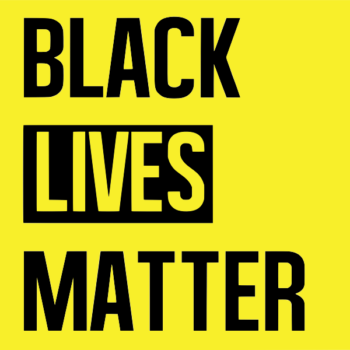
The last couple of weeks of Black Lives Matter protests has also underscored the importance of appropriateness of messaging.
While some brands were quick to put out messages of support, others dithered – making them look bad.
Of the brands that did put out supportive messages, most got the emotion (rousing, empathetic) and style right (adopting the plain black background of the main BLM movement in solidarity), but some were accused of failing on substance. Vague supportive noises were simply not seen as strong enough by many – because to be an ally is to speak up, take a stand, and act, not just stand there mumbling platitudes.
And many more brands fell down on the ethos side: They may have said the right things, in the right way, at the right time, with the right emotion – but their actions behind the scenes ensured they simply weren’t credible. How many brands were called out for their claims to want more racial equity, only to receive the (fair) response: “How many Black people are on your board?” or “What’s the racial pay gap in your company?”
Persuasion can be a technical thing, in other words. You can study the art of rhetoric to develop appropriate strategies and deploy the right tactics. But while you can fool some of the people some of the time, and persuade some people for a while, you can’t fool everyone for ever.
Still, use these four points from Aristotle as a foundation for working out your strategy, and at least you’ve got the basics in place.
Which is probably why pretty much every marketing strategy deck still includes them in some form or other, albeit in agency speak rather than ancient Greek… At my current place we do this quite directly, referring to Wisdom (a form of ethos), Wonder (a form of logos) and Delight (a form of pathos), topped off with a bit of Velocity (one approach to kairos) – as well as a few additions like Atomisation, designed to acknowledge that different audiences (and different media) require different approaches.
There’s a lot more to it than this, of course. Aristotle alone wrote enough for a whole book about it… I’m planning on following up with more on the art and science of persuasion in the coming weeks and months. Watch this space.
I’m not normally one for posting random aphorisms of motivational/aspirational self-improvement (far too journalistically cynical), but this – from Francis Bacon’s Essays, written a good 400 years ago – strikes me as an ideal personal manifesto for someone in my line of business:
“Read not to contradict and confute; nor to believe and take for granted; nor to find talk and discourse; but to weigh and consider… Reading maketh a full man; conference a ready man; and writing an exact man.”
Francis Bacon, Essays
At this time of deep confusion, frustration and rising anger, more reading, consideration, deliberation and self-reflection can only be a good thing.
Guess how I’ll be spending the weekend?
In fact, after an additional period of consideration since I first posted this on LinkedIn, this quote may even have inspired me to start blogging more regularly again. Because I always used to use my old blog – the once-popular, occasionally influential EUtopia – as a way to shape my ideas, and it was often therapeutic, and helpful.
By semi-regularly writing about things that caught my eye in the world of politics, I honed my thinking, identified interesting trends, and – for a period – became what would now be deemed an influencer in the relatively niche space of the Brussels Bubble.
Now, the world of politics is too depressing to tackle direct. But instead I’m increasingly interested in how ideas – and ideologies – are shaped. How different people see the world. How opinions are formed. How a sense of identity is shaped by both internal and external forces.
This is, of course, an extension of my old political blog’s founding aim – and even of its strapline (“In search of a European identity”).
But the new approach – if I stick with this – will be broader. More philosophical, sociological, anthropological, psychological, semiological, theoretical and – with luck – also practical. At least when it comes to my marketing day job.
How are opinions and ideas shaped? How are minds influenced? Why do people believe what they believe?
At this time of widespread and outright denial of seemingly undeniable evidence and facts – the politicisation of actuality, if you will – much what we have assumed about the post-Enlightenment rise of rationality and evidence-led decision-making has been shown to have been mistaken.
Postmodernist concepts of meaning and reality have become the norm – ironically adopted and most successfully pushed by the right-wingers who have long argued against most postmodern conceptions of the world. Barthes’ idea of the death of the author has spread to the point that the *intention* behind any given statement is no longer seen as quite as important as the *interpretation* of that statement by any number of diverse audiences, creating outrage and confusion across the political spectrum.
Structuralism is similarly on the rise as a way of interpreting the world around us – most notably in a growing awareness of deep structural inequalities for women and minorities – leading to a renewed surge of Deconstructionism as these systems are analysed and explained in an effort to reshape society.
All this is reshaping the norms of how we see the world. Which means a return to the old texts of my university days seems overdue – and this time with more attention than I spent in the rapid skimming for essays on Barthes, Derrida, Saussure, Lacan and more during the theory part of my MA, now half-forgotten from some 20 years ago.
These ideas are complex – to unpack them requires heavy reliance on some of the most difficult theorists of the 20th century – so require a lot of the reading, weighing and considering that Bacon advocates.
And as I know from my past forays into blogging, to shape my currently half-formed ideas will also require more writing, *for myself* than I’ve done in a decade.
This is a start.
I’ll get much wrong along the way. Some of my ideas will seem naive to those who know more, wrong to those with different opinions, and pretentious to many (inevitable as soon as you start on theory).
But, for now, I’m not entirely sure what my opinions really are – except that I believe I need to read and write more to fully form them. And as this blog section of my old dust-covered personal site still exists – a legacy of my freelancing days that desperately needs a back- and front-end refresh – I may as well use it.
Should you find these musings, you’re welcome to read and comment as you see fit, but – just like in the early days of blogging – I’ll be writing here primarily for myself.
A (comedy) textbook lesson in why it’s vital to check existing trademarks and uses before launching a new brand, as the latest branch of the US military discovers that Netflix got there first…
Words are important, because language shapes our understanding of the world.
Over time, our choice of language can shatter or reinforce preconceptions – creating feedback loops of frustration or moments of radical shifts in perception that in turn can change society itself, for good or ill.
The same is true about our choice of what to talk about – or to ignore. Sometimes, staying silent is as strong a statement as speaking out. Sometimes, speaking out is a risk.
But for those of us – people or organizations – in a position of privileged security or power, sometimes speaking out is a duty.
The question is, what message will you send about what you see as important in the world in the words you use and the things you choose to talk about? And what good could your words do when you do speak out?
This piece from NiemanLab shows that the choice of language in covering protests about racial inequality is yet another area in which society is unfair and promotes systemic inequities.
This tweet highlights the importance of action as well as words in supporting movements for equality – especially from brands.
This TED Talk is an eye-opening, amusing analysis of how the language we use and the way we frame discussions about racial violence can point to the absurdity and insanity of racist norms.
This call from my current employers for brands to take action as well as show their support was rather good – and there has been action at my place behind the scenes, not shouted about, that has made me rather proud of my colleagues.
A strange book, hinting at some of Rushdie’s later brilliance, but not anywhere near as clever or profound as it seems to think it is.
This quote, from page 141, just as you start to wonder what the point of it all is, pretty much sums up the book:
“I do not care for stories that are so, so tight. Stories should be like life, slightly frayed at the edges, full of loose ends and lives juxtaposed by accident rather than some grand design. Most of life has no meaning – so it must surely be a distortion of life to tell tales in which every single element is meaningful… How terrible to have to see a meaning or a great import in everything around one, everything one does, everything that happens to one!”
Sadly unsurprising, but still anger-making. Being child-free, I’ve mostly been enjoying working from home – but if this *is* going to be the new normal, we urgently need to find ways to make homeworking work for everyone.
This shift away from the office could and should have been a fantastic opportunity to break down barriers to employment for people who have previously struggled to participate in the traditional office-based nine to five – whether due to caring commitments, location, disability, or simple hiring prejudice.
We 100% cannot afford to allow it to reinforce structural inequality or outdated stereotypes.
Very early stages and a limited release so far, but this seems perfectly suited to structured storytelling – because it appears to be a way of doing listicles, which are, let’s face it, just about the most structured type of storytelling there is. Will be interesting to see how this one develops.
To help shape my thinking, I write essays and shorter notes examining the ideas and narratives that shape media, marketing, technology and culture.
A core focus: The way context and assumptions can radically change how ideas are interpreted. Much of modern business, marketing, and media thinking is built on other people's frameworks, models, theories, and received wisdom. This can help clarify complex problems – but as ideas travel between disciplines and organisations they are often simplified, misapplied or treated as universal truths. I'm digging into these, across the following categories - the first being a catch-all for shorter thoughts:

 4/5 stars
 In Japanese, the word for alcohol is sake – which is fairly familiar to English speakers as Japanese rice wine. Ask for sake in a Japanese bar (at least, if you’re obviously not Japanese, like me), and that’s what’ll be delivered, even though the word technically means all types of alcohol.
 2/5 stars