by James Clive-Matthews | 10 Oct, 2025 | Systems & Technology
The rhythms and tone of AI-assisted writing are now pretty much endemic on LinkedIn
And I get why: GenAI copy is generally pretty tight, pretty focused, and flows pretty well. Certainly better than most non-professional writers can manage on their own.
Hell, it sounds annoyingly like my own natural writing style, honed over years of practice…
But people I’ve known for years are starting to no longer sound like themselves.
Their words are too polished, too slick, too much like those an American social media copywriter would use, no matter where they’re from.
None of this post was written with AI.
And despite (because of?) being a professional writer/editor, It took me over half an hour of questioning myself, rewriting, starting again, looking for the right phrase. Doing this on my phone, my thumbs now ache and the little finger on my right hand, which I always use to support the weight while writing, is begging for a break.
With GenAI I could have “written” this in a fraction of the time, and it would have been tighter, easier to follow.
But it wouldn’t have been me – and I still (naively) want my social media interactions to be authentically human to human.
(Of course, the AI version would probably have ended up getting more engagement, because this post – as well as going out on a Sunday morning when no one’s looking, and without an image – is now far too long for most people, or the LinkedIn algorithm, to give it much attention. Hey ho!)
by James Clive-Matthews | 21 Aug, 2024 | Systems & Technology
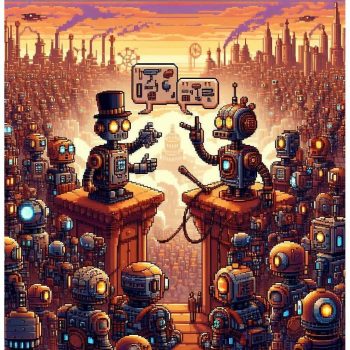 The default writing style of GenAI is becoming ever more prevalent on LinkedIn, both in posts and comments.
This GenAI standard copy has a rhythm that, because it’s becoming so common, is becoming increasingly noticeable.
Sometimes it’s really very obvious we’ve got bots talking to bots – especially on those AI-generated posts where LinkedIn tries to algorithmically flatter us by pretending we’re one of a select few experts invited to respond to a question.
—
Top tip: If you’re using LinkedIn to build a personal / professional brand, you really need a personality – a style or tone (and preferably ideas) of your own. If you sound the same as everyone else, you fade into the background noise.
So while it may be tempting to hit the “Rewrite with AI” button, or just paste a question into your Chatbot of choice, my advice: Don’t.
Or, at least, don’t without giving it some thought.
—
There are lots of good reasons to use AI to help with your writing – it’s an annoyingly good editor when used carefully, and can be a superb help for people working in their second language, or with neurodiverse needs. It can be helpful to spot ways to tighten arguments, and in suggesting additional points. But like any tool, it needs a bit of practice and skill to use well.
But seeing that this platform is about showing off professional skills, don’t use the default – that’s like turning up to a client presentation with a PowerPoint with no formatting.
Put a bit of effort in, and maybe you’ll get read and responded to by people, not just bots. And isn’t that the point of *social* media?
by James Clive-Matthews | 5 Sep, 2020 | Structures & Models
I’m not a stickler for “correct” punctuation, as a rule – except when it comes to apostrophes and the Oxford Comma. This is because punctuation, mostly, is about flow and rhythm, not meaning. Misplaced apostrophes and missing commas in lists can substantially change meaning rather than flow, so their correct placement becomes vital.
This fascinating essay on the evolution of punctuation makes clear that improving flow and clarifying meaning has long been the goal – while also exploring the long history of resistance to punctuation that over-clarifies meaning.
It’s a useful reminder that words are about interpretation as much as intention. Sometimes ambiguity lets greater meaning emerge, building stronger connections with your audience by encouraging them to think more deeply about your words. Sometimes it creates confusion.
The challenge, as ever, is getting the balance right – so focus on the needs of your audience. What will most help them understand your meaning (or meanings)? What will confuse? No one wants to have to try and parse a complex run-on sentence with multiple sub-clauses and dozens of punctuation marks. Even if they do make it through to the end without giving up, your meaning is likely to be lost.
In other words, as ever, when in doubt: Keep it simple.
by James Clive-Matthews | 12 Aug, 2020 | Systems & Technology
PDF: Still Unfit for Human Consumption, 20 Years Later
Punchy title and many good points made. But PDFs are an easy target.
It’s also ironic that in attacking PDFs as clunky, hard to read in a browser, and bad for mobile, the authors have created a 2,400-word monster without a single engaging image or design element to break up the wall of text. And they’re so keen to make their point as robustly as possible that a few too many arguments are piled on top of each other – some rather weaker than others.
The point they miss is format needs to be led by function – the medium isn’t the message, but it does shape it. For some functions, a PDF is a better option than HTML, for others a simple email may be best. Your format should depend on your objective, target audience, and what impression you want to leave them with.
Most importantly, *presentation* also needs to be shaped by format, audience, and objective. Sometimes, better a PDF where the design is fixed than responsive HTML that messes up your careful layout when your key client views it on their ancient IE6-running machine. (Bitter experience…)
If you want to persuade, your thinking and presentation always need to be good, no matter the format. Sloppy content structure, sloppy design and sloppy thinking will undermine your objectives far faster than a PDF ever will.
by James Clive-Matthews | 3 Jun, 2020 | Narratives & Meanings
 2/5 stars
A strange book, hinting at some of Rushdie’s later brilliance, but not anywhere near as clever or profound as it seems to think it is.
This quote, from page 141, just as you start to wonder what the point of it all is, pretty much sums up the book:
“I do not care for stories that are so, so tight. Stories should be like life, slightly frayed at the edges, full of loose ends and lives juxtaposed by accident rather than some grand design. Most of life has no meaning – so it must surely be a distortion of life to tell tales in which every single element is meaningful… How terrible to have to see a meaning or a great import in everything around one, everything one does, everything that happens to one!”
by James Clive-Matthews | 26 Apr, 2020 | Narratives & Meanings
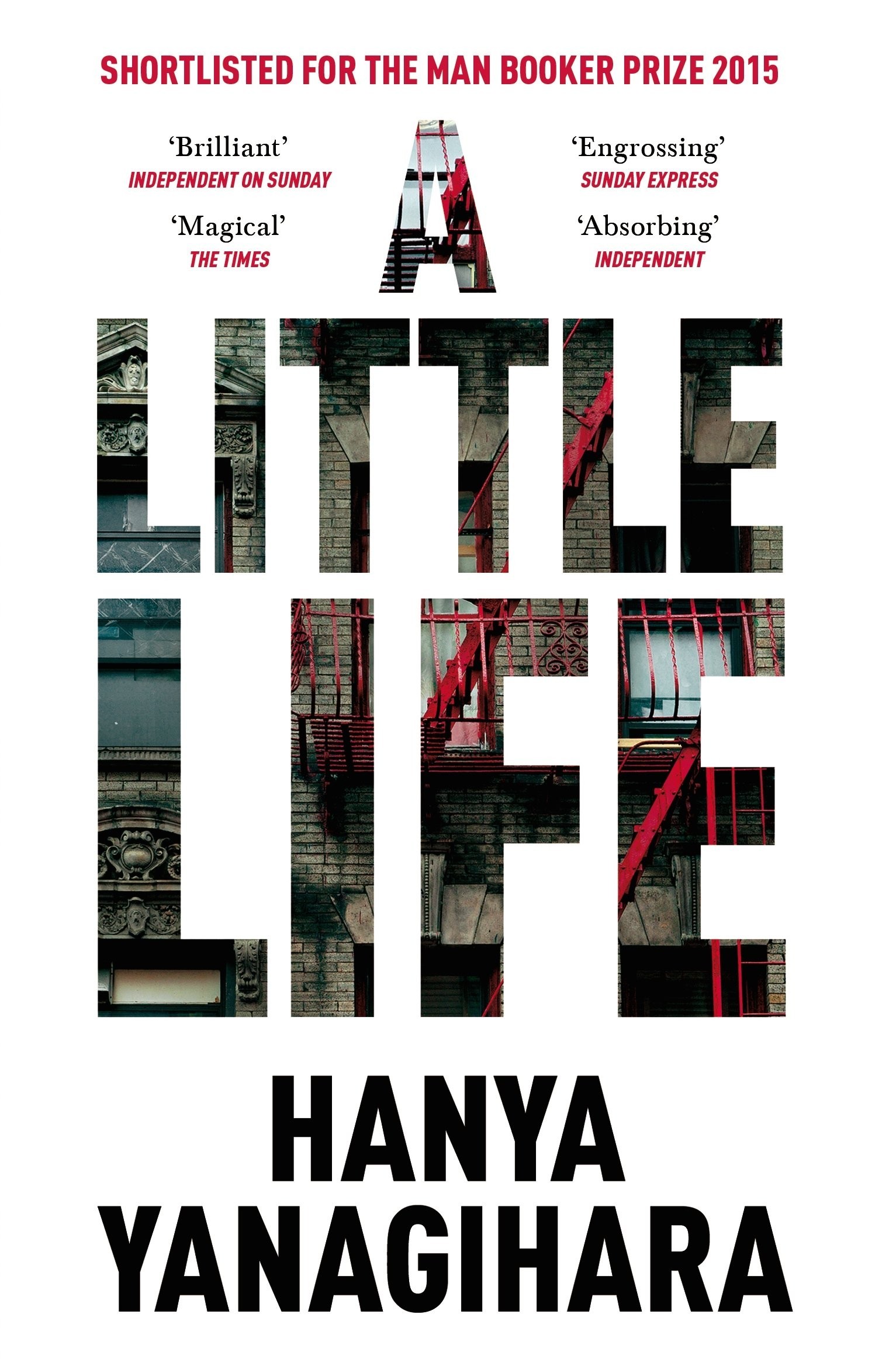 2/5 stars
Very readably written (hence the extra star and bothering to finish it), but for a 700-page character study it’s impressive just how shallow all the characters are.
Every single one – from the principles to the supporting cast – has one defining characteristic, and one only. There’s so little complexity or depth they may as well all be described as deeply as the two characters known throughout only as “black Henry Young” and “Asian Henry Young”.
There’s Withdrawn Trauma, our hero – the life of the title – defined purely by his childhood abuse, and still acting like a child decades later. Selfish, closed-minded, suspicious. Worthy of pity, certainly – but it’s hard to see why so many other characters deem him worthy of so much loyalty for so long, in the face of so much predictable nonsense. Normally after spending 700 pages with a character you empathise with them. Not this guy, despite having winced through scene upon scene of abuse and suffering.
There’s the three friends, Compassion (who, at least, briefly shows signs of developing some complexity where Compassion briefly turns to Conflicted), Obvious Unrequited Secret Admirer, and Architect (supposedly one of the core group of four friends at the heart of the story, but with no personality beyond his career).
There’s also Ineffective Father-figure, always wanting to help but never quite knowing how. There’s Doctor, who inexplicably keeps staying on call 24/7 – unpaid too, in America! – for one of the most difficult, selfish patients anyone could ever hope not to encounter. And then there’s Violent Rapist, Manipulative Rapist, Psycho Rapist, and a succession of other anonymous rapists undeserving of description.
And it’s still astonishing, 700 pages later, that a woman was able to write such a long novel without a single substantive female character.
Plus, it’s incredibly predictable. In the final quarter I found myself actively laughing as it unfolded, because everything was so obvious. No surprises at all.
But worst of all, this is a novel that exists to smother the concept of hope for change and redemption. To confirm the worst suspicions of the traumatised and suicidal. To encourage the suicidal to go through with it. It’s repeated message is that things don’t get better – at least, not for long. It’s Keynes’ “In the long run we’re all dead” in brutal, unforgiving, waffling novel form.
It contains nothing positive, says nothing new or substantive, is packed with stereotypes, and, considering the subject matter, is deeply irresponsible.
Tempted to take that second star off now, TBH.
by James Clive-Matthews | 25 Apr, 2020 | Marginalia
Finally, some good news!
Word is going to start showing double spaces after a full-stop/period as a mistake, preventing the daily howls of frustration from copy-editors worldwide who are continually having to find/replace the damned things.
(And yes, I know lots of people were taught to type with a double space after a full-stop. I was too – because I learned on a typewriter, which is where this came from: to improve the kerning and create more readable text. Computers / word processors are rather more sophisticated than typewriters – they sort the spacing out for you. This means using a double space on a computer actually *increases* layout issues – especially when justifying text – so achieves the precise opposite of what people who do this think it does.)
I’m fairly flexible as an editor most of the time, but along with *always* advocating the Oxford Comma, killing post-period double spaces is one of the few editing hills I’m prepared to die on.
by James Clive-Matthews | 22 Feb, 2020 | Marginalia
Complaining about nonsense business-speak may be futile, but this piece – a review of a memoir about life in startup land – does a good job of summing up why spewing out business bullshit is not just intellectually offensive, but actively harmful:
“I like Anna Wiener’s term for this kind of talk: garbage language. It’s more descriptive than corporate speak or buzzwords or jargon. Corporatespeak is dated; buzzword is autological, since it is arguably an example of what it describes; and jargon conflates stupid usages with specialist languages that are actually purposeful, like those of law or science or medicine. Wiener’s garbage language works because garbage is what we produce mindlessly in the course of our days and because it smells horrible and looks ugly…
“But unlike garbage, which we contain in wastebaskets and landfills, the hideous nature of these words — their facility to warp and impede communication — is also their purpose. Garbage language permeates the ways we think of our jobs and shapes our identities as workers. It is obvious that the point is concealment; it is less obvious what so many of us are trying to hide.”
In short, if your ideas are good, don’t bury them in garbage. If they’re not, the presence of garbage is a good indicator.
by James Clive-Matthews | 17 Feb, 2018 | Marginalia
 4/5 stars
Borderline five star for me, this. Ticks a huge number of the boxes for books I love: Lyrically-written magic realism, unreliably narrated from multiple perspectives, set in the 16th century (flicking between Medici Florence and the court of Akbar the Great), weaving together elements of real history, fiction, fable, philosophy, and inventive ideas.
My issue with it is hard to pinpoint, but throughout I had a niggling dislike of a book whose writing and concept I loved. I think it’s probably to do with how every single female character is an archetype: the whore, the jealous wife, the bitter mother-in-law, the spurned lover, the unattainable object of desire, the witch, the imaginary ideal.
This is, of course, thematically kind of appropriate for the story – which revolves around the romanticised fiction of a mythical woman’s life – but it still grated. The inner workings of the mind of the Mughal emperor are so interestingly explored, yet none of the women in this novel seem to have any layers of complexity to them at all.
Is that just because the women are presented through the eyes of the men in the novel, or because Rushdie lacks the ability to create a convincing female character? It’s the first book of his I’ve read (have been meaning to get around to him for ages), so hard to judge. But I’ll still certainly try more of his stuff after this.
by James Clive-Matthews | 5 Jul, 2014 | Marginalia
We still don’t know why, though…
“There are many more listicles of length 10 published compared to other numbers. This is primarily because BuzzFeed is selling the 10-length listicle to partner brands, such as the Michael J. Fox Show, Nordstrom Topman, and Buick. The second most popular length is 15, followed by 12. Listicle length drops off quite rapidly in the 20’s, although surprisingly, lengths 11-21 are far more popular than those under 10…
“If we look the bar chart by audience score we see a completely different picture — odd number length listicles… tend to have a higher audience score on average, where in our dataset, the number 29 tends to have an advantage over the rest.”
