by James Clive-Matthews | 5 Aug, 2024 | Systems & Technology
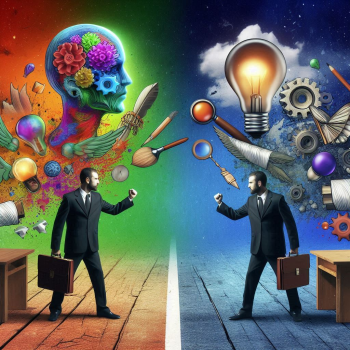 Given the music industry’s track record of building successful cases for unauthorised sampling and even inadvertent plagiarism (aka Cryptomnesia, as with the George Harrison ‘My Sweet Lord’ lawsuit back in the 70s) this will be the one to watch.
The music industry’s absolutist approach to copyright is a dangerous path to follow, however. How can you legally define the difference between “taking inspiration from” and “imitating”? What’s the difference between a GenAI tool creating music in the style of an artist, and an artist operating within a genre tradition?
*Everything* is a mashup or a reference, to a greater or lesser extent – that’s how culture works. We’re all standing on the shoulders of giants – as well as myriad lesser influences, most of which are subconscious. Hell, the saying “there’s nothing new under the sun” comes from the Book of Ecclesiastes, written well over 2,000 years ago.
Put legal restrictions on the right of anyone – human or bot – to build or riff on what’s come before, and culture risks hitting a dead end.
So while I have sympathy with artists’ concerns, the claim that GenAI could “sabotage creativity” is a nonsense in the same way claims that the printing press or photocopier could sabotage creativity are. Creativity is about the combination of ideas and influences and continual experimentation to find out what works – GenAI can help us all do this faster than ever. If anything, this should help increase creativity.
What *does* sabotage creativity is short-termist, protectionist restrictions on who’s allowed to do what – exactly like the ones these lawsuits are trying to impose.
by James Clive-Matthews | 25 Nov, 2020 | Structures & Models
What’s your preferred approach for coming up with good ideas? This podcast from The Accidental Creative suggests there are four steps to true creativity:
1) Preparation
2) Incubation
3) Illumination
4) Verification
While everyone seems to focus on that Eureka moment of illumination / inspiration (I tend to get them in the middle of long walks, or while reading a totally unrelated book), and agencies often focus on the first (the mythical perfect brief), the second and fourth of these are actually the most vital.
The best creative ideas need deliberation, interrogation, to be stepped away from and ignored for a while, then returned to with fresh eyes. They need to be poked, questioned, critiqued, bounced off other people, sense-checked, confirmed as not having been done before – all that good due diligence of verification. But creativity can’t be rushed.
At least, that’s the theory.
Sometimes, a ridiculous deadline is *exactly* what we need – even if it’s one of our own making, caused by dawdling on stage two until the last possible moment, or prevaricating with other, less important tasks. I tend to do that more often than I’d care to admit.
But then, we’re all different. The truth is creativity doesn’t follow a set formula or. If it did, it wouldn’t be creative. What it needs is the right mindset.
by James Clive-Matthews | 14 May, 2020 | Marginalia
As an ex-journo I’ve always put more emphasis on substance than style in marketing, but that’s not to deny style’s essential role in making the substance shine. The very best content (and advertising) has always had a perfect balance between both. The best copy in the world won’t do anything for you if it doesn’t stand out and get noticed by the right audiences.
Now, however: “Chrome is setting the thresholds to 4MB of network data or 15 seconds of CPU usage in any 30 second span”.
I get the thinking behind this – both for consumers (to save their data/battery) and for Google (to re-emphasise the importance and value of data-light search marketing) – but it feels a decade late. Modern phones, and most data packages, surely won’t even blink at a meagre 4 megs – and 5G will make it a nothing.
A good digital ad is a rare thing (most are, let’s face it, either annoying or ignored), but many of the best are creative, interactive experiences that maximise the potential of the medium. This means they need more bandwidth to make better user experiences.
So while I may focus on organic distribution and the message before the medium, I do worry this restriction of ad options will create a blander, less creative digital future. At least give users the choice to turn this on or off.
by James Clive-Matthews | 26 Dec, 2019 | Narratives & Meanings
Using the Christmas break to catch up on a backlog of reading, and this passage on how reading inspires creativity (because innovative ideas are usually derivatives with enhancements) is the perfect reminder of why I should do this more often:
“When you read you might hear voices of the dead that make your hair stand on end, or that trigger in you a thought analogous to the founding thought and prompt you to write a response that grows from the times you live in, and differs from the earlier text simply because times and thinking and words have changed… You may see new things in the earlier text, and so give something back to it.”
Want to be more creative in the new year? Read more. Watch more. Listen more. Consume more. Because the greater the range of sources of inspiration you expose yourself to, the more varied and interesting your output.
Do “what the best poets do, trying to think *behind* the words… whether those words come from a newspaper, from an essay, from a hubbub on the street…”
A good new year’s resolution, that: Think *behind* the words.
by James Clive-Matthews | 7 Dec, 2019 | Systems & Technology
“In the future, we can expect computers to produce literature different from anything we could possibly conceive of” – fascinating piece about the still nascent art of AI creativity, this.
There’s nothing to overly worry us human creatives so far, based on the examples on show here – unless you’re a fan of surrealism and the avant garde, that is… Still, there’s a lot of promise. After all, “A machine that can caption images is a machine that can describe or relate to what it sees in a highly intelligent way.” Give this tech time, and it will get more sophisticated, and harder to tell from human creative.
The potential to use AI to reinterpret disparate inputs into new creative forms – poems based on images, an experimental novel based on the inputs of GPS from a road trip – is definitely the kind of thing to get creative directors’ creative juices flowing. AI can already write, paint, compose music and create photo-realistic images. How can we deploy it to boost human creativity?
Most brands know what they look like, what their tone of voice is. If you could programme an interpretative AI with your brand’s key attributes and ask it to reinterpret the world around it, what would the results be?
The answer might be meaningless nonsense, but it sure would be fun to find out.
