by James Clive-Matthews | 2 Apr, 2016 | Marginalia
 5/5 stars
A short, readable book, well worth a read for anyone interested in the media – specifically how to tackle the ongoing challenge of funding news, and the role of journalism in democracy.
The solution proposed for the ongoing challenges of monetisation and the maintenance of independence from vested interests is an interesting one. Plausible too – if governments can be persuaded that news is a public good, that is.
And even if you don’t buy in to the news as public good argument that underpins the entire thesis, along the way come a number of interesting – often surprising – nuggets about the media industry across various countries that make this worth a look by themselves. I was particularly intrigued by the finding that an increase in the number of newspapers leads to a decrease in democratic engagement – initially counterintuitive, but makes perfect sense once explained.
by James Clive-Matthews | 17 Jan, 2016 | Narratives & Meanings
 5/5 stars
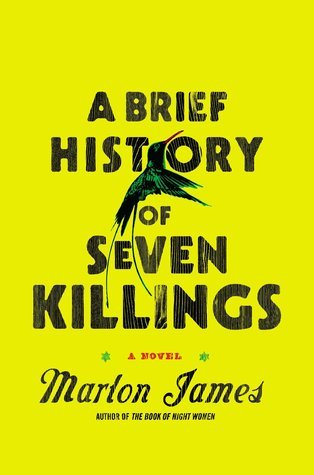
In the acknowledgements, James describes the book as “A novel that would be driven only by voice.” It’s an excellent description. Multiple characters, multiple perspectives, but each with a such a distinctive written style you can tell whose chapter it is even when they’re unnamed.
On starting, I was told it’s like James Ellroy, and it really is. Complex in places, but fairly easy to keep track, even without knowing pretty much anything about Bob Marley. But unlike Ellroy, (or, at leasy, the Ellroy I’ve read, which can get a bit monotonous after a while), the multiple voices and short chapters keep the pace fast, even when very little is happening. And the atmosphere. Excellent stuff.
Not my usual sort of thing, but may well make me look out more novels that aren’t my usual sort of thing.
by James Clive-Matthews | 3 Jan, 2016 | Narratives & Meanings
 4/5 stars
I’m not convinced that Mishima really works in translation, as it’s all about the beauty of the language he uses rather than the narrative. For this book in particular, with the concept of beauty at its heart, this is especially the case, and this translation was at times a little too clunky to work. In places terrible, in fact.
That said, I enjoyed it. The introduction compares it to Dostoyevsky, and that’s a fair one – strong hints of Turgenev as well.
The book sums itself up nicely, though again this would likely work better in the original Japanese (I mean, “adumbrated”? Really, translator?):
“If one examined the beauty of each individual detail… the beauty was never completed in any single detail… for each detail adumbrated the beauty of the succeeding detail. The beauty of the individual detail itself was always filled with uneasiness. It dreamed of perfection, but it knew no completion and was invariably lured on to the next beauty… Such adumbrations were signs of nothingness. Nothingness was the very structure of this beauty”
by James Clive-Matthews | 8 Mar, 2015 | Narratives & Meanings
 4/5 stars
Finally got through the whole thing, and am frankly not much the wiser, and still not sure how to explain what it’s about.
A plot made of innumerable MacGuffins and deliberately incoherent sidetracks, writing that is at once beautiful in its flow and incomprehensible in its meaning, packed with schoolboyishly deliberate attempts to shock through the gamut of sexual taboos (paedophilia, coprophilia, incest, bestiality) and postmodernisms piled so densely on top of postmodernisms that you can’t help feeling that Pynchon was, at least in places, taking the piss. (Hell, the plot centres on magical erections, so…)
Did I enjoy it? For the most part, and in places I loved it. Did I understand it? Well, I think I get the overarching point, which is something.
But as much as I like “difficult” books and have enjoyed every Pynchon I’ve read so far, (including the much-maligned Vineland), there’s something to be said for plots that can be followed. Mason & Dixon is similarly episodic, yet works as a narrative as well as a concept. Against the Day has significant flaws, but its multiple narratives are at least internally coherent and enjoyable to read. V becomes hard to follow in places, like reading while drunk, but always pulls you back.
Gravity’s Rainbow, meanwhile, works as a concept, but I’m not convinced that it does as a novel. It’s simply too sprawling, too vague, too unconcerned with helping the reader to keep up, or in delivering a satisfactory resolution. Which is, of course, part of the point that the book’s trying to get across about the meaning and nature of life, so I guess I shouldn’t complain.
by James Clive-Matthews | 31 Dec, 2014 | Narratives & Meanings
 5/5 stars
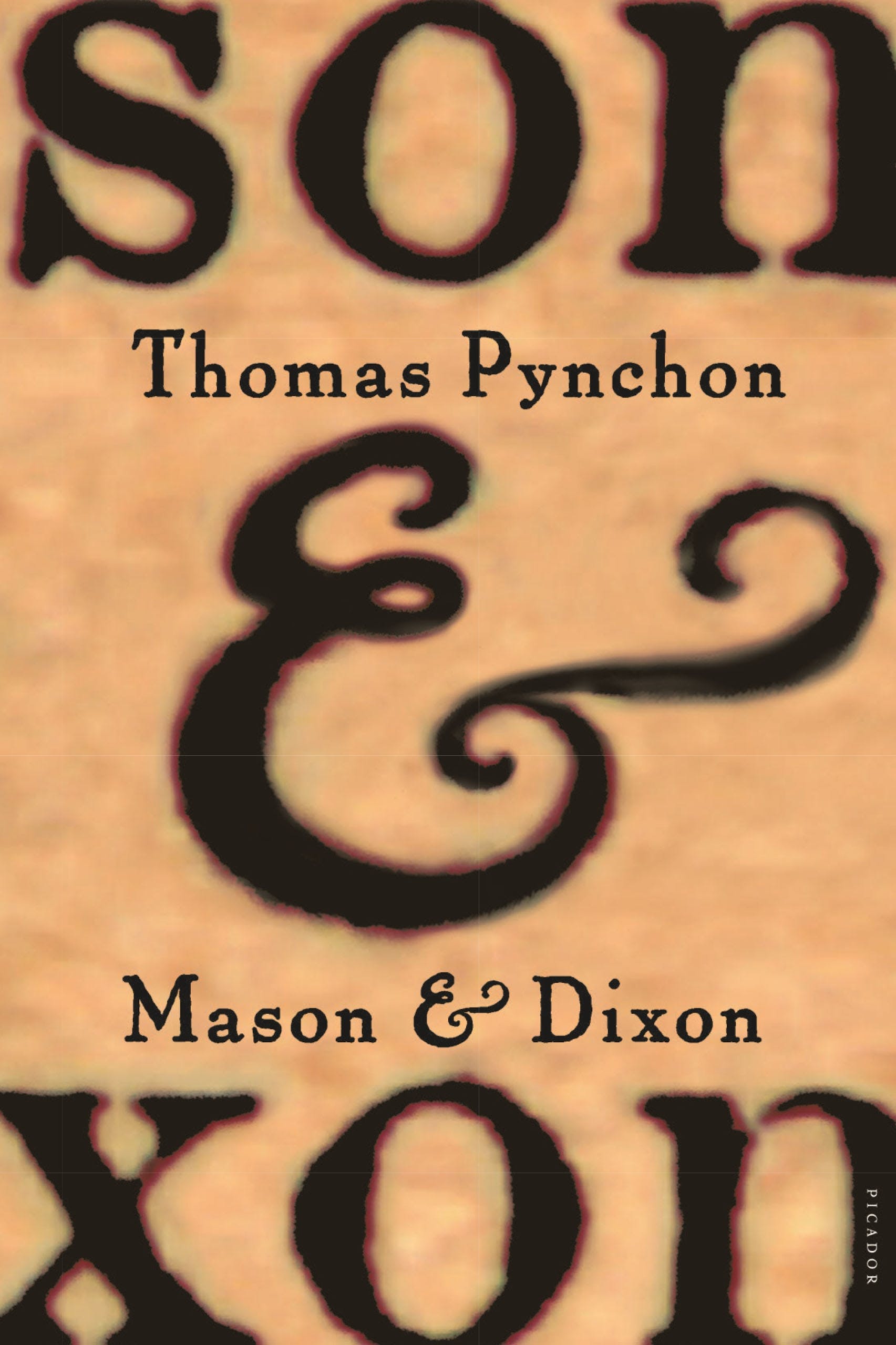
As ever with Pynchon, I loved it even while I struggled to get into it at first. Episodic, confusing, beautifully written, dreamlike, near impossible to follow, and definitely deserving to be re-read – it was only with a passage on page 610(!) that my inability to keep track of what it all meant started to make sense, as Mason speculates to his companion about the purpose and meaning of the titular duo’s lengthy mission into the American wilderness:
“None of this may be about either you or me. Our story may lie rather behind and ahead… never here in the Present, upon the Line, whose true Drama belongs to others… and when ’tis all done I shall only return to Shapperton, no wiser, and someday wake up and not know if any of this’ happen’d,’ or if I merely dream’d it, even this very moment, Dixon, which I know is real…”
Dixon’s response to this may be that of many when approaching this book: “Oh dear…?”
It certainly won’t be to everyone’s taste, but a postmodern 18th century pastiche was never going to be. Hell, if the first sentence hasn’t put you off, you’ve got no excuse not to make it to the end, I say. At which point you’ll want to return to try it again, to try and understand the bits you missed the first time around:
“Snow-Balls have flown their Arcs, starr’d the Sides of Outbuildings, as of Cousins, carried Hats away into the brisk Wind off Delaware,-the Sleds are brought in and their Runners carefully dried and greased, shoes deposited in the back Hall, a stocking’d-foot Descent made upon the great Kitchen, in a purposeful Dither since Morning, punctuated by the ringing Lids of various Boilers and Stewing-Pots, fragrant with Pie-Spices, peel’d Fruits, Suet, heated Sugar,-the Children, having all upon the Fly, among rhythmic slaps of Batter and Spoon, coax’d and stolen what they might, proceed, as upon each afternoon all this snowy Advent, to a comfortable Room at the rear of the House, years since given over to their carefree Assaults.”
Glorious stuff.
by James Clive-Matthews | 28 Sep, 2014 | Narratives & Meanings
 3/5 stars
Interesting, but frustratingly messy in places.
Bookended by the author’s personal experiences hunting for Genghis’ final resting place, and explaining the persecutions the Mongol people have experienced in the last century or so along the way, the majority of the book is a fairly straight narrative of the rise and fall of the Mongol Empire, constantly at pains to point out that they weren’t a bunch of bloodthirsty barbarians.
As someone new to the subject, this was all interesting enough – but a) I was reading this to understand the post-Mongol impact on the world (as promised by the title) , not how they achieved power, and b) there was consistently far more emphasis on the eastern branch of the Empire in China than on the Middle Eastern, Indian or Russian wings.
This seems especially odd considering that:
- the author emphasises how much of the Mongols’ innovations in China were deliberately suppressed after their fall,
- the Indian branch lasted the longest,
- the Middle Eastern angle could have surely been tied in to the instabilities and rivalries in that region that have lasted to the present day, and
- that he starts and ends with personal accounts of Soviet repression of Mongol memory, implying that there remains some deep Russian connection.
None of these things are elaborated on at any length, which is a real shame, as the author is mostly good on his supposedly central thesis of how important the Mongols were on the creation of the modern world (although he is decidedly shaky on specifics in some areas).
I ended up left with the distinct impression that the book the author wanted to write was about the life, culture and history of the Mongol people, but his publisher insisted on something a bit more sellable, so tacked on the modern world pitch. The two parts may well have worked better as separate books.
by James Clive-Matthews | 14 Jun, 2014 | Structures & Models
 3/5 stars
Foucault’s Pendulum remains one of my favourite novels, and as this is another conspiracy theory piece from Eco I was looking forward to it. The unrelenting antisemitism (and general racism) of the central character was unpleasant, but bearable – I’d been warned what to expect – but still stumbled to a halt halfway through on my first attempt, mostly due to frustration with the amnesia conceit and the inconsistently intermittent interruptions of the mysterious narrator, which occasionally seemed to forget they were meant to be the narrator rather than a diary entry.
I’ve since restarted, and have been enjoying it more on the second attempt. Not one of Eco’s best, but evocative of the time and place – a grotty, unpleasant time and place, from his portrayal, and as such a refreshing alternative to the usual depiction of late 19th century Europe as some kind of golden age.
Finally finished, after another long break. Dense with information and impressive research, it’s an interesting fictionalised history. But I’m still unconvinced by the contrived structure – the pointless addition of a decidedly intermittent narrator, the found diary conceit, and (most of all) the split-personality amnesiac concept that forms the core of the book’s narrative reveal. Why did Eco think this necessary? For me, it merely distracted from the substance with unnecessary, not very well done style.
by James Clive-Matthews | 10 May, 2014 | Structures & Models
 3/5 stars
Judt was obviously a master, as anyone who’s read even parts of Postwar can attest. His illness and early death was tragic. The idea for this book – to capture some of his knowledge and ways of thinking before the end – was a good, if macabre, one.
The trouble is, it’s an extended interview where the interviewer doesn’t seem to know when to shut up and let the interviewee speak. Timothy Snyder may well be a good historian in his own right (I don’t believe I’ve read any of his stuff, so can’t tell), but as an interviewer he leaves much to be desired – acting like an eager student trying to please teacher by showing off his own knowledge rather than shutting up and learning from the teacher as he’s supposed to do.
This gets particularly frustrating when Snyder keeps trying to divert Judt onto topics – such as the repeated questions about impact of Judt’s Jewish heritage on his upbringing and thought processes – that Judt continually tries to politely dismiss as largely irrelevant. Judt himself repeatedly points out that he had a more complex intellectual background than merely being a left-wing Jew – to try and shoehorn him into such a stereotype pushes the book dangerously close to being predictable, which is the last thing I’ve come to expect from Judt’s work.
That said, there’s still some fascinating stuff in here – but it needed a tighter edit, largely to remove Snyder’s voice and some of the more rambling digressions, and let Judt’s voice and opinions come through more clearly.
