by JCM | 5 Apr, 2020 | Marginalia
Behind the Economist paywall, sadly, but this is the key point – always worth remembering beyond the current crisis, and something a number of political leaders need to learn:
“Recommendations that sound more advisory than mandatory seem to presume rational adults will do the right thing with accurate information. The central insight of behavioural economics is that they do not…”
Clarity of messaging is more vital now than ever – it’s become a literal matter of life and death. “Practice social distancing” is vague, confusing, advisory. “Stay home” is clear, unambiguous, mandatory. Guess which has worked better?
This is also a lesson we should take with us after this crisis has passed: If you want to be understood, make your point as clearly and plainly as possible. Otherwise you have no one to blame but yourself when people don’t pay attention to what you’re telling them – or, worse, start believing simpler-sounding misinformation.
by JCM | 3 Apr, 2020 | Marginalia
Despite loving the near limitless possibilities of digital publishing, my first love is books. I’ve written two, reviewed them, and even worked at a book publisher for a while. Part bibliophile, part tsundoku, I buy books almost obsessively – and usually have dozens on the go at any one time. My flat could easily be mistaken for a secondhand bookshop.
So it’s probably unsurprising that I’m a big fan of the idea of collecting previously ephemeral digital content into book form to extend its (literal) shelf life. Great to see the New York Times agrees:
“Reporters leave a ton in their notebooks… The book form really gives us a chance to expand the journalism and include a lot more of the detail and texture that is never going to make it into the daily report.”
More brands – especially B2B ones – should consider following the NYT’s lead and mine their content archives to curate thematic ebooks (and even physical ones) of their best pieces.
Repackaging ideas in book form offers opportunities to expand and elaborate on points in more depth in the perfect lean-back format. Because there’s nothing better than a book for encouraging deep engagement with and deliberation over someone else’s thinking. If you’re selling ideas, the book is the perfect format.
by JCM | 27 Mar, 2020 | Marginalia
Cut to the chase about halfway down, and the potential benefits of remote working on company culture and productivity here are pretty accurate, based on my experience of working in a globally distributed team at Microsoft and as a freelancer back in the day.
These benefits don’t just happen by magic, though – it takes concerted effort to transition to and encourage new ways of working, and some people will find this shift harder than others. They’ll need support, and we’ll all have a responsibility to help our colleagues make the switch if this is going to work.
They say it takes 60 days to form new habits… Will the lockdowns so many of us are experiencing last long enough for these new ways of working to bed in to our working culture? And when we do finally return to work properly, will we be able to bring their benefits back with us?
by JCM | 12 Mar, 2020 | Marginalia
Surprising wisdom from Chris Rock, which seems particularly pertinent as we reluctantly go into social distancing / self-isolation mode:
“Naive people will tell you, ‘There’s always tomorrow and you’ll always get another chance.’ The smart people will tell you, ‘You probably get three chances at anything in life, and you’ll probably be busy for the first two chances. When you get that third one you better be f—ing ready.'”
There’s going to be a bunch of missed chances over the next few weeks. But we’ll also all have plenty of time to prepare for future ones: Time to read that book, take that online course, learn that skill, do those push-ups, and generally get ready for that next chance once life returns to normal.
(More clichéd LinkedIn style than my usual posts, this – but years of life as a freelancer taught me the importance of maintaining a positive mindset and future-focus when working from home. Get a constructive hobby, and make the most of the extra time saved by not commuting to pick up new knowledge and skills. It’s a major benefit, used well.)
by JCM | 11 Mar, 2020 | Marginalia
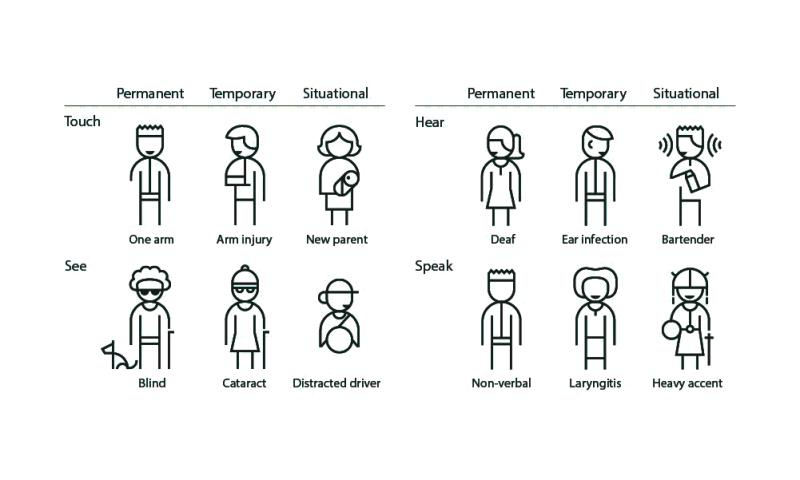 I’m not a fan of user personas. They’re meant to remind us of alternative perspectives, but tend to become either so specific as to make us blinkered, or so single-minded as to be unrealistic.
This piece does a good job of summarising how this fallacy of assuming we can identify user archetypes came about, how it misses so much vital nuance and complexity, and why we need to shake it off if we’re ever going to meet the needs of real users via a more effective, inclusive design approach to developing a better customer experience.
by JCM | 29 Feb, 2020 | Marginalia
This is a decent short piece in Inc. about Oprah Winfrey’s podcast strategy – basically mining her archive of TV shows for audio highlights – with some simple yet sensible advice for this age of ephemeral experiences:
“Good content is good content. No matter how old it is… Get creative and find ways to adapt that content to be relevant for… new audiences, and put it in front of them.”
That “get creative” part is key, though. Older content is likely to only have nuggets of still-relevant gold that will need careful mining and potentially refining for different formats, audiences, and purposes.
Remember: Not everything has to be explicitly about today’s perceived front-of-mind issues to be relevant and interesting. There’s a reason Dale Carnegie continues to be a bestselling author in the business books category 75 years after his death. Good insights are good insights.
Approached with the right mindset, old white papers, transcripts of conference speeches, case studies, surveys – even LinkedIn posts – could become a treasure trove of inspiration for creating something similar but different to engage new people on new platforms and in new formats.
Content marketing is, after all, about effective presentation of the content as well as the brand. And content ultimately succeeds based on *its* content – ideas and their presentation.
And there is *always* more than one way to present an idea.
by JCM | 22 Feb, 2020 | Marginalia
Complaining about nonsense business-speak may be futile, but this piece – a review of a memoir about life in startup land – does a good job of summing up why spewing out business bullshit is not just intellectually offensive, but actively harmful:
“I like Anna Wiener’s term for this kind of talk: garbage language. It’s more descriptive than corporate speak or buzzwords or jargon. Corporatespeak is dated; buzzword is autological, since it is arguably an example of what it describes; and jargon conflates stupid usages with specialist languages that are actually purposeful, like those of law or science or medicine. Wiener’s garbage language works because garbage is what we produce mindlessly in the course of our days and because it smells horrible and looks ugly…
“But unlike garbage, which we contain in wastebaskets and landfills, the hideous nature of these words — their facility to warp and impede communication — is also their purpose. Garbage language permeates the ways we think of our jobs and shapes our identities as workers. It is obvious that the point is concealment; it is less obvious what so many of us are trying to hide.”
In short, if your ideas are good, don’t bury them in garbage. If they’re not, the presence of garbage is a good indicator.
by JCM | 19 Feb, 2020 | Structures & Models
 3/5 stars
A strange book. Well written, entertaining, but largely pointless – and doesn’t deliver on its core promise of explaining *how to use* rhetoric more effectively.
Instead, its basic argument consists of the astonishing revelation that:
- language can be used to make a case that’s designed to persuade
- people have been doing this for a long time
- people used to study the techniques involved and gave them all fancy Greek names
- people no longer use the fancy Greek names but still use the techniques.
All of which is illustrated with examples, including deconstructions, showing what techniques were used.
So far, so good – but that’s a *what*, not a *how*. As such, so what?
This book starts out as a plea for the restitution of rhetoric as a field of study – but then fails to follow through with a convincing case to do so because it never manages to demonstrate the practical application of an understanding of rhetorical theory. About halfway through there’s even a line that tells us to ignore the detailed analysis and use of rhetorical terminology via the double dismissal:
“in the end, these distinctions… can safely be left to the theorists.” (p.131-2)
If those distinctions can be ignored, what is the benefit of learning *any* of the terminology of rhetoric that is scattered throughout the book? It seems to be just to make you look clever by spouting archaic Greekisms.
(That question was, of course, a rhetorical device.do I know the *name* of the rhetorical device? No. But I knew how to deploy it. I rest my case.)
Because the problem is that while Leith shows how an understanding of rhetoric can be used to analyse words and see how arguments were constructed, at no point does he coherently illustrate how to use this knowledge in a practical way to construct arguments of your own. Nor does he provide a single example of how anyone has done so – beyond references to great speakers of the past reading lots of past great speeches, which is not the same thing at all.
All of which means that, while this is a perfectly entertaining enough book, I’ve come out of it *less* convinced that there’s any point in trying to memorise what hendiadys or hypallage, pleonasmus or polysyndeton are. All I need to know is that I know how to use them. And this book, despite giving plentiful examples of how these techniques have been used by other people, is no practical use on that front at all.
In short, if you want to learn more about how to write or speak in a more convincing rhetorical style, this may be good to point you to some of the greats of the past so you can go and read their stuff (as long as you’re happy focusing primarily on British and American greats, that us), but that’s about it.
And, most importantly, that’s not what the dust jacket promises.
by JCM | 15 Feb, 2020 | Narratives & Meanings
 3/5 stars
Parts of this were very good, and the writing mostly flows well. Parts were a bit confused – or confusing, or both.
Some characters are fully fleshed out, with clear story arcs that make sense. Most flit in and out with little clear purpose beyond serving as an excuse to explore some aspect of Zambian life.
All this is fine enough, as it goes, as the whole book is effectively a montage of snapshots of loosely intertwined lives designed to give a sense of the country’s own confused identity – but it’s a montage building to something that feels unfinished.
Unless that’s the point – which, in part, I think it is. But if so it’s a bit frustrating for the reader who’s just invested all that time reading the best part of 600 pages, even if it may well be thematically appropriate.
by JCM | 27 Jan, 2020 | Marginalia
 Great to see a copy of the Culture Trip magazine in the flesh on Eurostar. A slick, matt finish cover and perfect-bound spine screams quality, while the prominence of adverts for other Culture Trip formats (and lack of much other advertising) reveals this to be a piece of brand awareness marketing more than just a shift to a new, retro format for an established digital publisher.
Getting a travel magazine on Eurostar is quite the distribution coup as well – finely targeted to a (likely) receptive audience.
I’d not be surprised to see more digital ventures going physical for ad hoc print editions like this in the coming years. The shift towards longform and digital editions, the revival of vinyl, plus the growth in sales of physical books and independent publications suggests a rising demand for tactile, physical content formats alongside the convenience of digital.
With good design and production values, a print magazine or book can be something to both treasure and show off – a powerful, prestigious tool for driving brand loyalty.
Don’t get me wrong – digital is great. But every format is worth considering in the marketing mix – if it’s got potential to drive results rather than being mere vanity.
by JCM | 18 Jan, 2020 | Systems & Technology
More on the death of the cookie. Good (likely accurate) quote here too:
“the next two years will be characterized by ‘madness and transition’ as the [media] industry devises an entirely new infrastructure”
FWIW, I’m pretty sure that, in the long run, this will be a good thing for everyone. Adtech has long promised more than it really delivered, while programmatic ads are really little better than spam – microtargeting claiming sophistication, but really just encouraging lowest-common-denominator, purely transactional digital nagging.
And because hardly anyone *willingly* clicks on those adverts, bounce rates on accidental clicks are mad high, making it harder to spot which things are actually performing well, so hiding potential opportunities to identify trends that could help you boost organic growth.
We’ve long needed more sophistication in digital advertising – this will hopefully be the kick up the backside that sees this start to happen.
by JCM | 15 Jan, 2020 | Systems & Technology
This move will reshape the internet, and change how publishers, advertisers, brands and marketers operate.
“View-through attribution, third-party data, DMP and multitouch attribution will be ‘dead’ under the proposals. We’re now facing a world with significantly less measurement and targeting.”
What does this mean? Initial thoughts:
- Less audience targeting from 3rd party cookies => more need for audience insights from other data sources. Owned web properties will become more important.
- Google’s stranglehold on advertising will tighten, as Chrome will track engagement metrics instead.
- Throwing money at supposedly targeted distribution will stop appealing to advertisers, many of whom are already suspicious of the purported ROI of such campaigns.
- Digital ads we see will become less obviously personalised to us.
- Instead, marketing will need to work on its merits – attracting audiences via sustained campaigns based around creative concepts rather than algorithms.
- Yet another revenue source will be cut off for publishers, making it harder than ever to fund traditional journalism.
- This will in turn either open up more gaps for niche non-profit publishers (and brands) to fill, or lead to a decline in the amount of content produced.
Interesting times…
by JCM | 26 Dec, 2019 | Narratives & Meanings
Using the Christmas break to catch up on a backlog of reading, and this passage on how reading inspires creativity (because innovative ideas are usually derivatives with enhancements) is the perfect reminder of why I should do this more often:
“When you read you might hear voices of the dead that make your hair stand on end, or that trigger in you a thought analogous to the founding thought and prompt you to write a response that grows from the times you live in, and differs from the earlier text simply because times and thinking and words have changed… You may see new things in the earlier text, and so give something back to it.”
Want to be more creative in the new year? Read more. Watch more. Listen more. Consume more. Because the greater the range of sources of inspiration you expose yourself to, the more varied and interesting your output.
Do “what the best poets do, trying to think *behind* the words… whether those words come from a newspaper, from an essay, from a hubbub on the street…”
A good new year’s resolution, that: Think *behind* the words.
by JCM | 19 Dec, 2019 | Systems & Technology
Everyone’s going to be sharing this NYT piece on location data – and rightly so. Scary stuff, with some superb journalism backed up with excellent presentation that should make the telecoms, tech and advertising industries (as well as regulators) all take a good hard look at themselves.
But the real challenge (and huge opportunity) is finding ways to enable safe sharing of this kind of data without impeaching on privacy or personal security. Because – even anonymised – this kind of data can lead to insanely useful insight that goes far, far beyond serving up targeted advertising:
“Researchers can use the raw data to provide key insights for transportation studies and government planners. The City Council of Portland, Ore., unanimously approved a deal to study traffic and transit by monitoring millions of cellphones. Unicef announced a plan to use aggregated mobile location data to study epidemics, natural disasters and demographics.”
This isn’t a problem with the concept of location tracking. It’s a problem with the execution.
by JCM | 7 Dec, 2019 | Systems & Technology
“In the future, we can expect computers to produce literature different from anything we could possibly conceive of” – fascinating piece about the still nascent art of AI creativity, this.
There’s nothing to overly worry us human creatives so far, based on the examples on show here – unless you’re a fan of surrealism and the avant garde, that is… Still, there’s a lot of promise. After all, “A machine that can caption images is a machine that can describe or relate to what it sees in a highly intelligent way.” Give this tech time, and it will get more sophisticated, and harder to tell from human creative.
The potential to use AI to reinterpret disparate inputs into new creative forms – poems based on images, an experimental novel based on the inputs of GPS from a road trip – is definitely the kind of thing to get creative directors’ creative juices flowing. AI can already write, paint, compose music and create photo-realistic images. How can we deploy it to boost human creativity?
Most brands know what they look like, what their tone of voice is. If you could programme an interpretative AI with your brand’s key attributes and ask it to reinterpret the world around it, what would the results be?
The answer might be meaningless nonsense, but it sure would be fun to find out.
by JCM | 7 Nov, 2019 | Narratives & Meanings
 5/5 stars
A postmodern, magic realist extended analogy about efforts to recover a pre-colonial sense of identity and belonging? Yes. Very much yes.
Brutal in places, though, as I suppose should be expected from a book that opens with a murder and that revolves around a curse – but that magical element is more subtle for the most part. It’s more a McGuffin than central, and the book more realist than magic realist for the most part.
The true centrality is instead Uganda itself – a country invented by outsiders who couldn’t pronounce its name, torn apart and warily trying to put itself back together while trying to avoid having to look too closely at its past.
So many very well thought-through metaphors, many of which I’m sure I’ve missed in my ignorance – but a superbly constructed and considered book.
by JCM | 25 Oct, 2019 | Narratives & Meanings
 4/5 stars
One of the better books in the series, and certainly the most adult in terms of content. Contains a number of pretty clear parallels with the real-world events of the last few years, from the refugee crisis to dodgy, divisive politics – as well as almost certainly not child-friendly descriptions of how men leer at young women, and even a brutal attempted rape.
There are some more suspect elements too, from stereotypical portrayals of non-English people and cultures (even the Welsh are all miners, and people from the Middle East all seem to be either downtrodden victims of oppression or oppressors, with little in between) to some familiar characters behaving in ways that seem unlikely based on past behaviour in previous books.
There’s a fair bit of quite simplistic philosophising as well, but of a rather more pretentious kind than the straight-up Atheism 101 of The Amber Spyglass, which again suddenly pulls you back into realising this is still a book for kids / teens.
This shouldn’t be a surprise – of *course* it’s a kids book – but tonally it makes the whole feel inconsistent, as Pullman evidently has aspirations for this to appeal to an older audience – and to really *say* something, especially in the latter parts – but can’t quite break out if the writing for kids style that nudges him into a less complex view of the world.
Still decent, though.
by JCM | 19 Oct, 2019 | Narratives & Meanings
 4/5 stars
Still a solid four stars on a re-read, despite getting a bit unsubtle and preachy in places. Still kinda impressed that this got published as a book for kids 20 years ago, considering how soon after the pissy responses to things like The Life of Brian and The Last Temptation of Christ that was.
The strange thing is the logical inconsistency in the anti-religion message.
This is a book that basically says religion is actively bad – but:
1) The final message is that something went wrong when science arrived. It’s science that is the cause of Dust leaving the universe – in the age of religious credulity, which Pullman dislikes so much, Dust was stable and even growing. The only way to reverse the damage caused by the Subtle Knife (a product of the new science in the same way Newton was) is to meticulously fix the damage it’s caused and destroy the knife. The message there? Science is bad, and the universe was healthier in the age of religion.
2) At the same time, “The Authority” (aka God) turns out to be a delicate, senile, but seemingly benevolent being who – despite having been set up as something evil and a usurper – has himself been usurped by a much more malevolent, lust-filled angel (who used to be a man). Every other angel we meet is also benevolent. The implication? Not aspects of religion are literally true (god and angels both really exist, and are “good” despite the protestations that there’s no such thing as good and evil), and it’s only humans who have perverted it – be it ex-human angel usurpers or the fanatics of the Church.
3) The world of the mulefa – with its natural roads, seed pod wheels, and creatures perfectly evolved to use those wheels – is repeatedly hinted at being evidence of something closer to intelligent design than evolution. And “the Creator” is mentioned on a few occasions throughout the seriea in a way that heavily implies this was a literally true being, again supporting the core idea if (Christian) religion of a created universe.
4) The alethiometer allows Lyra to communicate with some kind of (never fully explained) higher power that reveals “truth” and appears to be omniscient, aware of the future as well as the present. This same force – and the witches’ prophecy – firmly underscore the idea that there is such a thing as fate / predestination. Despite suggestions that Lyra may not follow her fate, or that her destiny could be shifted by others, follow it she does. Is there actually free will in Pullman’s universe? It seems unlikely. Everything happens for a reason. The higher power, whatever it is, knows best.
The implication is, therefore, not that atheism is the way forward, as I remembered it, but only that organised religion has perverted the deeper literal truths underlying Christianity. Which makes this a much more conservative trilogy than I remembered it – effectively a fantasy version of Martin Luther.
by JCM | 26 Sep, 2019 | Marginalia
 4/5 stars
A strange, dreamlike extended metaphor for the eastern European experience of the mid-late 20th century.
After the shift in tone and narrative between books one and two, it wraps up with a third book of gloriously appropriate confusing ambiguity about the nature of identity and truth.
Constantly odd, occasionally nasty, sometimes showing warmth and kindness, but always detached, it’s surprisingly readable and engaging considering the unlikeable nature of the main character(s?) / narrator(s?). Four stars simply because it’s hard to love a book like this – but very easy to admire.
by JCM | 29 May, 2019 | Narratives & Meanings
 3/5 stars
Impressive in ambition, wildly erratic in execution.
Parts of this overview of Western philosophy and thinking (including psychology, science, and humanity’s understanding of the world in the broadest sense) are excellent – enlightening, clear, engagingly-written.
Others are waffly, repetitive, and lack sufficient context of explanation for newcomers to the ideas being discussed.
Yet others are actively confusing – not because they don’t make sense, but because it’s unclear how they could have been written by the same author.
The Epilogue is a prime case in point. This follows a strong chapter on postmodern thinking – one of the best in the book – that has emphasised the flaws in teleological / progress-driven / narrative interpretations of history and the universe. But the conclusion is explicitly, unashamedly teleological, expounding some grand theory of destined progression of thinking to wind up with a frankly rather patronising, paternalistic suggestion of what’s next.
Apparently the same author has also done a book on how astrology can explain key moments in history. Had I known that when I picked this up, I may not have bothered – and it does explain a lot about that conclusion.
But still, some strong chapters mean I don’t utterly begrudge the time spent with this one. A kinda useful companion to other histories of philosophy – albeit one with some very odd quirks.
