by JCM | 11 Mar, 2020 | Marginalia
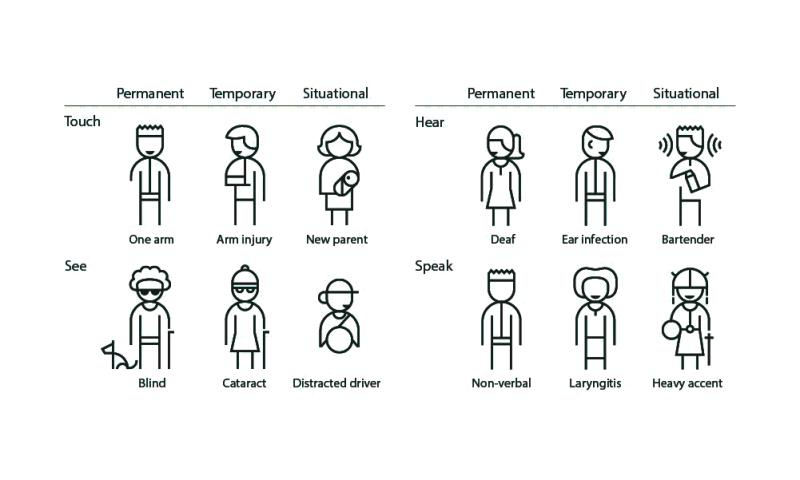 I’m not a fan of user personas. They’re meant to remind us of alternative perspectives, but tend to become either so specific as to make us blinkered, or so single-minded as to be unrealistic.
This piece does a good job of summarising how this fallacy of assuming we can identify user archetypes came about, how it misses so much vital nuance and complexity, and why we need to shake it off if we’re ever going to meet the needs of real users via a more effective, inclusive design approach to developing a better customer experience.
by JCM | 29 Feb, 2020 | Marginalia
This is a decent short piece in Inc. about Oprah Winfrey’s podcast strategy – basically mining her archive of TV shows for audio highlights – with some simple yet sensible advice for this age of ephemeral experiences:
“Good content is good content. No matter how old it is… Get creative and find ways to adapt that content to be relevant for… new audiences, and put it in front of them.”
That “get creative” part is key, though. Older content is likely to only have nuggets of still-relevant gold that will need careful mining and potentially refining for different formats, audiences, and purposes.
Remember: Not everything has to be explicitly about today’s perceived front-of-mind issues to be relevant and interesting. There’s a reason Dale Carnegie continues to be a bestselling author in the business books category 75 years after his death. Good insights are good insights.
Approached with the right mindset, old white papers, transcripts of conference speeches, case studies, surveys – even LinkedIn posts – could become a treasure trove of inspiration for creating something similar but different to engage new people on new platforms and in new formats.
Content marketing is, after all, about effective presentation of the content as well as the brand. And content ultimately succeeds based on *its* content – ideas and their presentation.
And there is *always* more than one way to present an idea.
by JCM | 22 Feb, 2020 | Marginalia
Complaining about nonsense business-speak may be futile, but this piece – a review of a memoir about life in startup land – does a good job of summing up why spewing out business bullshit is not just intellectually offensive, but actively harmful:
“I like Anna Wiener’s term for this kind of talk: garbage language. It’s more descriptive than corporate speak or buzzwords or jargon. Corporatespeak is dated; buzzword is autological, since it is arguably an example of what it describes; and jargon conflates stupid usages with specialist languages that are actually purposeful, like those of law or science or medicine. Wiener’s garbage language works because garbage is what we produce mindlessly in the course of our days and because it smells horrible and looks ugly…
“But unlike garbage, which we contain in wastebaskets and landfills, the hideous nature of these words — their facility to warp and impede communication — is also their purpose. Garbage language permeates the ways we think of our jobs and shapes our identities as workers. It is obvious that the point is concealment; it is less obvious what so many of us are trying to hide.”
In short, if your ideas are good, don’t bury them in garbage. If they’re not, the presence of garbage is a good indicator.
by JCM | 27 Jan, 2020 | Marginalia
 Great to see a copy of the Culture Trip magazine in the flesh on Eurostar. A slick, matt finish cover and perfect-bound spine screams quality, while the prominence of adverts for other Culture Trip formats (and lack of much other advertising) reveals this to be a piece of brand awareness marketing more than just a shift to a new, retro format for an established digital publisher.
Getting a travel magazine on Eurostar is quite the distribution coup as well – finely targeted to a (likely) receptive audience.
I’d not be surprised to see more digital ventures going physical for ad hoc print editions like this in the coming years. The shift towards longform and digital editions, the revival of vinyl, plus the growth in sales of physical books and independent publications suggests a rising demand for tactile, physical content formats alongside the convenience of digital.
With good design and production values, a print magazine or book can be something to both treasure and show off – a powerful, prestigious tool for driving brand loyalty.
Don’t get me wrong – digital is great. But every format is worth considering in the marketing mix – if it’s got potential to drive results rather than being mere vanity.
by JCM | 26 Sep, 2019 | Marginalia
 4/5 stars
A strange, dreamlike extended metaphor for the eastern European experience of the mid-late 20th century.
After the shift in tone and narrative between books one and two, it wraps up with a third book of gloriously appropriate confusing ambiguity about the nature of identity and truth.
Constantly odd, occasionally nasty, sometimes showing warmth and kindness, but always detached, it’s surprisingly readable and engaging considering the unlikeable nature of the main character(s?) / narrator(s?). Four stars simply because it’s hard to love a book like this – but very easy to admire.
by JCM | 17 Feb, 2018 | Marginalia
 4/5 stars
Borderline five star for me, this. Ticks a huge number of the boxes for books I love: Lyrically-written magic realism, unreliably narrated from multiple perspectives, set in the 16th century (flicking between Medici Florence and the court of Akbar the Great), weaving together elements of real history, fiction, fable, philosophy, and inventive ideas.
My issue with it is hard to pinpoint, but throughout I had a niggling dislike of a book whose writing and concept I loved. I think it’s probably to do with how every single female character is an archetype: the whore, the jealous wife, the bitter mother-in-law, the spurned lover, the unattainable object of desire, the witch, the imaginary ideal.
This is, of course, thematically kind of appropriate for the story – which revolves around the romanticised fiction of a mythical woman’s life – but it still grated. The inner workings of the mind of the Mughal emperor are so interestingly explored, yet none of the women in this novel seem to have any layers of complexity to them at all.
Is that just because the women are presented through the eyes of the men in the novel, or because Rushdie lacks the ability to create a convincing female character? It’s the first book of his I’ve read (have been meaning to get around to him for ages), so hard to judge. But I’ll still certainly try more of his stuff after this.
by JCM | 17 Jan, 2018 | Marginalia
 4/5 stars
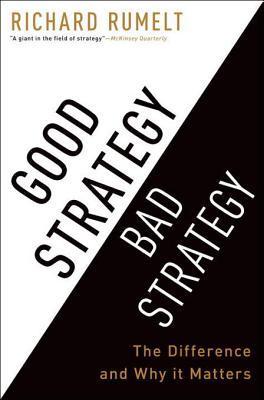
One of the few strategy books recommended by Lawrence Freedman in his chunky Strategy: A History, largely for its gleeful destruction of the fatuous nonsense that passes for most business strategy.
There’s a lot of good stuff in here. Useful ideas. Good tips for clarifying thinking and approaching problems in a more strategic way.
But, as with so many business books, it’s very heavy on anecdote and case study, few of which are well told, and all of which could do with succinct, clearly formsttd summaries of the point so you can skip the details if needed. Only one section tries to do this, and it doesn’t do it well.
Nonetheless, where the thinking is clear and clearly presented, it’s got some excellent short sumaries of ways to think and act that can be invaluable to anyone in a leadership position. If you are, it’s definitely worth a read.
by JCM | 14 Nov, 2017 | Marginalia
 5/5 stars
An impressive no bullshit overview of strategic thinking (and claims about the merits of such thinking) over the last two centuries. My copy is now littered with copious notes, and I’m sure I’ll be returning to it repeatedly as a reference book from now on. Particularly enjoyed the excellent destruction of pretty much all businesses guru claims about management strategy.
Well worth investing the time to read this for anyone interested in politics or business – though there are big chunks it’s perfectly possible to skip, depending on your primary interest (the lengthy detour into left-wing and radical political theory added little for me, largely because I was already familiar with it).
by JCM | 5 Oct, 2017 | Marginalia
 4/5 stars
A solid, readable polemic (with occasional excellent passages and a few clunky ones) that neatly demonstrates the complex challenges of Britain’s odd understanding of and responses to racism.
In all, the book made a fair few things clearer, while provoking several moments of “hmmm… That’s a bit strong / doesn’t really help the argument” – but as I’m a white man, most of my objections had either already been anticipated or dismissed as me not getting the point. (A useful rhetorical device for shutting down objections, that – but here, in places, it is probably a valid one.)
Most interesting were probably the chapters on race and feminism / race and class – this is where the core argument about the need to fight all forms of injustice and inequality (to really get rid of the structures that ensure racism/sexism/etc persists) begins to kick in. That’s a good argument, and needs to be made more often. (*waves at the Labour party*)
Only fear now is that even by writing this review (let alone reading the book on the tube earlier) I could be guilty of “performative anti-racism”. I kinda knew that was a thing, and know I’m occasionally guilty of it, but now can’t tell what counts – or whether the “performance” is a negative to be avoided, or just something that doesn’t make sufficient difference in the overall battle. (I’d argue it’s all good marketing…)
by JCM | 20 May, 2017 | Marginalia
 5/5 stars
As ever with anthologies, some variation in quality of writing (from excellent to competent) – but consistently raw and compelling in emotion and insight for those, like me, lucky enough not to have to live with racism every day.
Horrible to say, but at first as a Brit I kept comparing to something like Ta-Nehesi Coates’ Between the World and Me and the US experience of racism, and being slightly proud of the UK for there are fewer stories of naked aggression or direct violence, or even of fear.
But then that’s the point. The worst racism isn’t necessarily the extremes, the exceptions, the stuff we can all (even our racist relatives) safely disassociate ourselves from and loudly disapprove of – the shit through the letterbox, the defacing of Jewish graves, the random assaults – it’s the daily, mundane slog of unspoken assumptions and unconscious bias. The stuff us privileged white people, even well-meaning ones, barely notice – even when we’ve realised it’s there. Constantly. Inescapably. With no end in sight.
To better appreciate the all-pervasive impact of that kind of everyday racism, this book is essential.
