Space Force vs the Space Force
A (comedy) textbook lesson in why it’s vital to check existing trademarks and uses before launching a new brand, as the latest branch of the US military discovers that Netflix got there first…

A (comedy) textbook lesson in why it’s vital to check existing trademarks and uses before launching a new brand, as the latest branch of the US military discovers that Netflix got there first…
 Words are important, because language shapes our understanding of the world.
Over time, our choice of language can shatter or reinforce preconceptions – creating feedback loops of frustration or moments of radical shifts in perception that in turn can change society itself, for good or ill.
The same is true about our choice of what to talk about – or to ignore. Sometimes, staying silent is as strong a statement as speaking out. Sometimes, speaking out is a risk.
But for those of us – people or organizations – in a position of privileged security or power, sometimes speaking out is a duty.
The question is, what message will you send about what you see as important in the world in the words you use and the things you choose to talk about? And what good could your words do when you do speak out?
 2/5 stars
A strange book, hinting at some of Rushdie’s later brilliance, but not anywhere near as clever or profound as it seems to think it is.
This quote, from page 141, just as you start to wonder what the point of it all is, pretty much sums up the book:
“I do not care for stories that are so, so tight. Stories should be like life, slightly frayed at the edges, full of loose ends and lives juxtaposed by accident rather than some grand design. Most of life has no meaning – so it must surely be a distortion of life to tell tales in which every single element is meaningful… How terrible to have to see a meaning or a great import in everything around one, everything one does, everything that happens to one!”
“We are the losers in this crisis.”
Sadly unsurprising, but still anger-making. Being child-free, I’ve mostly been enjoying working from home – but if this *is* going to be the new normal, we urgently need to find ways to make homeworking work for everyone.
This shift away from the office could and should have been a fantastic opportunity to break down barriers to employment for people who have previously struggled to participate in the traditional office-based nine to five – whether due to caring commitments, location, disability, or simple hiring prejudice.
We 100% cannot afford to allow it to reinforce structural inequality or outdated stereotypes.
Promising new Instagram feature here, hinting at another move in the direction of deeper, more substantial content.
Very early stages and a limited release so far, but this seems perfectly suited to structured storytelling – because it appears to be a way of doing listicles, which are, let’s face it, just about the most structured type of storytelling there is. Will be interesting to see how this one develops.
As an ex-journo I’ve always put more emphasis on substance than style in marketing, but that’s not to deny style’s essential role in making the substance shine. The very best content (and advertising) has always had a perfect balance between both. The best copy in the world won’t do anything for you if it doesn’t stand out and get noticed by the right audiences.
Now, however: “Chrome is setting the thresholds to 4MB of network data or 15 seconds of CPU usage in any 30 second span”.
I get the thinking behind this – both for consumers (to save their data/battery) and for Google (to re-emphasise the importance and value of data-light search marketing) – but it feels a decade late. Modern phones, and most data packages, surely won’t even blink at a meagre 4 megs – and 5G will make it a nothing.
A good digital ad is a rare thing (most are, let’s face it, either annoying or ignored), but many of the best are creative, interactive experiences that maximise the potential of the medium. This means they need more bandwidth to make better user experiences.
So while I may focus on organic distribution and the message before the medium, I do worry this restriction of ad options will create a blander, less creative digital future. At least give users the choice to turn this on or off.
“I haven’t witnessed an update as widespread as this one since 2003,” says the author of this piece. Some sites are reporting 90% traffic drops, with even the likes of Spotify and LinkedIn apparently impacted. This is big.
What exactly has changed is still unclear – a few days on results are still fluctuating too much for detailed analysis – but one thing does seem certain: “there are multiple reports of thin content losing positions”.
This has been the trend with Google for a while now, with the firm recommending “focusing on ensuring you’re offering the best content you can. That’s what our algorithms seek to reward.”
What *is* good content in this context? After all, “quality” is quite a subjective concept.
Well, algorithms aren’t people, but Google’s long been aiming to make their code more intelligent, and better able to understand context and likely relevance. Keyword stuffing has been penalised for years, as have dodgy link-building efforts. Instead, Google is aiming for near-human levels of appreciation of nuance.
Helpfully, though, Google has also put out a list of questions to help you understand if the content of your site is likely to be seen as quality in the eyes of the all-powerful algorithm:
All good questions, and all from Google’s own blog.
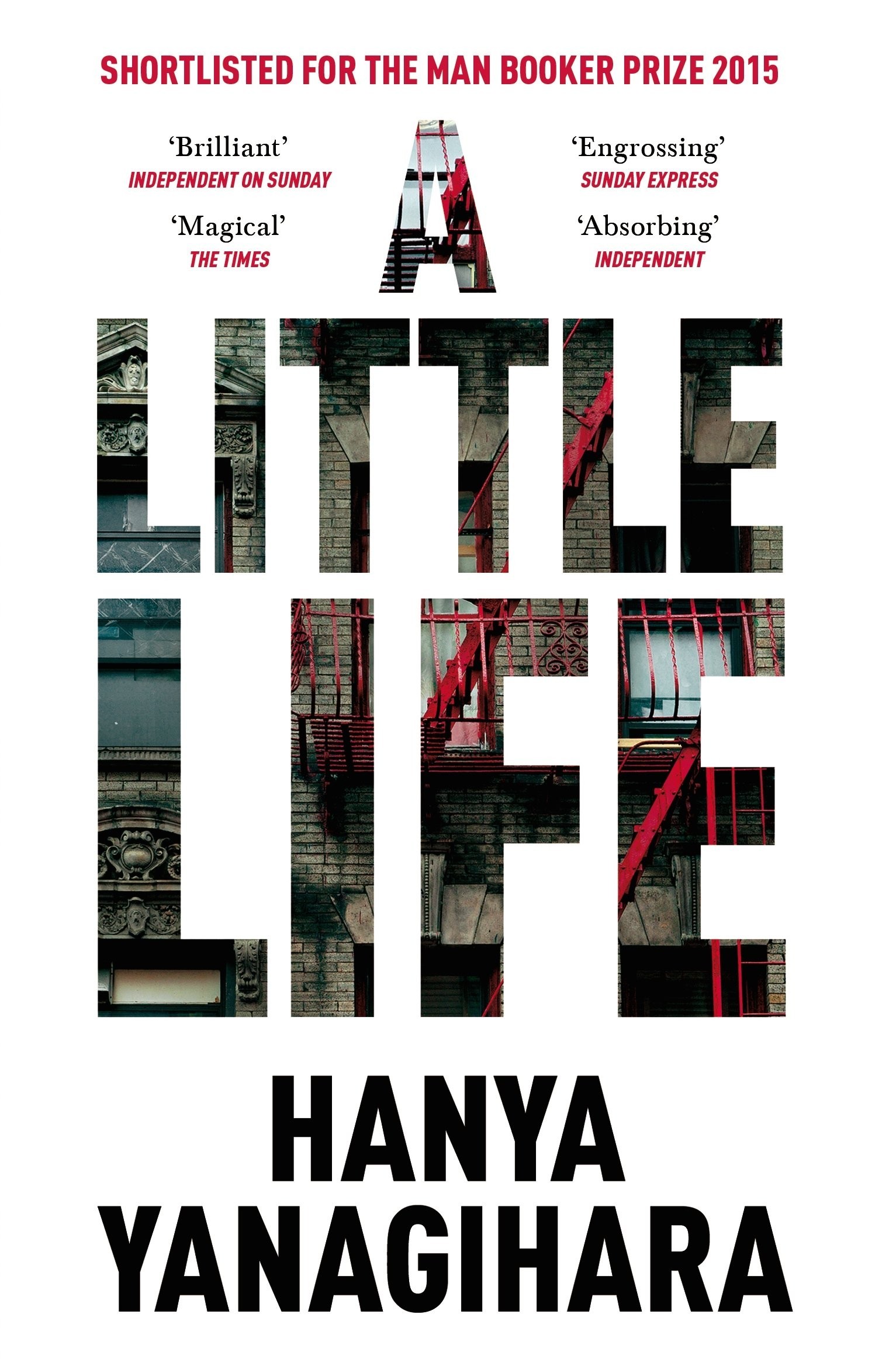 2/5 stars
Very readably written (hence the extra star and bothering to finish it), but for a 700-page character study it’s impressive just how shallow all the characters are.
Every single one – from the principles to the supporting cast – has one defining characteristic, and one only. There’s so little complexity or depth they may as well all be described as deeply as the two characters known throughout only as “black Henry Young” and “Asian Henry Young”.
There’s Withdrawn Trauma, our hero – the life of the title – defined purely by his childhood abuse, and still acting like a child decades later. Selfish, closed-minded, suspicious. Worthy of pity, certainly – but it’s hard to see why so many other characters deem him worthy of so much loyalty for so long, in the face of so much predictable nonsense. Normally after spending 700 pages with a character you empathise with them. Not this guy, despite having winced through scene upon scene of abuse and suffering.
There’s the three friends, Compassion (who, at least, briefly shows signs of developing some complexity where Compassion briefly turns to Conflicted), Obvious Unrequited Secret Admirer, and Architect (supposedly one of the core group of four friends at the heart of the story, but with no personality beyond his career).
There’s also Ineffective Father-figure, always wanting to help but never quite knowing how. There’s Doctor, who inexplicably keeps staying on call 24/7 – unpaid too, in America! – for one of the most difficult, selfish patients anyone could ever hope not to encounter. And then there’s Violent Rapist, Manipulative Rapist, Psycho Rapist, and a succession of other anonymous rapists undeserving of description.
And it’s still astonishing, 700 pages later, that a woman was able to write such a long novel without a single substantive female character.
Plus, it’s incredibly predictable. In the final quarter I found myself actively laughing as it unfolded, because everything was so obvious. No surprises at all.
But worst of all, this is a novel that exists to smother the concept of hope for change and redemption. To confirm the worst suspicions of the traumatised and suicidal. To encourage the suicidal to go through with it. It’s repeated message is that things don’t get better – at least, not for long. It’s Keynes’ “In the long run we’re all dead” in brutal, unforgiving, waffling novel form.
It contains nothing positive, says nothing new or substantive, is packed with stereotypes, and, considering the subject matter, is deeply irresponsible.
Tempted to take that second star off now, TBH.
Word is going to start showing double spaces after a full-stop/period as a mistake, preventing the daily howls of frustration from copy-editors worldwide who are continually having to find/replace the damned things.
(And yes, I know lots of people were taught to type with a double space after a full-stop. I was too – because I learned on a typewriter, which is where this came from: to improve the kerning and create more readable text. Computers / word processors are rather more sophisticated than typewriters – they sort the spacing out for you. This means using a double space on a computer actually *increases* layout issues – especially when justifying text – so achieves the precise opposite of what people who do this think it does.)
I’m fairly flexible as an editor most of the time, but along with *always* advocating the Oxford Comma, killing post-period double spaces is one of the few editing hills I’m prepared to die on.
 4/5 stars
An odd book, but very readable. Mini biographies of various leading economists of the last couple of hundred years are a mostly useful way to build the central argument: Economic ideas are a product of their time, and of their creators’ circumstances. It’s a fair argument, and one likely borne out by the fact I’m leaving this much more sympathetic to the ideas of Amartya Sen than any other person featured. He’s the only economist covered who’s still alive…
But this book is odd mostly due to its choices for who to include – and who to omit.
It starts by scene-setting with Dickens, then progresses straight to Marx and Engels, rather than going slightly further back to include Smith, Malthus, Ricardo and other earlier economists.
It’s heavily focused on British/American/Austrian thinkers to the exclusion of pretty much any others – and doesn’t include any non-Western economists other than Sen. Hell, it doesn’t even include any French economists.
The main contention other than everything progresses (it’s largely teleological in approach) is that everyone’s a Keynesian – even people you don’t think are Keynesian. Keynes hangs over the entire book, from long before he appears.
There’s a good case for this – I mean, Keynes is Keynes – but considering the general argument is that economics has been getting increasingly sophisticated, it seems odd that it largely (and rapidly) tails off in its interest in the aftermath of WWII (and, perhaps not coincidentally, Keynes’ death).
The most surprising omission, considering there’s a strong undercurrent of concern with human welfare throughout, is any reference to behavioural economics – surely one of the most fundamental shifts in approach to the discipline in the last 50-60 years.
Nor is there any coverage of the birth of game theory – arguably one of the most influential (and abused) concepts of the same period. This last is particularly surprising given the frequent use of the term “zero sum game” in latter chapters – and by the fact that the author’s previous best-known book was a biography of John Nash.
So yes, an odd book as much for its omissions as its inclusions. But engaging, readable, and (mostly) relatable. In that, it does what it set out to do – help you to understand not just *what* ideas economists had, but *why* they had them.