by JCM | 3 Jun, 2018 | Narratives & Meanings
 5/5 stars
A superb piecing together of disparate unreliable information from multiple countries and centuries in an effort to piece together just what medieval Europe knew of the wider world, prior to its rapid expansion after Columbus, Magellan, and Da Gama.
The legends of Prester John, the travels of Marco Polo and John Mandeville, the rediscovery of classical learning, the threat of the Mongols, the desire to reconquer Jerusalem with a new crusade, the closing of the Silk Road by Central Asian wars, the rumours of Atlantic islands, the pursuit of Paradise in Ceylon, the source of African gold, and the various pre-Columbian discoverers of the Americas – all are here, making the medieval world seem much bigger in the process.
Excellent fun stuff that makes Columbus’ voyage both make more sense and less – he had enough evidence there was something over the horizon, but much of that evidence suggested it was much further away, and he still had no real idea how to get there.
by JCM | 27 Jan, 2018 | Narratives & Meanings
 5/5 stars
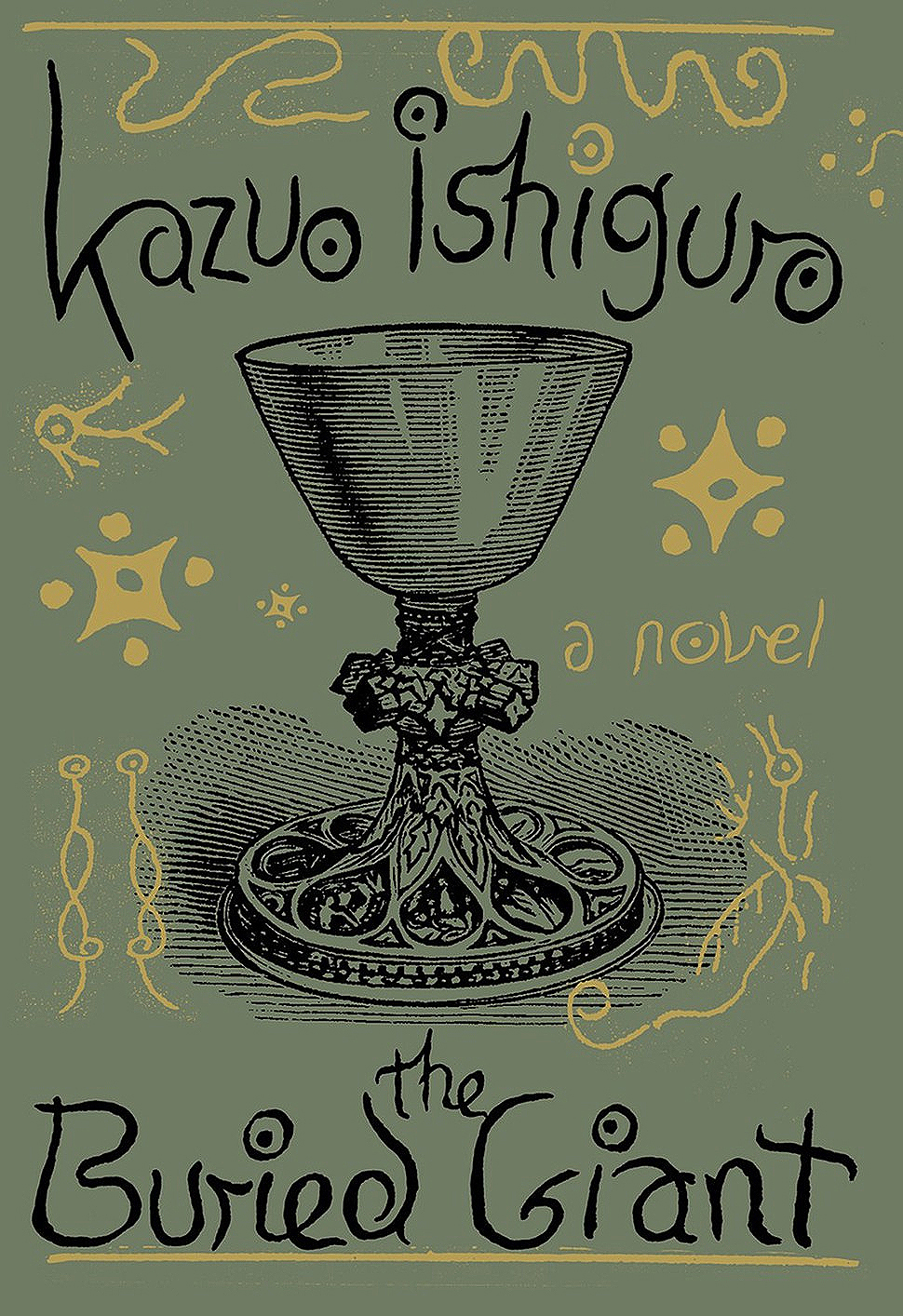
A surprisingly deep book for one written in such a simple, innocent style – and once that slowly presses the emotional buttons in a way you don’t quite notice until it’s too late and you’re fully sucked in. Want to go and give the wife a massive hug right now, basically…
Initially couldn’t see what the fuss was about, but it builds and grows, layer after layer, subtly adding depth and clarity to the allegorical elements and emotional attachment to the characters. The conclusion, though long expected, is done with a skill that has genuinely left me feeling a little shell-shocked – that kind of sadness that comes with a calm acceptance. Fits the book perfectly.
It’s about relationships, memory, trust, forgiveness, anger, revenge, and history. How the past is forgotten, manipulated, subjective, vital – but also how human relationships are the thing that both bind and divide us, and can, with the right attitude, overcome any past.
It gives both cause for hope and for despair. It’s both pessimistic and optimistic. And, ultimately, despite being a fantasy, it’s profoundly realist and meaningful. Worth a read.
by JCM | 22 Oct, 2017 | Narratives & Meanings
 5/5 stars
An immense amount of research packed into a well-written, fascinating book. Has given me untold new appreciation for the late Georgian scientists and explorers – from a period before the word scientist had even been invented, and where art and science were still far more closely intertwined. This isn’t just Banks, Herschel and Davy – Coleridge also plays a significant role, as do Shelley, Woolstonecraft, Wordsworth.
Is it a bit Anglocentric? Possibly – I don’t know enough about the period to tell. But it does amply show how much scientific dialogue there was between England and France in particular, even during the Napoleonic Wars – a kind of friendly rivalry in which England seemed to have come out on top.
Is it a bit London-centric too? Possibly, though the Davy chapters do feature the Westcounty, and there are references to the later proliferation of provincial scientific associations. And in any case, this is about the initial scientific breakthroughs, not their applications asthe Industrial Revolution spread.
I took my time reading this, as it was an ideal tube journey book – each chapter split into shorter sub-chapters, and all enjoyably worth savouring. Tiny print in the paperback also means this packs in far more words than many books of the same pagecount. Could it have been a far faster read? Yes – but I’m glad I took my time, and that I finally got around to it after years of it lying on the shelf unread.
by JCM | 3 Sep, 2017 | Narratives & Meanings
 4/5 stars
The author is one of those irritatingly lucky people who stumbles through life being in the right place at the right time, meeting the right people. Deep envy.
Some small oddnesses and cultural misunderstandings, though – such as a passage describing the interpretation of a painted scene. He reads the image from left to right (making it about the moment before glory) rather than right to left, as Japanese people would read it (making it about the transient nature of life and success, a much more Japanese concept). Small things like that make me wonder whether, despite the author’s long years living in Japan, and his close familiarity with many aspects of its culture and history, he really does understand the place.
But then, as he says, that’s the beauty of Japan – it can’t really be explained in words, it mostly has to be experienced. And, to be fair, he has a good stab of explaining it.
The book itself is an engaging overview of the crisis of cultural identity Japan’s still going through, though mostly from the boom years of the 60s to 80s. Makes a lot of the oddness of modern Japan make a lot more sense than most other books I’ve read on the place, and so well worth a read for anyone interested in trying to understand the place.
by JCM | 24 Aug, 2017 | Narratives & Meanings
 4/5 stars
Flicked through before, this time read kinda cover to cover over a few days. Skipping bits, for sure, but reading most of it. Main observations:
1) It’s going to date badly – too much speculation about meanings, and too many interpretations that feel very of a particular moment.
2) Despite thinking it’s being critical and analytical, it’s actually kinda teleological, and definitely has an agenda. It’s an agenda I agree with and support, pushing a global, multicultural view of the world, but just because I agree with the agenda doesn’t mean I can’t see that some of the points are stretched very, very thin.
3) It doesn’t function as a linear narrative, but the thematic sections also don’t make much sense to me – largely because they’re also kinda chronological. It would make much more sense to have the first coins followed by the first ledgers and the first bank notes, but instead these objects are all grouped into other sections, to facilitate a more semi-chronological approach. Thematic makes more sense.
4) There’s a huge amount of unjustified historical equivalence, making some things sound more important than they are for world history to ensure a good geographic spread – often accompanied by enthusiastic hyperbole about the significance. But there’s also still a number of significant gaps: nowhere near enough China or Greece in particular.
That’s not to say it’s not a good book. It is. And it informed me abiut a bunch if things I never knew. But history is about selection, and here the selection was limited by the British Museum’s own collections. How would other major global museums have approached this differently? I’d be keen to find out.
by JCM | 12 May, 2017 | Narratives & Meanings
 3/5 stars
Decent and interesting, as far as it goes – but this is a history of religious myth only, and then only really of ancient Near East and Judeo-Christian religious myth. China is breifly touched on, but no India, no Africa, no Americas, no Asia-Pacific. No national myths, no folklore (bar some Chinese ones), no attempt to define the difference between myths and legends (that I remember).
Why no myths of the likes of King Arthur or Robin Hood? Why no discussion of folk tales, ghosts, genies, goblins, faries, and the like? Why no mythical creatures like the Loch Ness monster, Bigfoot, and the like?
As much as I like Armstrong, the only answer that I can think of is that it doesn’t fit the narrative of the rise of rational thought – because the appeal of these kinds of non-religious myths have endured. If anything, the rise of the urban myth and appeal of TV shows like The X-Files and its successors show we’re still looking for unbelievable things to believe in.
But while Armstrong keeps talking about humans being attracted to myths, her explanation leaves out any real psychological discussion. Instead, it’s all about “spirituality”, a concept she fails to define (that I can recall).
Not her best book, in other words. Too limited in thinking, not just in length. But still interesting enough for a quick read. Sparked a few ideas, at any rate – and that’s all I ask for.
by JCM | 15 Sep, 2016 | Narratives & Meanings
 4/5 stars
Rather liked this. Told from multiple perspectives (including those of animals, dead people, and abstract concepts), it’s a rare historical murder mystery that didn’t violently irritate me by being an historical novel that’s a murder mystery, one of the most frustrating clichés of the historical fiction genre.
Underlying it all is a melancholy exploration of the Islamic rejection of art, and the Turkish identity crisis that’s continuing to this day, making this a wonderfully contemporary book, even while being set five centuries ago. Reads well too – a solid translation.
Four stars primarily because it’s deliberately written in a way that makes it hard to keep track of some of the characters’ identities, which may well help maintain the murder mystery, but occasionally makes for a confusing reading experience.
by JCM | 17 Jan, 2016 | Narratives & Meanings
 5/5 stars
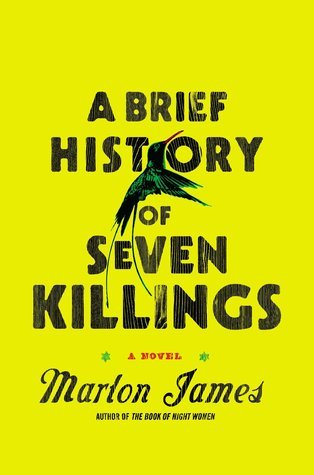
In the acknowledgements, James describes the book as “A novel that would be driven only by voice.” It’s an excellent description. Multiple characters, multiple perspectives, but each with a such a distinctive written style you can tell whose chapter it is even when they’re unnamed.
On starting, I was told it’s like James Ellroy, and it really is. Complex in places, but fairly easy to keep track, even without knowing pretty much anything about Bob Marley. But unlike Ellroy, (or, at leasy, the Ellroy I’ve read, which can get a bit monotonous after a while), the multiple voices and short chapters keep the pace fast, even when very little is happening. And the atmosphere. Excellent stuff.
Not my usual sort of thing, but may well make me look out more novels that aren’t my usual sort of thing.
by JCM | 3 Jan, 2016 | Narratives & Meanings
 4/5 stars
I’m not convinced that Mishima really works in translation, as it’s all about the beauty of the language he uses rather than the narrative. For this book in particular, with the concept of beauty at its heart, this is especially the case, and this translation was at times a little too clunky to work. In places terrible, in fact.
That said, I enjoyed it. The introduction compares it to Dostoyevsky, and that’s a fair one – strong hints of Turgenev as well.
The book sums itself up nicely, though again this would likely work better in the original Japanese (I mean, “adumbrated”? Really, translator?):
“If one examined the beauty of each individual detail… the beauty was never completed in any single detail… for each detail adumbrated the beauty of the succeeding detail. The beauty of the individual detail itself was always filled with uneasiness. It dreamed of perfection, but it knew no completion and was invariably lured on to the next beauty… Such adumbrations were signs of nothingness. Nothingness was the very structure of this beauty”
by JCM | 8 Mar, 2015 | Narratives & Meanings
 4/5 stars
Finally got through the whole thing, and am frankly not much the wiser, and still not sure how to explain what it’s about.
A plot made of innumerable MacGuffins and deliberately incoherent sidetracks, writing that is at once beautiful in its flow and incomprehensible in its meaning, packed with schoolboyishly deliberate attempts to shock through the gamut of sexual taboos (paedophilia, coprophilia, incest, bestiality) and postmodernisms piled so densely on top of postmodernisms that you can’t help feeling that Pynchon was, at least in places, taking the piss. (Hell, the plot centres on magical erections, so…)
Did I enjoy it? For the most part, and in places I loved it. Did I understand it? Well, I think I get the overarching point, which is something.
But as much as I like “difficult” books and have enjoyed every Pynchon I’ve read so far, (including the much-maligned Vineland), there’s something to be said for plots that can be followed. Mason & Dixon is similarly episodic, yet works as a narrative as well as a concept. Against the Day has significant flaws, but its multiple narratives are at least internally coherent and enjoyable to read. V becomes hard to follow in places, like reading while drunk, but always pulls you back.
Gravity’s Rainbow, meanwhile, works as a concept, but I’m not convinced that it does as a novel. It’s simply too sprawling, too vague, too unconcerned with helping the reader to keep up, or in delivering a satisfactory resolution. Which is, of course, part of the point that the book’s trying to get across about the meaning and nature of life, so I guess I shouldn’t complain.
