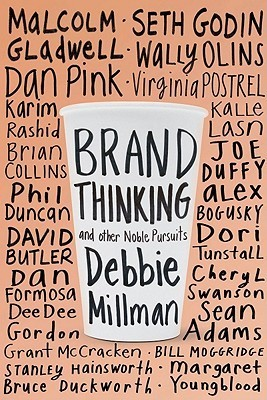
As this is a book of fairly straightforward, slightly gushing interviews with various people from the world of marketing, this would today have worked much better as a podcast. In this format it feels pretty repetitive as well as being dated (first published in 2011, with some of the focus on social media as if it’s new and Apple as if it’s a challenger brand feeling really rather quaint.
There probably were some actively thought-provoking points made somewhere in here, but everyone blurred into one in the end. so I have no idea who said what, and nothing really stood out – except the guy who was very vocal about his dislike of Daniel Kahneman and the idea of Behavioural Economics.
Of course, these “insights” may have seemed more radical 15 years ago. And for newcomers to marketing they still might.
But it’s notable how much of what’s said here sounds fine in theory but feels very hard to turn into tangible takeaways that people trying to build brands themselves could actually use. It mostly all ends up sounding like fluff and cod psychology. You can see how marketing and branding ended up getting a bit of a bad name if this is the best they had to offer.
Then again, maybe it’s because pretty much everyone featured here is American? As Mark Ritson – today’s leading marketing advocate – keeps saying, American marketing and advertising hasn’t been particularly sophisticated for decades.
In short, useful to read if in the profession, but there’s very little surprising, practical or inspiring here. It’s mostly pretty obvious platitudes.
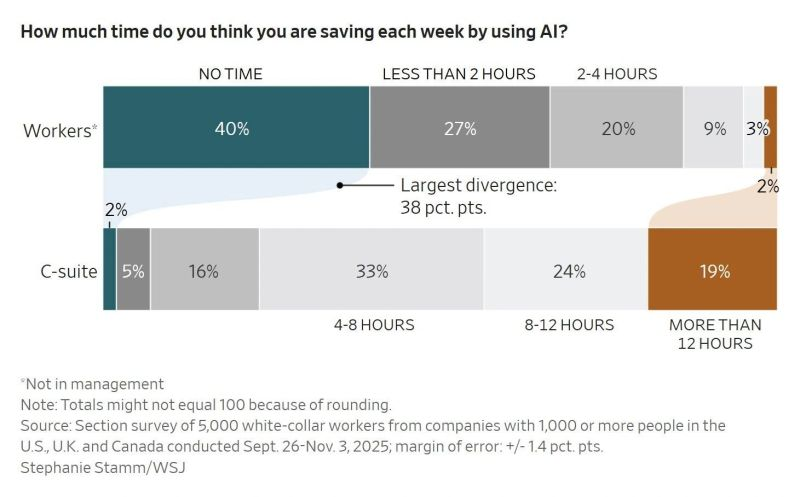
“While 82% of advertising executives believe Gen Z and millennial consumers feel positively about AI-generated ads, only 45% of these consumers actually feel that way”
But this is hardly a surprise. A couple of years back I referred to GenAI being at every stage of the Gartner hype cycle simultaneously, and that remains true today – it’s just that more people have passed over the peak of inflated expectations.
Meanwhile, the AI companies need to keep on trying to inflate those expectations further to keep the investment money coming in to allow them to build the infrastructure they need to keep delivering.
But we’re at a stage now where high level promises like those you get in an advert or keynote are hitting the law of diminishing returns. These companies are selling to an increasingly sceptical crowd – as a global society, we’re further down the funnel and are looking for more proof points before we buy in.
(This is part of why I’m convinced Elon Musk knew exactly what he was doing with his Grok porn bot – the uproar was great free publicity for Grok’s ability to create photorealistic images and video… PR can be cynical…)
Given this, is an old school Super bowl campaign really going to make any difference? or is this now just another old school brand awareness play, given Google seems to be on the verge of demolishing OpenAI’s previous lead?
Either way, we’re definitely entering a new phase in the AI play – and the emphasis is increasingly going to need to be on proof of impact, not just proof of concept. The narrative needs to shift.
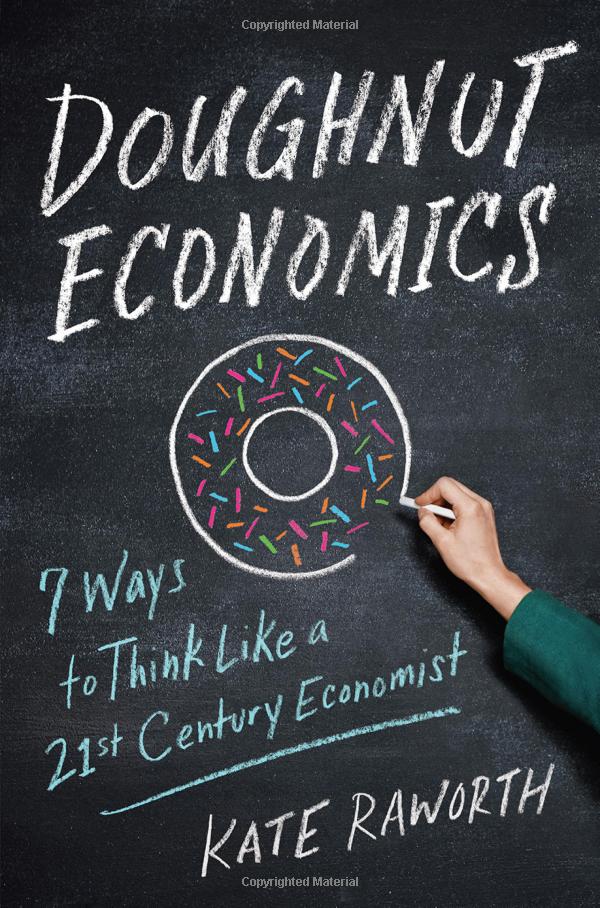
Interesting, thought-provoking and convincing about what needs to be done, while being realistic about how likely it is such vast changes to how the world works will come about. Yet also packed with examples of ways in which such changes are already taking place, giving some room for optimism.
A good polemic, in other words – and made even better by continually citing sources and experts from non-traditional backgrounds – neither ostentatiously nor explicitly, it made me realise how few economics and politics books regularly cite women or people from non-Western countries. Which may well be part of the reason why our economics and politics are so broken.
The only real criticism: The book itself is well enough written in terms of individual sentences and paragraphs, but lacks enough variety of tone and pacing to really keep the attention, and the author has a tendency to both repeat herself and extend metaphors well beyond the point where they have impact.
If you’re happy with platitudinous banality for your “thought leadership”, GenAI is great!
The trouble is, this isn’t just a GenAI issue.
Many (most?) brands have been spewing out generic nonsense with their content marketing for as long as content marketing has been a thing.
Because what GenAI content is very good at exposing is something that those of us who’ve been working in content marketing for a long time have known since forever: Coming up with genuinely original, compelling insights is *incredibly* hard.
Especially when the raw material most B2B marketers have to work with is the half-remembered received wisdom a distracted senior stakeholder has just tried to recall from their MBA days in response to a question about their business strategy that they’ve probably never even considered before.
And even more especially when these days many of those senior stakeholders are asking their PA to ask ChatGPT to come up with an answer for the question via email rather than speak with anyone.
If you want real insight that’s going to impress real experts, you need to put the work in, and give it some real thought. GenAI can help with this – I have endless conversations with various bots to refine my thinking across dozens of projects. But even that takes time. Often a hell of a lot of time.
Because even in the age of GenAI, it turns out the project management Time / Cost / Quality triangle still applies.
The question of what AI does to publishing has much more to do with why people are reading than how you wrote. Do they care who you are? About your voice or your story? Or are they looking for a database output? Benedict Evans, on LinkedIn
Context is (usually) more important to the success of content than the content itself. And that context depends on the reader/viewer/listener.
It’s the classic journalistic questioning model, but about the audience, not the story:
Who are they?
What are they looking for?
Why are they looking for it?
Where are they looking for it?
When do they need it by?
How else could they get the same results?
Which options will best meet their needs?
Every one of these questions impacts that individual’s perceptions of what type of content will be most valuable to them, and therefore their choice of preferred format / platform for that specific moment in time. Sometimes they’ll want a snappy overview, other times a deep dive, yet other times to hear direct from or talk with an expert.
GenAI enables format flexibility, and chatbot interfaces encourage audience interaction through follow-up Q&As that can help make answers increasingly specific and relevant. This means it will have some pretty wide applications – but it still won’t be appropriate to every context / audience need state.
The real question is which audience needs can publishers – and human content creators – meet better than GenAI?
It’s easy to criticise “AI slop” – but the internet has been awash with utterly bland, characterless human-created slop for years. If GenAI forces those of us in the media to try a bit harder, then it’s all for the good.
This, for me, has always been the real value of trying to produce “Thought Leadership” in a business context: The process of thinking and constructing a coherent explanation of that thinking can have far more lasting impact on an organisation than the one-off piece of content that appears to be the end result.
Every stakeholder involved in the creation of the thought leadership content should, during its course, have at least a few moments where they really stop and question what they think and believe, why, and how they can better articulate it. This can then positively impact how they operate day to day, how they interact with clients and customers, and how they articulate the benefits of their products and services.
It’s not about the piece of content – it’s about the *thinking*.
*That* is the value of putting an emphasis on “Storytelling” – because the narrative form insists on forcing us into shaping our thoughts in ways others can follow. Ideally in a relatively entertaining, relatively memorable way.
The risk, though, is that we start buying into the myths of our own stories – and forget that they are just one way of looking at the world, created to simplify.
This is why, as we try to produce a piece of content, we need to do a Rashomon on our own thinking.
There’s never only one story, one narrative, one way of looking at the world. Look at things from only one perspective, and you risk ending up like the blind men and the elephant. If you’re serious about producing real thought leadership, you should challenge yourself to look for alternative approaches every time.
This is why Critical Thinking is probably the most important skill when writing and editing: Question your assumptions and preconceptions, consider all the objections and alternative interpretations, and – as long as you can avoid the twin traps of analysis paralysis and editing by committee – the end result *will* be stronger.
Stylistic flair can disguise sloppy thinking – but only so much. And how much better is it to have both style *and* substance?
Seeing this graphic doing the rounds. Pretty. Still, call me a cynic, but:
1) [citation needed] – the full graphic lists multiple top-level sources, but without details – what were the exact sources? What was the methodology for identifying this data used by each of those sources? How credible is this information?
2) So what? What useful insight do these lump sums tell us without context? Most of the numbers are random, unrelated big figures, so how does this help us understand the world? What are the trends? What’s the insight?
This is superficially a great bit of marketing, as it’s getting shared a lot and is designed to promote a company flogging a data analytics platform. But there’s no further detail on their site, which is a masterclass in promising a lot (e.g. “Solve back-end integration of any data, at cloud scale, without moving data”) without actually saying or revealing anything about how their tools actually work. To find out more, you need to give them your contact details.
For true data geeks, as for ex-journalists like me, alarm bells start going off at this point:
– Data without context is meaningless
– Single data points don’t equal insight
– Data needs to be well sourced to warrant trust
– Don’t give away your data if you don’t know what you’re getting
Ethos (basically the speaker’s credibility or brand)
Logos (the subject & style of the message)
Pathos (effectively the audience’s response)
Prioritising pathos
For an artist, novelist, or even journalist, the first two of these are almost always the most important, with a strong emphasis on the second. While most artists and writers *want* to have a positive audience response to their work, their primary goal is to get their idea out there. Their ethos / reputation may help them reach an audience, but this is secondary to the logos of the work they’re producing: the subject they want to convey, and the way they – the authors of the work – decide to shape it is both their focus, and the focus of their audience.
In short, for an artist or writer, often it is the act of creation itself that is the goal. Getting a positive audience response is merely a bonus – and being forced to chase an audience can stifle their creativity and lead to both stress and bad work. Hence the cliche of the difficult second album…
By contrast, for marketing it’s the last of Aristotle’s three concepts – pathos, the response of the audience – which is most important. Without the right kind of audience response, a marketer’s work will have failed. Hence the birth of focus groups, testing, and the often quite derivative nature of advertising, as “creatives” are forced to shape their work not around a great creative concept in itself, as an artist would, but how that creative concept is likely to resonate with their target audience – pushing them into creativity by committee (always a killer), and a constant recycling of ideas that are known to work.
This focus on the audience’s response is how we’ve end up jumping all the way from Aristotle to Roland Barthes, the notoriously difficult to read late-20th century French semiotician. (But still, at least he’s not Pierre Bourdieu, who I may get to in a later piece in this series…)
Everything is subjective
Barthes’ most famous idea is that of the death of the author – basically the idea that the authorial/creative intentions behind a work of art/literature don’t matter; all that is important is the response of the audience.
To understand this response, Barthes – building on some of the concepts of Ferdinand de Saussure that helped give birth to semiotics, the study of signs (combined with some of Jacques Lacan’s ideas on psychology) – began to re-conceptualise the way meaning is created in culture and society.
Where for Saussure, the importance of semiotics was to help understand the connection between a symbol/sign (the signifier) – be that a sound, a word, or an image – and the thing or concept that symbol/sign was intended to represent (the signified), Barthes effectively took this one logical step further by pointing out that this two-way connection still didn’t get to the heart of the *meaning* of that sign/symbol, because meaning is entirely a matter of interpretation. The connection between signifier and signified is entirely subjective.
Why? Well, because all of us have different knowledge, experience, ideas, attitudes, needs and expectations.
Emojis and meaning
Emojis are a good example. Take this one: Originally designed to represent a Chinese dumpling, the emoji’s creator specifically had dumplings in mind when she made it, arguing:
“The dumpling is actually universal. Georgia has khinkali. Japan has gyoza. Korea has mandoo. Italy has ravioli. Polish people have pierogi. Russian people have pelmeni. Argentians have empanadas. Jewish people have kreplachs. Chinese people have potstickers and various other dumplings. Tibet and Nepal have momos. Turkish people have manti.”
As emojis are intended as shorthand signs to speed up communication, arguing for a dumpling emoji based on that logic is pretty sound.
When I first saw it, I initially thought it was a Cornish pasty – a type of food I grew up on. This wasn’t explicitly included in the creator’s initial list – but it was there in the spirit.
In other words, a symbol that means one thing to one person could mean something very different to someone else. (A bit like when my mother kept on signing off text messages with “LOL”, meaning “Lots Of Love”, and I was reading it as “Laugh Out Loud” and wondering what was so funny.)
Back to Barthes and a multitude of meanings
Anyway, all this is to illustrate one of Barthes’ key points: Meaning isn’t as simple as there being a direct connection between a signifier (word/image/sign) and signified (thing/concept). Instead you also need to consider the interpretation of both.
This led to Barthes’ modification of Suassure’s bilateral signifier-signified relationship into a trilateral model:
Representamen: the signifier / sign / word / image / sound used to represent a concept or thing
Object: the signified / thing / concept being represented
Interpretant: the person decoding the meaning denoted by both Representamen and Object – a meaning that may vary wildly from interpretant to interpretant depending on their personal context
In other words, there is no single objective, definitive, “correct” interpretation of any given representamen, because the meaning of such signifiers (and even the objects/signifieds they are intended to represent) will constantly change according to context.
An alcoholic example
Take the phrase “I want some alcohol” to illustrate the point.
In one sense, “alcohol” always means the same thing – reading that word, you *think* you know what I mean by it in writing it down. But – as with the emoji example above – what kind of alcohol is, to you, representative? Beer? Whisky? Wine? Gin? A fancy cocktail with an umbrella in it?
In Japanese, the word for alcohol is sake – which is fairly familiar to English speakers as Japanese rice wine. Ask for sake in a Japanese bar (at least, if you’re obviously not Japanese, like me), and that’s what’ll be delivered, even though the word technically means all types of alcohol.
But what if you’re a surgeon, talking about medical alcohol to clean your scalpel? Or Muslim, and alcohol is forbidden by your religion? Or an alcoholic, and the very thought of it represents a constant temptation and potential relapse? Or, to a lesser degree, what if it’s nine o’clock on a Saturday morning and you’ve got a hangover?
And then there’s the time and place (kairos, for Aristotle). “I want some alcohol” if you’re the surgeon in the operating theatre above will be purposeful, urgent, obviously related to a specific medical need. Say it at the end of a long working day, it could be an sign that you’ve worked hard and deserve a reward, or that you’ve been worked *too* hard and are feeling depressed, or just that you’d like to spend some time with your colleagues in a social environment. Say it at seven o’clock in the morning, and it likely means you’re an alcoholic (unless you’ve been going all night, in which case it means you’re a bit of a party animal – unless you’ve been going all night and you’re in your forties, in which case it means you’re having a mid-life crisis, and probably a little bit sad).
Even if both you as author and interpretant as reader are agreed roughly on what specific type of alcohol you’re referring to, there are still additional contextual meanings that the interpretant will layer on top of your representamen, often subconsciously, that will trigger very different responses.
Again, Aristotle got in there first – because this is pretty much what he had in mind with the idea of pathos: the emotional response of the audience to the rhetorical approach you, as speaker, have taken.
It’s always about your audiences – plural
So, if everything is subjective, context is everything to interpretation, and the intended meaning and interpreted meaning can vary wildly from person to person and context to context, what does this mean for effective communication?
Well, it basically means that it’s very, very difficult to communicate effectively.
But there is hope – Barthes doesn’t go as far as his fellow postmodernist Jacques Derrida (of whom more another time, probably) and argue that all this means things are changing so much there is ultimately no such thing as meaning.
But what it does mean is that we shouldn’t make assumptions about how what we’re trying to say will be interpreted. We need to think more about principles of inclusive design when starting to craft our messages. We need to constantly self-criticise and consider the vast range of cultural, linguistic, social, educational, and personal experiences of our audiences. And to recognise that audiences are always plural – even if the audience is a single person, because their mindset and mood will vary depending on the context in which they encounter the thing it is they are interpreting.
To anticipate all these variants may well be impossible. But if your job is to convey meaning and to try to persuade – as it is for marketers and advertisers – then your job is to attempt to anticipate as many as possible.
Anticipating responses – and adapting accordingly
Which is why, to be a successful marketer, a basic understanding of the media, of creative techniques, of the product you’re marketing and the sector you’re in – the traditional needs of the industry – is not enough. To be effective needs a far broader understanding of the context in which your work will be interpreted by your target audiences. And these audiences are far more complex than can ever hope to be summed up on a PowerPoint slide as a “persona”. To try and anticipate their responses needs an awareness of a huge range of potential variables – far more than the simplistic, old-school advertising approach focusing on fairly simplistic demographics.
This is why, as I continue this series exploring the art of persuasion and the theories and best practices that underlie marketing, I’m going to continue to branch out into other areas – from semiotics to sociology to anthropology to literary criticism to linguistics to economics to psychology to philosophy to history and more. Because ultimately, the only way to get close to persuading is to try to understand and anticipate the vast range of ways what we, as creators, are doing can be interpreted, and construct our attempts at persuasion backwards from this knowledge.
Barthes never quite got to an all-encompassing theory of meaning to create a roadmap of how to do this, having died mid-flow at the age of 64 after being run over by a laundry van following a convivial lunch with future French President Francois Mitterand and the philosopher Michel Foucault (of whom, probably, more another time). I doubt I’ll be the one to pick up the baton. And it may well be impossible anyway – even tapping into the potential promise of AI to analyse vast datasets and interpret correlations and likely causations of meaning and influence.
So, as I’m going to start writing about what I’m reading (and occasionally watching or listening to), primarily to explore a bit more about what I do for a living, I should at least start at the beginning. Even if I’m likely to jump around a lot afterwards.
The true beginnings of the art of persuasion came earlier, but Aristotle was one of the first (that we have surviving records for) to start codifying it into more of a science. As with a surprisingly large amount of Aristotle, a lot still stands.
First, what does Aristotle define rhetoric as being?
“The faculty of observing in any given case the available means of persuasion.”
In other words, rhetoric is all about knowing how to select the right tactics to effectively persuade a given audience on a given topic in a given circumstance.
There are “non-technical” means of persuasion – evidence, witnesses, etc. – but these lie outside the speaker’s direct control. Instead Aristotle’s rhetoric mostly focuses on “technical” approaches, which he terms “appeals” .
These he focuses on the three key elements of the situation:
Speaker
Subject
Audience
With a bit of elaboration and nuance, these become the three core elements of classical rhetoric – and remain insanely relevant today:
1) Ethos: the speaker’s character
Basically the impression you give. Your character as given through your approach – but also your past reputation. Your ethos needs to inspire confidence, and increase the perception that you are credible.
This, in other words, is pretty much your brand.
It’s built up by a combination, Aristotle reckons, of good sense, good will, and good morals. If any of these are suspect – or successfully undermined by a rival (or an annoying comment on social media pointing out a bit of hypocrisy), your attempt at persuasion is less likely to succeed.
2) Logos: the argument made about the subject
This covers both substance – what you’re arguing – and the style – how you present it.
A combination of the idea and the wording, this is what many marketers and advertisers focus on the most. It’s the concept. The copywriting. The compelling call to action.
Most important – and something I keep focusing on, frustrated with seeing far too much shallow marketing – Aristotle insists that style and substance need to work hand in hand. They need to complement each other, not compete.
Fancy words without depth are pointless sophistry, empty rhetoric – and your audience will soon find you out.
3) Pathos: the emotion conjured in the audience
Positive or negative, triggering emotional reactions in your audience makes them more likely to pay attention and remember what you’re telling them. This is now proven by science – brain scans and clinical trials have demonstrated this point pretty much conclusively. Aristotle just got in a couple of thousand years early.
The challenge, of course, is to trigger the appropriate emotional response for the argument you’re making, among the audience you’re trying to persuade, to achieve the desired response. Aristotle lists 14 emotions – fear, confidence, anger, friendship, calm, enmity, shame, shamelessness, pity, kindness, envy, indignation, emulation, and contempt – but more recent psychologists have expanded this.
Balancing the sell
To be persuasive requires a balance of all three elements. But, of course, the balance needed varies depending on subject, audience, intention, and the reputation of the speaker/brand doing the persuading.
But, let’s face it, this is pretty much the core of selling:
Ethos: This product / brand is good / reliable
Logos: Because it will do X in Y way
Pathos: And make your life better / prevent it from getting worse
Of course, it’s all a lot more complicated than that. That’s why there’s so many other rhetorical devices out there to play with. Of all these, there’s one more from Aristotle it’s important to cover in an introductory piece:
4) Kairos: it’s all about timing
You can be credible, emotionally considered, and have style and substance dripping from every pore – but if you time your appeal wrong, it’s never going to work.
Take this very post…
I’m writing this on a Monday evening. That’s a decent enough time for writing – especially as I had the day off and am feeling fresh and relaxed. But is it a good time for publishing? Most advice would say no. Even if I’d clearly defined my target audience, 10:30pm UK time is just about the worst time to publish anything: European audiences are heading to bed; American audiences are finishing up work for the day; Asian audiences are still asleep. If I wanted to reach my audience immediately, publishing now would be madness.
But it’s not just about the time on the clock – it’s also about appropriateness. We’ve had plenty of examples of this in the last few months of coronavirus lockdowns – some messages simply became out of place, and various ad campaigns have had to be pulled as businesses have shut down and travel and gatherings of people stopped.
Bringing it all together – or screwing it all up
The last couple of weeks of Black Lives Matter protests has also underscored the importance of appropriateness of messaging.
While some brands were quick to put out messages of support, others dithered – making them look bad.
Of the brands that did put out supportive messages, most got the emotion (rousing, empathetic) and style right (adopting the plain black background of the main BLM movement in solidarity), but some were accused of failing on substance. Vague supportive noises were simply not seen as strong enough by many – because to be an ally is to speak up, take a stand, and act, not just stand there mumbling platitudes.
And many more brands fell down on the ethos side: They may have said the right things, in the right way, at the right time, with the right emotion – but their actions behind the scenes ensured they simply weren’t credible. How many brands were called out for their claims to want more racial equity, only to receive the (fair) response: “How many Black people are on your board?” or “What’s the racial pay gap in your company?”
Persuasion can be a technical thing, in other words. You can study the art of rhetoric to develop appropriate strategies and deploy the right tactics. But while you can fool some of the people some of the time, and persuade some people for a while, you can’t fool everyone for ever.
Still, use these four points from Aristotle as a foundation for working out your strategy, and at least you’ve got the basics in place.
Which is probably why pretty much every marketing strategy deck still includes them in some form or other, albeit in agency speak rather than ancient Greek… At my current place we do this quite directly, referring to Wisdom (a form of ethos), Wonder (a form of logos) and Delight (a form of pathos), topped off with a bit of Velocity (one approach to kairos) – as well as a few additions like Atomisation, designed to acknowledge that different audiences (and different media) require different approaches.
There’s a lot more to it than this, of course. Aristotle alone wrote enough for a whole book about it… I’m planning on following up with more on the art and science of persuasion in the coming weeks and months. Watch this space.
To help shape my thinking, I write essays and shorter notes examining the ideas and narratives that shape media, marketing, technology and culture.
A core focus: The way context and assumptions can radically change how ideas are interpreted. Much of modern business, marketing, and media thinking is built on other people's frameworks, models, theories, and received wisdom. This can help clarify complex problems – but as ideas travel between disciplines and organisations they are often simplified, misapplied or treated as universal truths. I'm digging into these, across the following categories - the first being a catch-all for shorter thoughts:

 4/5 stars
 Seeing this graphic doing the rounds. Pretty. Still, call me a cynic, but:
 In Japanese, the word for alcohol is sake – which is fairly familiar to English speakers as Japanese rice wine. Ask for sake in a Japanese bar (at least, if you’re obviously not Japanese, like me), and that’s what’ll be delivered, even though the word technically means all types of alcohol.