Most of what the “GEO” crowd are peddling now *sounds* logical with all its talk of structured data and query fan outs, and is more or less exactly what I was arguing back in late 2023 / early 2024.
I was wrong then, and they’re still wrong now. As Orange Labs founder Britney Muller puts it:
During training, LLMs process text from across the web, but they don’t log URLs, store sources, or remember where anything came from. What’s left is a frozen statistical snapshot (Gao et al., 2023). Not an index. Not a database.
Search engines do the crawling, indexing, and retrieval. LLMs lean on them heavily to surface real-time info (because on their own, they can’t).
Stop optimizing for ‘AI.’ Optimize for search engines (so retrieval-based AI can cite you) + earn third-party coverage (so the model already knows you before the prompt is typed).
That’s not to say query fan out logic (and other “GEO” tactics) doesn’t have its place in content planning – it does. But all this *really* is is a fancy name for an FAQ page (with less emphasis on the “F”). That’s been a core idea in SEO for over two decades. And pretty much all the rest of the “GEO” advice is similarly reskinned old school SEO – from keyword stuffing to linkfarm spamdexing – that Google quietly filtered out years ago.
There’s an awful lot of snake oil being flogged out there at the moment. If some of it seems to work, it’s more by accident than design.
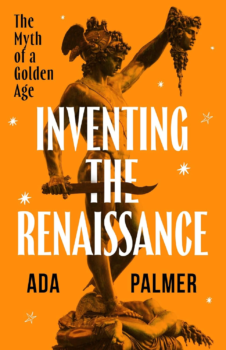
I initially loved this – effectively a popular historiography of the (Italian, mostly) Renaissance, exploring different perspectives and opinions and how these have evolved over time – while also providing overviews of some of the key events and personalities.
This is a wildly confusing period, so this approach actually works pretty well – highlighting who focused on what and offering multiple explanations as to why. Until about halfway through I loved it, and still remain convinced that looking at history by first looking at the lens of the historians and players who shaped that history is an approach more popular history books should take, rather than just run with a narrative.
But… “The Renaissance”, singular? This goes totally against the author’s core argument, which is all about how there are any number of ways of looking at this period (or even defining how long a period we’re talking about). Yet despite this we get surprisingly little about the Northern Renaissance, and almost every key figure called out was based in northern Italy – despite multiple references to Erasmus as a nexus of Renaissance correspondence, we get few investigations into how or whether what was happening in Italy was influenced by or influenced what was going on elsewhere (bar the frequent French invasions and other aspects of high politics).
Equally, about halfway through I started to find the whole thing a little overwhelming as we jump from overarching thesis (there’s no one right way of interpreting any of this) to detailed biography, so philosophical aside, to onrunning jokes. After a promising start, the structure starts to get lost, and it increasingly feels like a series of essays or blog posts loosely bound together.
The more this went on, the more I felt it could have been better if presented as essays rather than a whole – because after a while the running jokes (“Battle Pope”, “Abelarding”, references to Game of Thrones, etc etc) start to detract from rather than clarify the argument. This jokey style is one that’s been very popular the last decade or so, and can work – but in a book this long it can start to grate, even if you don’t object to it in principle, as some might.
Which is a shame, because there’s a lot of really good stuff in here. I learned a lot, and will want to go back and re-read various parts (as long as I can work out which with the jokey chapter titles) to refresh my memory – and eventually start to make a little more sense of a chaotic and challenging to understand period.
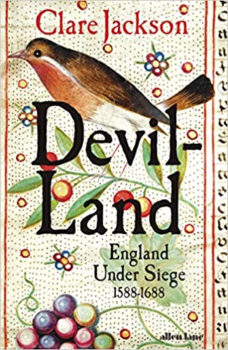
History is all about perspective, and perspectives. This history of England’s most turbulent century – a period I studied to postgrad level – is a welcome attempt to offer alternative views of events via the eyes of non-English observers. As we’re somehow still referring to the central event as the English Civil War – ignoring Scotland, Ireland and Wales – this is very much needed.
The introduction promised a lot, and got me genuinely excited to see how much this focus on foreign perspectives – and foreign policy – would shift my own understanding. But while there were some new things for me here, at its heart this was all rather familiar.
Then again, I’m not really the target audience. As well as having studied the period, I also spent some time plotting out a potential novel that hinged in part on the foreign policy of James VI/I and the (limited) British involvement in the Thirty Years War.
For anyone relatively new to the period, or looking for a refresher overview, this would be really rather good. Standard accounts do tend to focus almost exclusively on England, where here Scotland and Ireland (not so much Wales) do get their due. But more importantly, most accounts tend to obsess about the religious angle, the disputes over tax and revenue, the disputes about the limits to the power of the monarchy, the attempts by parliament to assert itself.
All those are present here too – but so too are explorations of the European horror at the execution of Mary Queen of Scots; the Spanish side of the Spanish Armada and the Spanish Match, as well as worries about the subsequent French marriage; general concern as the civil wars broke out and further horror at England’s execution of a second monarch in sixty-odd years; the Dutch rivalry and wars and invasion.
All this is necessary to a solid understanding of the era – but all too often is skipped over or sidelined. Here, while it’s still not foregrounded as much as I’d hoped – or as much as is promised in the introduction – it’s hard to avoid the fuller understand appreciation that England was not operating in isolation. That other countries existed even then, and that even the foreign relations were far more than just theoretical, largely religious concerns.
All that said, cutting this off with the Glorious Revolution (another bad name that’s stuck) makes zero sense from a non-English perspective (even if the epilogue continues the story through to George I). Logically, the cut off should be more like 1745 (that final Jacobite rising, in the midst of British involvement in the War of Austrian Succession) and the solidification of the Hanoverian dynasty, or even a century later with the death of the Young Pretender / Bonnie Prince Charlie. But I guess by that point Britain was so firmly involved in European and global affairs that the emphasis on non-English opinions about the English would hardly be surprising.
So, a good overview – even if sadly not as radical and overhaul of the period’s traditional narratives as I was hoping.
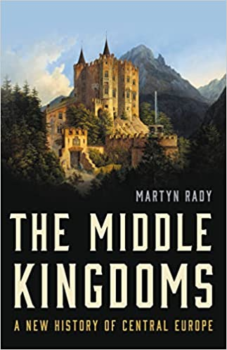
Much like the region it’s covering, this book lacks a certain coherence – and seems to be dominated by the looming presence of Germany.
This makes sense, of course – but if a region is in the middle or central, the obvious question is the middle or centre of what, and what’s surrounding it? Here, Rady seems to focus far more on contrasting central Europe to western Europe than to the east (Russia is the other obvious figure looming over the region’s history, but features far less than Germany), the north, or the south.
For me, the focus on a more or less linear, more or less political history of the region made some sense – and individual chapters were great overviews – but given the fuzziness of the definition of the region and the lack of any long political continuity for most of the countries that exist there today – this makes it even harder to keep track. When there’s no clear narrative, narrative history tends to struggle.
This is because – as Rady makes clear in the final couple of chapters – the concept of central Europe is so relatively recent.
The conclusion mentions something that shows how difficult the task the author set himself was – talking about nations without states, and states without nations, all with borders that have overlapped each other at various times. This is a perceptive and useful summary – but it makes the political history approach feel more than usually useless.
What may have been more helpful would have been a cultural history, or even a linguistic one. If this is a land of overlapping nations, how did these national identities emerge and persist given how frequently the political boundaries have shifted? That’s the book I think I was hoping for, but it’s not this one.
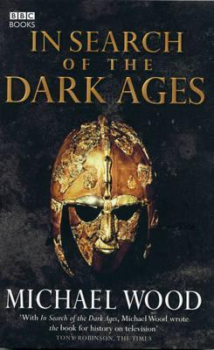
This is a strange book. Originally written to accompany a BBC TV series back in 1981, it has since been extensively revised to reflect the (substantial) changes in understanding of this long period – covering over a thousand years, from Boudicca to the Norman Conquest.
That period alone is enough to raise an eyebrow. What the hell does Wood mean by “the Dark Ages”? And why, if he’s in search of them, does he focus purely on England? Equally, why does he choose to explore them by focusing on a series of individuals?
In part, the thinking seems to be that by centering each chapter on a named individual, you can explore the sources to understand how much we can really know in an era of fragmentary record keeping and near constant conflict. This is a nice enough idea – but it’s been done better elsewhere, especially in the last decade or so, as archaeology and history have merged and a glut of good books have come out on the Vikings and Anglo-Saxons in particular.
Equally, given the use of the term “Dark Ages” – usually contrasted to the Greek/Roman Golden Age and the Renaissance – it’s strange the focus here is largely on politics and power rather than culture and learning and civilisation and society.
Not a bad book, certainly, but its episodic nature betrays its roots in television. It’s let down by the fact that there’s really no clear connecting thread, and nor is there a flowing narrative – something seemingly made worse by Woods’ laudable decision to add some new chapters about prominent women in this revised edition, to counter his early 80s patriarchal mindset and work in some more recent scholarship.
Nonetheless, Woods is a good writer, and this is engaging enough – it just feels a bit confused and incomplete.
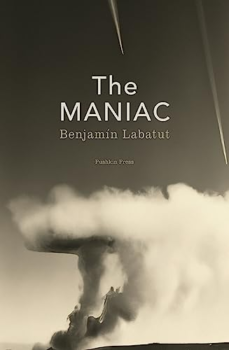
At times I liked this a lot – a neat companion to Neal Stephenson’s Cryptonomicon as a novel about the birth of the computer age. It could equally work as a companion to Sebastian Mallaby’s non-fiction The Power Law, focused on the venture capitalists and somewhat unstable, potentially sociopathic tech bros who have built the modern tech industry into the morally suspect force that it is.
Effectively a montage rather than a narrative, with surprisingly little-known polymath genius John von Neumann and the various hugely influential ideas he had as its centre of gravity, it’s as wide-ranging as he was. This is the guy who co-created Game Theory (an approach many tech types seem to consciously adopt), helped develop not just the atomic bomb, but also the hydrogen bomb and concept of Mutually Assured Destruction – with its wonderfully appropriate acronym.
But he also came up with some initial concepts for artificial intelligence, notably the self-teaching, self-reproducing, self-improving Von Neumann machines that he envisioned spreading through the universe long after his (and humankind’s) death.
It’s this that the book is really building to throughout: Pretty much all modern AI systems are Von Neumann machines – at least, to an extent.
This makes this extremely timely and thought-provoking, despite being about someone who died 70 years ago.
How will these systems continue to evolve? Given von Neumann himself is, throughout, compared to the machines and systems he developed – his utterly alien way of thinking, his apparent disregard for his fellow humans, his neglect of his family, his apparent patronising contempt for people not as smart as he was – the suggestion that these alien intelligences are something to be wary and probably scared of starts coming through stronger and stronger.
This culminates in the final section, a detailed narrative of the significance and a blow by blow account of DeepMind’s 2016 victory over the world’s leading human Go player with their AlphaGo system.
Yet while an impressive achievement, as a whole the book didn’t quite work for me. The different voices talking about their relationships and experiences with von Neumann, done as if being interviewed, eventually all started to sound too similar. The opening and closing sections were thematically clearly linked, but the structure as a whole leaves the reader doing much of the work to connect the dots and get to the point the author’s making. A final coda to wrap it all up would, for me at least, have been appreciated.
Goodreads tells me I finished 74 books in 2025, some 35,000 pages. I almost made it to 75, but just ran out of time… Most were nonfiction, but mostly history, philosophy and science, so not exactly classic LinkedIn fodder.
Here’s a few I’d definitely recommend to better navigate the world of business / work (in no particular order):
1) Alchemy, by Rory Sutherland – a useful corrective to the idea that logic and reason should drive strategy, and a timely reminder (in this age of GenAI probability-driven “thinking”) that it’s often necessary to go lateral to succeed. But Sutherland’s a marketer at heart – of *course* he’d say that…
2) The Art of Explanation, by Ros Atkins – a guide to more effective communication, borrowing from a couple of decades’ experience in journalism; a book many non-journalists could do with reading, and almost the opposite of Sutherland’s approach.
3) Economics, The User’s Guide, by Ha-Joon Chang – as the debate about AI bubbles and the future of the job market drags on, this is one of the very best overviews of the history and post-financial crisis state of economic thinking I’ve come across; thought-provoking and accessible via short, clear chapters. An excellent read.
4) The Corporation in the 21st Century, by John Kay – a slight cheat as I’ve got a couple of dozen pages to go, but this is an excellent companion to the previous one, providing a potted history of how we’ve got to where we are in the world of business organisations and ecosystems, and how it all seems to be changing. Again.
5) The Power Law, by Sebastian Mallaby – a deep dive into the history, mentality and working methods of the venture capitalists that have done so much to influence the tech industry and global economy over the last few decades. It helpfully shows that Elon Musk (among others) has been problematic for years…
—
Of course, all of these were written before the rise of GenAI and the advent of Trump 2, so.who knows how helpful they’ll be in navigating 2026?
We were having the same arguments 20 years ago about blog content from actual humans.
The problem is not with how the sausage is made but, as Sturgeon’s Law states, that “Ninety percent of everything is crap”.
(Of course, on Linkedin this quite simple – and surely obvious – statement led to lots of debate about the *ethics* of AI content rather than the quality. That’s a different matter altogether…)
This from John Hegarty resonated. Unpopular opinion, but awards – especially in B2B marketing – are the ad industry equivalent of social media vanity metrics. They may get you marginally more reach (usually long after the campaign’s over), but rarely with your real target audiences.
What’s worse, the positive signals award wins send out can create feedback loops of groupthink about tactics that can actively harm your ability to deliver.
I know it’s tough to demonstrate marketing effectiveness, but award wins rarely prove much beyond that marketing people like something. So unless you’re selling to marketers, they don’t really have much value.
This means awards make perfect sense for agencies (and individuals) to enter – but for their clients? The point of marketing is to improve brand perception and make sales with your buyers, not getting a round of applause from other marketers.
Which is why, often, I find the less glamorous side of marketing is where the real businesses impact can be found.
Fascinating long read, combining my old focus on film with my current one on tech, business, and society.
Core to this piece is a fundamental question: What is a fair wage in a digital era in which the connection between the effort and means of production and the business bottom line is utterly obscure?
Lots of interesting questions – not least of which is: Could Hollywood actors striking be a tipping point for AI awareness and regulation?
“SAG-AFTRA is one of the most well-known labor unions in the United States (everybody loves a celebrity). Partnering with WGA to draw a line in the sand over the AI threat to workers is a huge deal that I believe can benefit people in the many different industries beyond Hollywood that are facing the same existential danger that the technology presents. Precedents are important, and big wins on national platforms can help the little guys get what they deserve too.”
To help shape my thinking, I write essays and shorter notes examining the ideas and narratives that shape media, marketing, technology and culture.
A core focus: The way context and assumptions can radically change how ideas are interpreted. Much of modern business, marketing, and media thinking is built on other people's frameworks, models, theories, and received wisdom. This can help clarify complex problems – but as ideas travel between disciplines and organisations they are often simplified, misapplied or treated as universal truths. I'm digging into these, across the following categories - the first being a catch-all for shorter thoughts:

 GenAI content is neither good nor bad:
 This from John Hegarty