Most of what the “GEO” crowd are peddling now *sounds* logical with all its talk of structured data and query fan outs, and is more or less exactly what I was arguing back in late 2023 / early 2024.
I was wrong then, and they’re still wrong now. As Orange Labs founder Britney Muller puts it:
During training, LLMs process text from across the web, but they don’t log URLs, store sources, or remember where anything came from. What’s left is a frozen statistical snapshot (Gao et al., 2023). Not an index. Not a database.
Search engines do the crawling, indexing, and retrieval. LLMs lean on them heavily to surface real-time info (because on their own, they can’t).
Stop optimizing for ‘AI.’ Optimize for search engines (so retrieval-based AI can cite you) + earn third-party coverage (so the model already knows you before the prompt is typed).
That’s not to say query fan out logic (and other “GEO” tactics) doesn’t have its place in content planning – it does. But all this *really* is is a fancy name for an FAQ page (with less emphasis on the “F”). That’s been a core idea in SEO for over two decades. And pretty much all the rest of the “GEO” advice is similarly reskinned old school SEO – from keyword stuffing to linkfarm spamdexing – that Google quietly filtered out years ago.
There’s an awful lot of snake oil being flogged out there at the moment. If some of it seems to work, it’s more by accident than design.
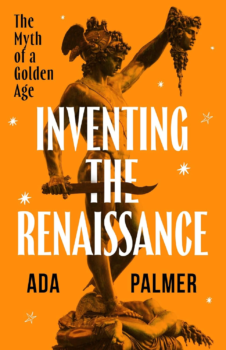
I initially loved this – effectively a popular historiography of the (Italian, mostly) Renaissance, exploring different perspectives and opinions and how these have evolved over time – while also providing overviews of some of the key events and personalities.
This is a wildly confusing period, so this approach actually works pretty well – highlighting who focused on what and offering multiple explanations as to why. Until about halfway through I loved it, and still remain convinced that looking at history by first looking at the lens of the historians and players who shaped that history is an approach more popular history books should take, rather than just run with a narrative.
But… “The Renaissance”, singular? This goes totally against the author’s core argument, which is all about how there are any number of ways of looking at this period (or even defining how long a period we’re talking about). Yet despite this we get surprisingly little about the Northern Renaissance, and almost every key figure called out was based in northern Italy – despite multiple references to Erasmus as a nexus of Renaissance correspondence, we get few investigations into how or whether what was happening in Italy was influenced by or influenced what was going on elsewhere (bar the frequent French invasions and other aspects of high politics).
Equally, about halfway through I started to find the whole thing a little overwhelming as we jump from overarching thesis (there’s no one right way of interpreting any of this) to detailed biography, so philosophical aside, to onrunning jokes. After a promising start, the structure starts to get lost, and it increasingly feels like a series of essays or blog posts loosely bound together.
The more this went on, the more I felt it could have been better if presented as essays rather than a whole – because after a while the running jokes (“Battle Pope”, “Abelarding”, references to Game of Thrones, etc etc) start to detract from rather than clarify the argument. This jokey style is one that’s been very popular the last decade or so, and can work – but in a book this long it can start to grate, even if you don’t object to it in principle, as some might.
Which is a shame, because there’s a lot of really good stuff in here. I learned a lot, and will want to go back and re-read various parts (as long as I can work out which with the jokey chapter titles) to refresh my memory – and eventually start to make a little more sense of a chaotic and challenging to understand period.
This, on the resurgence of the Rise of the Robots fears about the threat of widespread AI job losses, gets some of the way to articulating the niggling issues I have with this apocalyptic narrative:
Even if you do believe the technology has got or can get good enough to replace workers at scale, the economics simply don’t make sense.
Of course, we’ve spent the last two decades witnessing many, many things that made no economic sense yet that happened anyway thanks to a combination of complacency, willful ignorance, ideology, bloody-mindedness, and spite. Just because something makes no economic sense doesn’t mean it won’t happen.
But despite non-AI industry stocks having been hammered over the last couple of weeks, think what needs to happen to enable this AI revolution. Most developed nations had energy and clean water supply challenges even before factoring in a data centre building boom. We still have a deep reliance on rare earth metals for the hardware that the AI needs to function (the clue’s in the name).
What happens to prices when demand surges to unprecedented levels and supply struggles to keep up? And how does that change the balance sheet projections when deciding whether to replace human workers with a grandiose form of a new SaaS subscription, whose monthly costs and reliability could shift at any moment?
Remember the $7 *trillion* Sam Altman was asking for to invest in infrastructure? That’s likely to be a substantial under-estimate of the amounts needed given how much every industry upstream of the AI companies is already struggling to meet their projected needs.
History is all about perspective, and perspectives. This history of England’s most turbulent century – a period I studied to postgrad level – is a welcome attempt to offer alternative views of events via the eyes of non-English observers. As we’re somehow still referring to the central event as the English Civil War – ignoring Scotland, Ireland and Wales – this is very much needed.
The introduction promised a lot, and got me genuinely excited to see how much this focus on foreign perspectives – and foreign policy – would shift my own understanding. But while there were some new things for me here, at its heart this was all rather familiar.
Then again, I’m not really the target audience. As well as having studied the period, I also spent some time plotting out a potential novel that hinged in part on the foreign policy of James VI/I and the (limited) British involvement in the Thirty Years War.
For anyone relatively new to the period, or looking for a refresher overview, this would be really rather good. Standard accounts do tend to focus almost exclusively on England, where here Scotland and Ireland (not so much Wales) do get their due. But more importantly, most accounts tend to obsess about the religious angle, the disputes over tax and revenue, the disputes about the limits to the power of the monarchy, the attempts by parliament to assert itself.
All those are present here too – but so too are explorations of the European horror at the execution of Mary Queen of Scots; the Spanish side of the Spanish Armada and the Spanish Match, as well as worries about the subsequent French marriage; general concern as the civil wars broke out and further horror at England’s execution of a second monarch in sixty-odd years; the Dutch rivalry and wars and invasion.
All this is necessary to a solid understanding of the era – but all too often is skipped over or sidelined. Here, while it’s still not foregrounded as much as I’d hoped – or as much as is promised in the introduction – it’s hard to avoid the fuller understand appreciation that England was not operating in isolation. That other countries existed even then, and that even the foreign relations were far more than just theoretical, largely religious concerns.
All that said, cutting this off with the Glorious Revolution (another bad name that’s stuck) makes zero sense from a non-English perspective (even if the epilogue continues the story through to George I). Logically, the cut off should be more like 1745 (that final Jacobite rising, in the midst of British involvement in the War of Austrian Succession) and the solidification of the Hanoverian dynasty, or even a century later with the death of the Young Pretender / Bonnie Prince Charlie. But I guess by that point Britain was so firmly involved in European and global affairs that the emphasis on non-English opinions about the English would hardly be surprising.
So, a good overview – even if sadly not as radical and overhaul of the period’s traditional narratives as I was hoping.
Back when ChatGPT 3.5 came out, I was telling anyone who’d listen that it was going to disrupt search and publishing.
In early 2024, while at PwC, I started pitching new content formats to address this – intended to help capture whatever the GenAI equivalent of search ranking was going to be. “GEO” before this label stuck (I was calling it AIO at the time).
My thinking then was based on what seemed to be a logical, structured approach – similar to the “query fan out” advocates you’ll see in the “GEO” space today. (Basically label the hell out of your content, anticipate and answer the questions your target audience is likely to ask, as that structure should help the AI understand the context more easily, and so encourage it to pull from your page rather than someone else’s. Effectively a slightly deeper version of an old school Q&A or FAQ piece…)
But as I dug deeper it soon became clear that the challenge with LLM-based GenAI (from a model visibility perspective) wasn’t to do with clarifying the intended meaning of the information you want the model to ingest and regurgitate, as I first thought. (“These things can process unstructured data, but they’ll process *structured* data easier – so let’s structure it for them.”)
Instead it’s that these systems – despite being called Large *Language* Models – don’t actually understand language, or context. “Logic” to them is a meaningless concept; not only that, they have no concept of what a concept even is.
—
Tokens aren’t words, and don’t have meaning independently – they only appear to have meaning when combined into words.
Tokens create the illusion of being words (and having meaning) because of the probabilistic nature of these tools, when working with them using language as the system interface. This creates an environment in which they’re working within the rules of language, so can produce output that makes sense – even if they don’t “understand” what they’re saying.
But URLs aren’t language, and don’t have linguistic rules or any consistency from site to site in terms of information architecture. Every site’s URL structure is similar, but different.
And as LLMs don’t really understand structure (except as recognisable, predictable patterns), this makes accurately relating URLs a significant challenge for current LLM-based GenAI tools.
—
This is a structural challenge, baked into the very nature of these models. Despite what many GEO “experts” are now claiming, if your goal is to generate links and traffic from GenAI results, it’s not going to be an easy one to engineer if you’re working from outside that system.
It may be possible to tweak model outputs to improve this and increase URL attribution accuracy, but a) it won’t remove the underlying structural constraints, and b) what would be the incentive for the GenAI companies to do this?
“What looks like higher productivity in the short run can mask silent workload creep and growing cognitive strain as employees juggle multiple AI-enabled workflows…
“Over time, overwork can impair judgment, increase the likelihood of errors, and make it harder for organizations to distinguish genuine productivity gains from unsustainable intensity.”
As so often, it’s too early to say what the true impact of GenAI will be on the workforce – see other recent studies suggesting that productivity gains may (so far!) be overstated or marginal – but if it leads to doing more work at unsustainable rates, it would be a strange irony if the fears about job losses ultimately prove unfounded. Could GenAI end up pushing organisations to need more people, not fewer?
“You don’t know if you’re gonna get what you want on the first take or the 12th take or the 40th take”
This is GenAI’s current biggest challenge: It’s still being sold as primarily an efficiency tool – do more, faster!
In practice, as most who’ve played with it have found, it’s only faster if good enough is good enough. If you’re seeking excellence, it can help you to improve and refine what you’re doing – but not at speed.
The time / cost / quality pyramid persists, despite what we were all hoping.
What GenAI *is* allowing is for more people to try things that previously they’d never have been able to do – like code, write better, or create video or imagery.
But what this fascinating piece shows is that even genuine experts with a desire to experiment and push the boundaries can struggle to get genuinely excellent results – and that human + machine + time + iteration + patience remains (for now) the only way to get beyond good enough.
Notes and Essays
To help shape my thinking, I write essays and shorter notes examining the ideas and narratives that shape media, marketing, technology and culture.
A core focus: The way context and assumptions can radically change how ideas are interpreted. Much of modern business, marketing, and media thinking is built on other people's frameworks, models, theories, and received wisdom. This can help clarify complex problems – but as ideas travel between disciplines and organisations they are often simplified, misapplied or treated as universal truths. I'm digging into these, across the following categories - the first being a catch-all for shorter thoughts: