by JCM | 24 Aug, 2017 | Narratives & Meanings
 4/5 stars
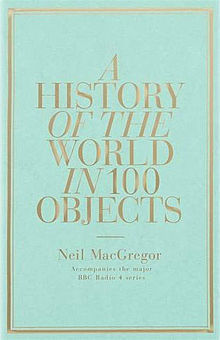
Flicked through before, this time read kinda cover to cover over a few days. Skipping bits, for sure, but reading most of it. Main observations:
1) It’s going to date badly – too much speculation about meanings, and too many interpretations that feel very of a particular moment.
2) Despite thinking it’s being critical and analytical, it’s actually kinda teleological, and definitely has an agenda. It’s an agenda I agree with and support, pushing a global, multicultural view of the world, but just because I agree with the agenda doesn’t mean I can’t see that some of the points are stretched very, very thin.
3) It doesn’t function as a linear narrative, but the thematic sections also don’t make much sense to me – largely because they’re also kinda chronological. It would make much more sense to have the first coins followed by the first ledgers and the first bank notes, but instead these objects are all grouped into other sections, to facilitate a more semi-chronological approach. Thematic makes more sense.
4) There’s a huge amount of unjustified historical equivalence, making some things sound more important than they are for world history to ensure a good geographic spread – often accompanied by enthusiastic hyperbole about the significance. But there’s also still a number of significant gaps: nowhere near enough China or Greece in particular.
That’s not to say it’s not a good book. It is. And it informed me abiut a bunch if things I never knew. But history is about selection, and here the selection was limited by the British Museum’s own collections. How would other major global museums have approached this differently? I’d be keen to find out.
by JCM | 3 Aug, 2017 | Structures & Models
 3/5 stars
I’ve come away convinced that this would have been infinitely better as a 400-page standalone novel with an optional 600-page sister volume of semi-related spin-off short stories as a kind of DVD extras disc, rather than this incoherent mess of disjointed interconnected short stories.
Even though I understand *why* he structured it this way (to fit in with his new, fun, central concept of the nature of nonlinear time), and though he makes it clear enough he doesn’t really care what his audience thinks (this is ART, darling – and if you don’t like it you’re an idiot and can fuck off), I kinda prefer novels to have some kind of coherent narrative to them, as well as a thematic point.
All that said, there are bits of this vast, meandering not-really-a-novel that are five stars. There are some genuinely great bits in it, where Moore is at his very best. The 350-odd pages of straight narrative in the middle, written as a kind of heightened, metaphysical Enid Blyton Magic Faraway Tree for adults, is good fun – the sort of thing fans of Promethea, Top 10, Tom Strong and The League of Extraordinary Gentlemen will love. Even the Joyce pastiche chapter is very well done – albeit an appropriately hard slog that adds little, if anything, to the overall narrative.
But it’s far too self-indulgent. Too smug. At points – especially towards the end as he builds up to the conclusion (which isn’t really a conclusion, because – thematically appropriately – the promised one never comes), he starts breaking the fourth wall via his characters, dropping more and more hints as to his book’s grand design.
Eventually he gives up, and taps on a final “postlude” chapter to smugly, patronisingly, and still vaguely obscurely, explain the entire thing, positioning himself as a weirdo artistic genius who doesn’t really care if you understand it or not.
I did understand it. I did enjoy much of it – including many of the bits I think should have been cut. I just didn’t think it was as clever as he does, and didn’t think it holds together as a narrative whole. Because it doesn’t, pretty much by design.
Glad to have got it over with. Glad to have read it. And now know far more about Northampton than I ever wished to.
